01
Sewer Camera Inspection
A camera run through the line so the failure is seen, not guessed at.
Urgent sewer failures
A sewer line rarely gives a polite warning before it fails. One evening the drains run as usual, and the next morning sewage is coming up through a basement floor drain, or every toilet in the house stops flushing at once. That is the moment this service exists for. We treat a sudden pipe collapse, a complete blockage, and sewage flooding as urgent work, and we talk through what to do first when you call, starting with keeping people away from the affected water and stopping further use of the drains.
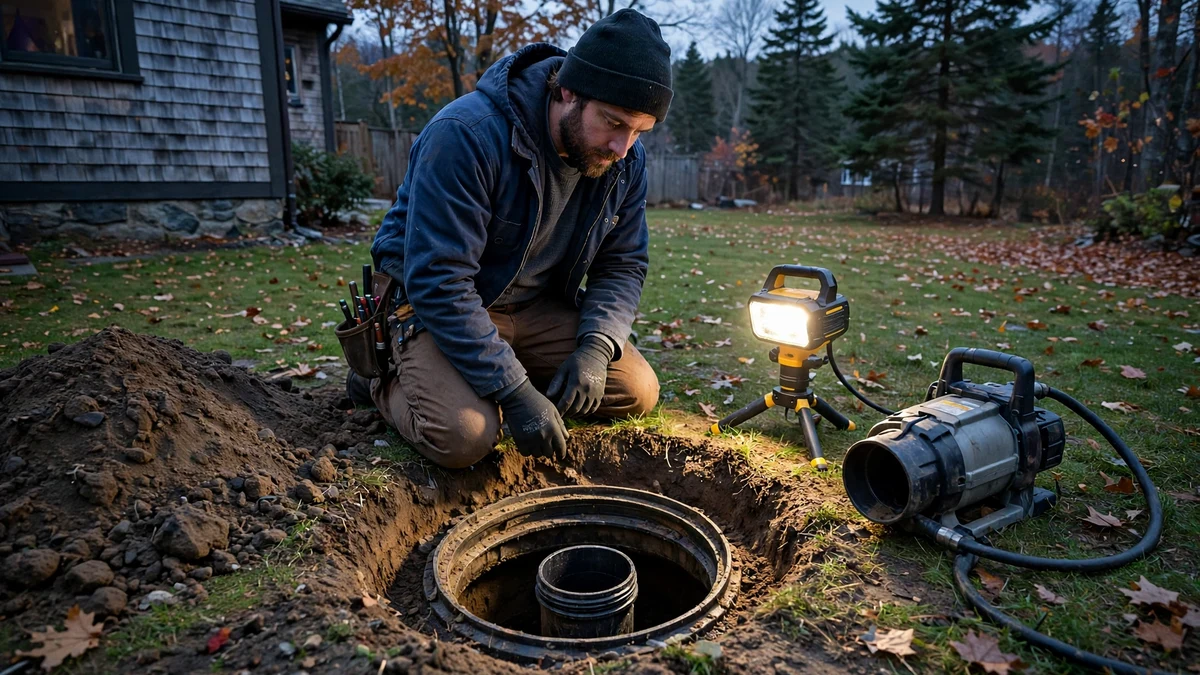
The first job on an emergency visit is not digging. It is finding out what happened. Where the line allows, we run an emergency camera through the main line and the lateral so we can see whether the trouble is a collapsed section, a blockage that has sealed the pipe shut, or a joint that has finally given way. A portable pump can move standing water out of the way so the camera can see, and a temporary line bypass can keep a property usable while a repair is planned. Those steps sound small, but they change the whole job: a repair chosen from a camera picture is a different repair from one chosen from a guess.
Maine homes make this harder than it looks. Many of them were built before 1939, and their lines are often clay or cast iron that has been in the ground for decades. Clay joints open up and let soil in, cast iron corrodes from the inside until the bottom of the pipe channels away, and a hard winter of frost movement can finish a joint that was already weak. When one of those lines fails, it usually fails all at once, and the work that follows has to respect both the age of the pipe and the depth it sits at, since frost depth in Maine commonly runs four to five feet or more.
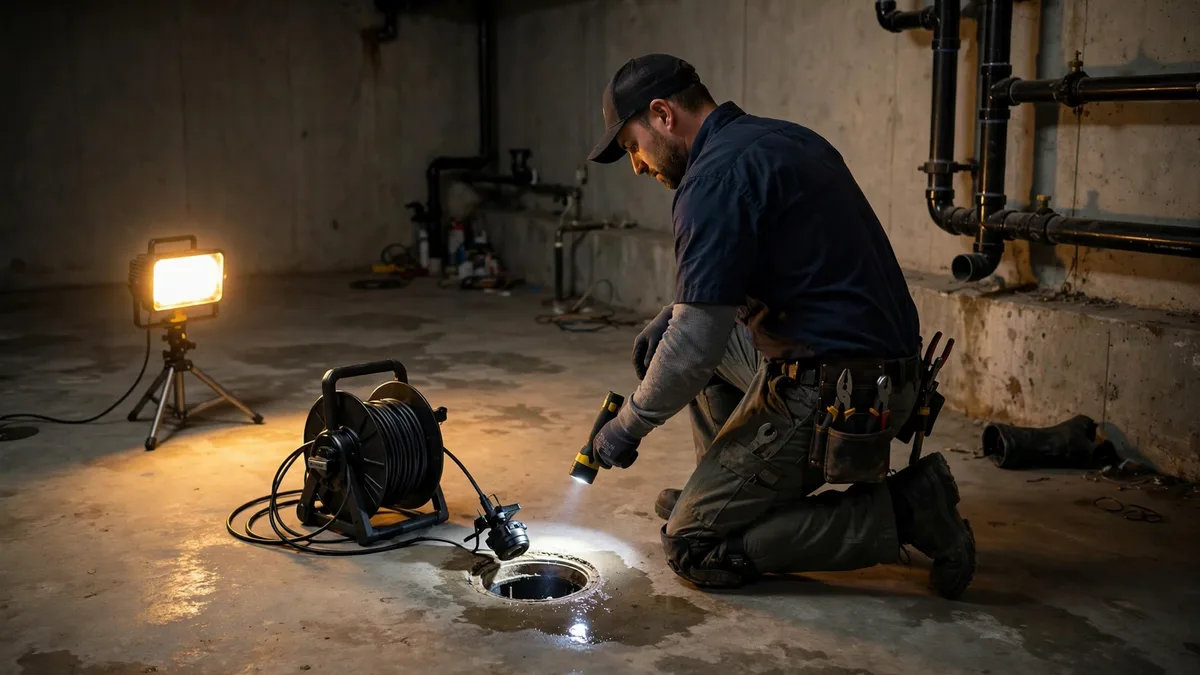
Not every sewer problem needs an emergency visit, and saying so plainly helps homeowners decide. A single slow drain is usually a developing problem, not an emergency. Sewage coming into living space, all fixtures backing up together, or a line that has collapsed and will not drain at all are different. Those are the signs of an urgent sewer line failure, and they are the cases we move on first.
A burst line underground can also show itself in the yard, as a sunken patch, a wet area that never dries, or a smell that hangs over one part of the lawn. Soil washing into a broken pipe leaves a void behind, and the ground above it can settle. If you see the ground sink over the line of a sewer, keep people and vehicles off that spot and call. The camera and the locator will show how much pipe is involved before any digging starts.
Under emergency conditions, a spot repair can sometimes steady the line the same visit, when the damage is confined to one section and the rest of the pipe still holds its shape. When the damage runs longer, or the pipe has lost its structure, the honest answer is a fuller replacement, and we say so rather than patching a line that will fail again a short distance away. Maine plumbing code emergency provisions and local sewer use ordinances still apply on urgent work, and we work within them even when the schedule is tight.
When you call, describe the symptoms in plain words: which fixtures are affected, whether sewage is visible, and whether the problem started suddenly or built up over days. That description shapes what we bring and where we start. On arrival we check the cleanout first, since that access point often tells us quickly whether the blockage sits in the house side or further out toward the street connection.
From there, the emergency camera goes in where the line allows. The footage shows the main line, the lateral, and the cleanout route in one pass, and it lets us mark the damaged length on the ground with the locator. If the line is blocked solid, clearing comes first so the camera can travel. If the pipe has collapsed, clearing cannot fix it, and the conversation turns to excavation or another replacement method that fits the site.
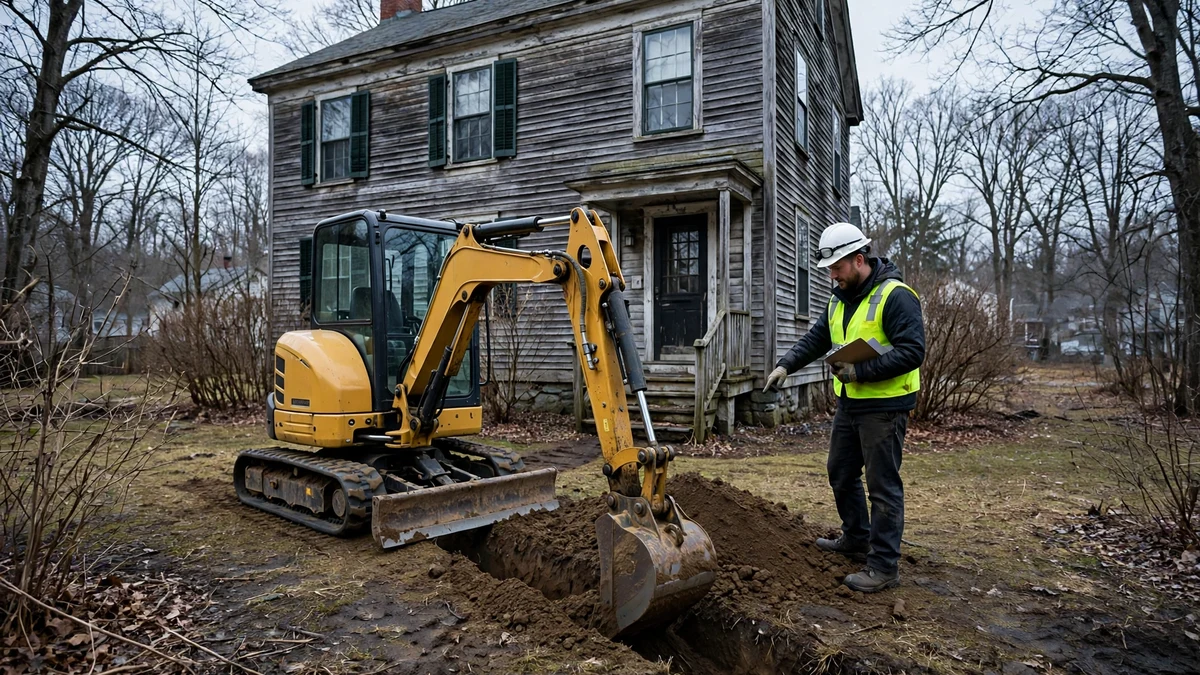
Excavation on an emergency job uses the same care as a planned job, just on a tighter clock. An excavator opens the trench over the failed section, trench safety practice governs how the trench is held open, and the replacement pipe goes in on proper bedding before the ground is restored. We explain each stage as it happens, because a homeowner watching an emergency dig deserves to know what is being replaced and why, not just to see a hole in the yard. You can read how the follow-up inspection works on our sewer camera inspection page, and the single-section option is covered under sewer line spot repair.
An emergency repair is not finished when the water stops coming in. The rest of the line still needs a look, because the same clay or cast iron that failed in one place is often weak in others. After the urgent section is dealt with, we run the camera through the remaining line where access allows and talk through what it shows, including whether a planned lining, bursting, or traditional replacement would suit the older sections before they fail the same way.
That follow-up conversation matters most in Maine, where the oldest housing stock in the country means many lines are already past the age their materials were built for. A homeowner who has just had one emergency does not want a second one in the same season, and a camera record of the whole line is the practical way to weigh that risk. For general background on how public sewer systems work, the United States Environmental Protection Agency water infrastructure pages explain the systems that carry wastewater from homes to treatment.
If the emergency repair turns out to be part of a longer replacement, the method choice follows the same rule as every other job we do: the camera decides. Pipe bursting replacement can suit a failed line that still has a path to pull through, while traditional sewer line replacement fits a line that has collapsed or lost its grade. Either way, the emergency visit gives you a clear picture first, and the longer repair is planned from that picture rather than rushed.
Keep people and pets away from the affected water, stop using toilets, showers, and washing machines, and check whether the backup affects one fixture or the whole house. Note what you see, then call a sewer line company and describe the symptoms plainly so the visit starts in the right place.
Sometimes a single damaged section can be steadied with a spot repair, but a collapsed line often needs a fuller replacement that cannot be finished in one visit. A camera inspection shows how much pipe has failed, and that picture decides whether a same-visit fix is honest or a planned replacement is needed.
Sewage entering living space, every fixture backing up together, or a line that will not drain at all are emergency signs. A single slow drain or one gurgling toilet usually points to a developing problem instead, and a camera inspection is the right next step for that.
Keep people away from any sewage water, stop running water into the drains, and note which fixtures are affected and when the problem started. That information helps the visit start in the right place.
Not always. A camera check comes first, and some emergencies are steadied with a spot repair through a small opening. If the pipe has collapsed or lost its shape, excavation over the failed section is usually the honest answer.
Often, yes. Where the line allows, a camera run through the main line and the lateral shows a collapse, a blockage, or a failed joint directly, and a locator marks the spot on the ground before any digging starts.
Yes. Maine plumbing code provisions and local sewer use ordinances apply on urgent work as well as planned work, and trench safety practice governs any excavation we open.
We run the camera through the rest of the line where access allows and talk through what it shows, so you can weigh whether older sections need planned work before they fail the same way.
Call (207) 819-0831 or email info@sewerlinerepairmaine.com, and describe the symptoms in plain words. Our office address is 400 Congress St, Portland, ME 04101, United States.
Start by telling us what you are seeing. We will talk through the symptoms and the next step from there.
01
A camera run through the line so the failure is seen, not guessed at.
02
A fix for one damaged section when the rest of the line still holds.
03
Open excavation for a line that has collapsed or lost its grade.
Last updated: October 28, 2026