01
Scheduled Sewer Inspection
Repeat camera checks that track a line with early wear over time.
See inside your line
Every sewer repair starts with a question that cannot be answered from the surface: what is actually wrong inside the pipe? Slow drains, repeat backups, and gurgling can all come from different causes, and each cause points to a different repair. A sewer camera inspection answers that question directly. We run a push rod camera through the line from a cleanout access point, watch the inside of the pipe on a monitor recorder, and record the run so the findings can be reviewed rather than remembered.
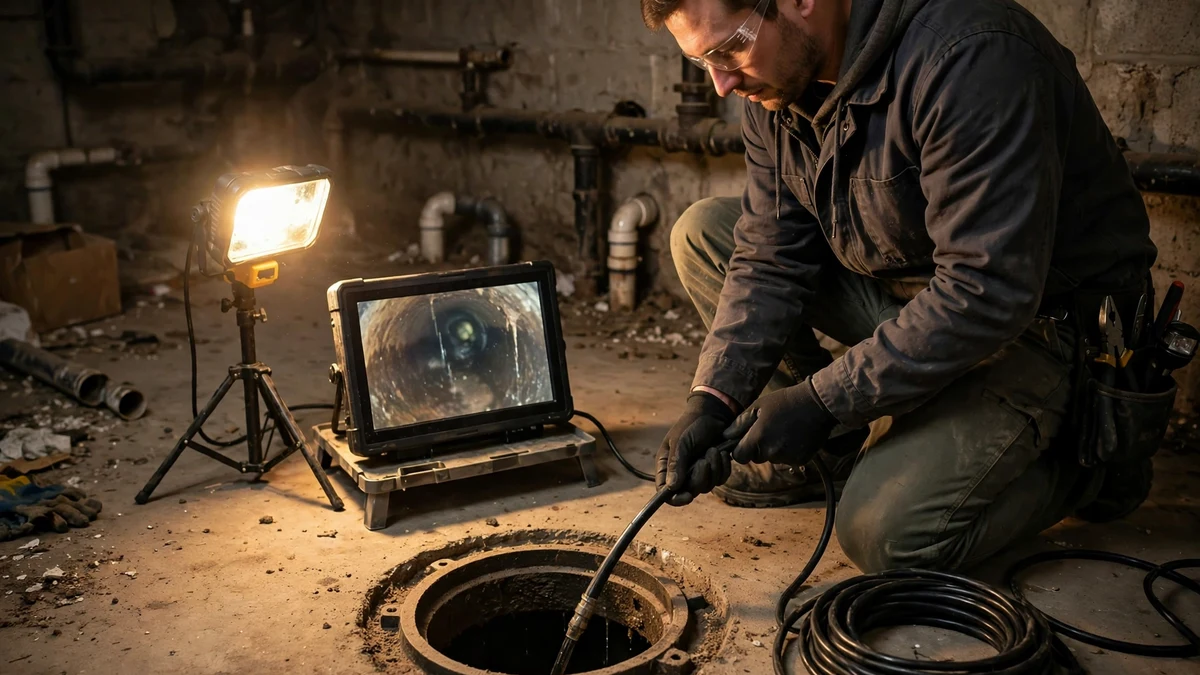
That record matters because sewer work is otherwise invisible. A homeowner cannot watch a buried pipe the way they can watch a roof or a furnace, so trust has to come from something they can see. The footage gives them that. A joint separation looks like a gap with soil showing through. Root intrusion looks like pale fibers reaching into the pipe. A pipe belly looks like a dip where water sits instead of flowing on. Once you have seen the problem, the repair conversation becomes concrete, and the choice between cleaning, lining, bursting, or excavation follows from the picture.
Maine lines reward this approach more than most. The state has the oldest housing stock in the country, and Portland homes have a median year built of 1945, so a large share of the lines we inspect are clay laid before the 1970s, cast iron laid before the 1980s, or Orangeburg laid from the 1940s to the 1970s. Each of those materials fails in its own way, and the camera tells us which material we are looking at and how far its wear has gone, rather than leaving us to guess from the age of the house.
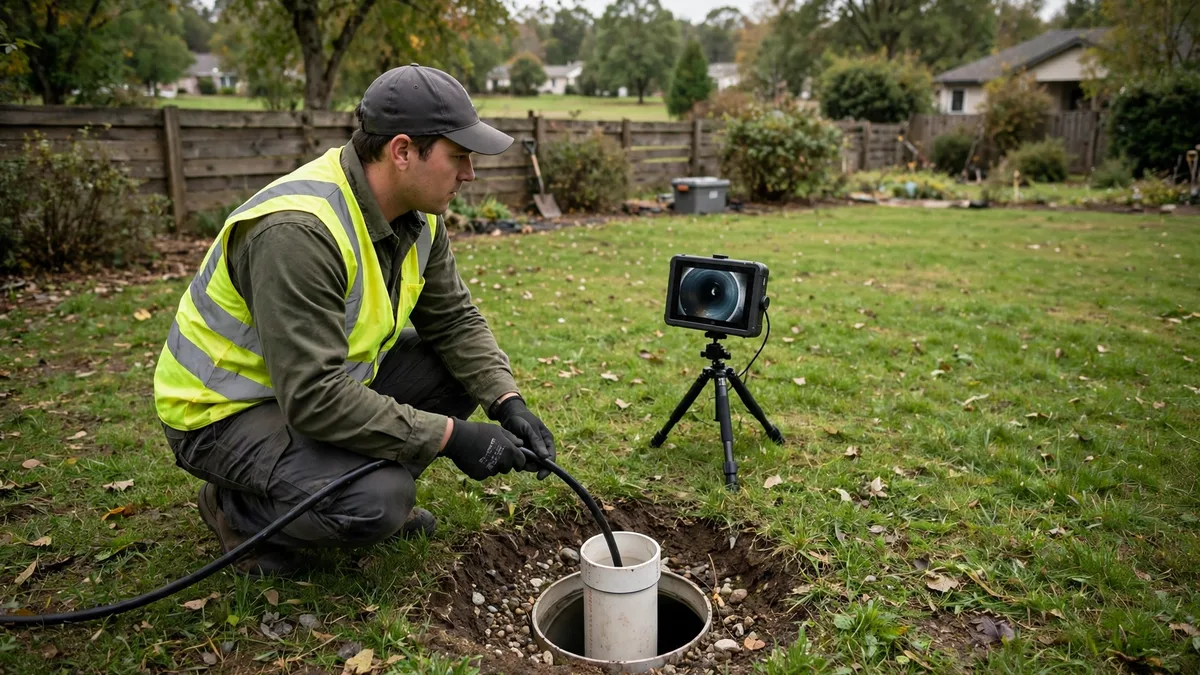
A recorded video inspection covers the main line and the lateral in one pass where access allows. The push camera travels from the cleanout access toward the street connection, and the locator sonde in the camera head lets us mark the depth and position of anything we find on the ground above. That pairing of picture and position is what turns footage into a repair plan: we know not only what is wrong, but where it sits and how long the damaged stretch runs.
The common findings each tell a different story. Joint separation in clay pipe usually means roots and soil have a way in, and the fix depends on how many joints are affected. Root intrusion at a single joint may suit cutting and a later repair, while roots at joint after joint point to a line near the end of its life. A pipe belly, a low dip in the run, collects waste and causes repeat blockages even after cleaning, because the shape of the pipe itself is the problem. Corrosion pitting in cast iron shows as rough, scaled walls that catch paper and waste, and the camera shows whether that roughness is patchy or runs the whole line.
We explain all of this while the footage is on screen, in plain words, and we do not rush past the parts that matter. If the picture is unclear, we say so and run the camera again rather than building a repair on a blurry frame. You keep the camera footage from the visit, so you can show it to another tradesperson, keep it with the house records, or look at it again before deciding on a larger repair. That footage belongs to you, because it is a record of your property.
Home buyers benefit more than anyone, because a sewer line is one of the few expensive parts of a house that a standard walk-through never sees. A camera inspection before buying a Maine home can reveal a lateral that is already failing under a house that otherwise looks sound, and that knowledge belongs in the purchase decision, not discovered after moving in. The same applies to anyone buying an older home in particular, where clay, cast iron, and Orangeburg lines may be near the end of their working life even when the drains still run.
Property managers benefit for a different reason: they manage repeat problems across many units, and a camera record turns a recurring backup from a mystery into a documented condition with a location and a cause. Instead of clearing the same line again and again, the manager can see whether the trouble is a belly, a root mass, or a broken joint, and plan the repair once. Homeowners with a line that keeps blocking after cleaning are in the same position. If clearing never holds, the camera usually shows why.
A lateral launch inspection adds a second view where the main line camera cannot reach on its own. The lateral launch head steers into the house lateral from the main, so the segment that runs under the yard gets its own look rather than being assumed sound. That segment matters, because it is the part of the system the homeowner owns outright, and it is often the part that fails first in older homes.
The visit follows four plain steps, and we keep to them so nothing is skipped. First, we listen. You describe the symptoms: which fixtures are slow, whether backups repeat, and whether any digging or repair has happened before. That history tells us where to look first. Second, we set up access. The cleanout access is the usual entry point, and if a property has no usable cleanout, we talk through the options before anything is opened.
Third, we run the camera. The push rod camera travels the line while the monitor recorder saves the footage, and the locator sonde marks positions on the ground as findings appear. We narrate what we see as we go, so you hear the interpretation at the same time as the picture. Fourth, we review together. We play back the key sections, point out each finding in plain words, and talk through the repair options that fit what the footage shows, including when the honest answer is to watch a developing wear and re-inspect later rather than repair now.
Two named steps sit inside that run and are worth knowing about. Sewer line location, marking the line's path and depth on the ground with the locator, is part of every inspection where the sonde signal allows, because a repair cannot be planned without knowing where the pipe runs. Descaling, a jet pass that strips scale from cast iron walls, is sometimes needed before the camera can see the wall condition at all, and we say so when that step is needed rather than reporting on a wall we could not see.
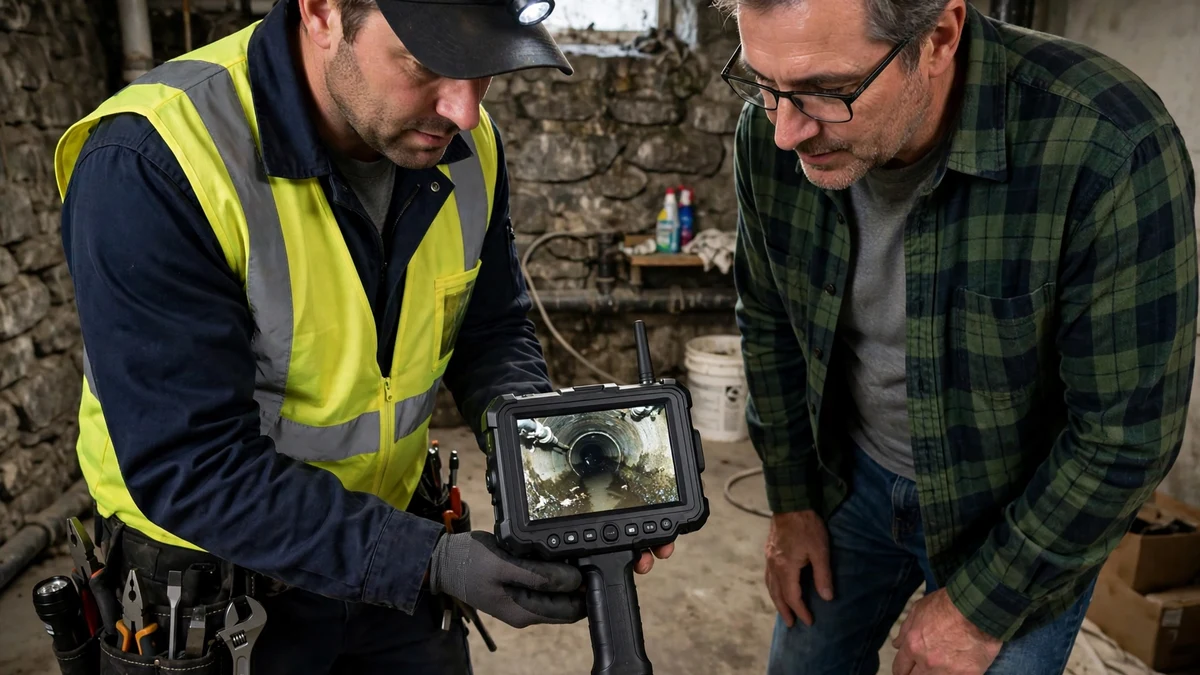
After the visit, the footage and our plain-words summary stay with you. If the line is sound, that record is useful on its own, especially before a purchase or before a renovation that will cover the line. If the line needs work, the footage decides which service fits: a blockage points to sewer line cleaning, roots point to tree root removal, a cracked but shaped pipe points to trenchless pipe lining, and a collapsed or deeply bellied line points to excavation. The inspection does not sell a repair. It shows the line, and the repair follows.
Inspection practice follows the ASTM camera inspection practice as a guide, and Maine sewer district access rules govern how we work where a line meets a public system. Those standards shape how footage is recorded and how findings are described, so the record is consistent from one visit to the next. That consistency matters when a line is re-inspected over time, because a new run can be compared against the old one and real change can be seen.
A camera inspection is also the right starting point for a scheduled sewer inspection plan, where a line with early wear is checked again on a repeat schedule rather than repaired before it needs it. The first inspection sets the baseline. Later ones show whether a joint is wearing, roots are regrowing, or a belly is deepening, and the repair decision is made from that trend, not from a single snapshot.
It shows the inside of the main line and lateral: joint gaps, root intrusion, cracks, bellies, corrosion, blockages, and the pipe material itself. The locator marks where each finding sits, so the picture becomes a repair plan with a location, not just a diagnosis.
Yes, especially for an older Maine home. A standard walk-through never sees the buried lateral, yet a failing line can be one of the most expensive hidden problems in a house. The footage lets you weigh that risk before you buy, not after.
Yes. You keep the recorded video from the inspection, along with a plain-words explanation of what it shows. The footage is a record of your property, and you can keep it with the house records or share it with another tradesperson.
We feed a push rod camera into the line through a cleanout access point and watch the inside of the pipe on a monitor recorder. A locator sonde in the camera head marks the position and depth of findings on the ground above.
Joint separation, root intrusion, pipe bellies, cracks, corrosion pitting, blockages, and the pipe material itself. Each finding points to a different repair, which is why the footage comes before the repair choice.
No. The camera travels inside the existing pipe through an access point. If the line is blocked solid, clearing may be needed first so the camera can travel, and we explain that before proceeding.
We talk through the access options before any work starts. Some properties need an access point created before a full camera run is possible, and we explain that honestly rather than forcing a partial inspection.
Yes. We narrate what the camera shows as it travels, review the key sections with you afterward in plain words, and you keep the footage to look at again.
Call (207) 819-0831 or email info@sewerlinerepairmaine.com, and describe the symptoms or the reason for the inspection. Our office address is 400 Congress St, Portland, ME 04101, United States.
Start by telling us what you are seeing. We will talk through the symptoms and the next step from there.
01
Repeat camera checks that track a line with early wear over time.
02
Tracing a sewer smell to its source when the cause is unclear.
03
A new pipe inside the old one, chosen from what the camera shows.
Last updated: October 28, 2026