Portland Runs on Some of the Oldest Pipes in the Country
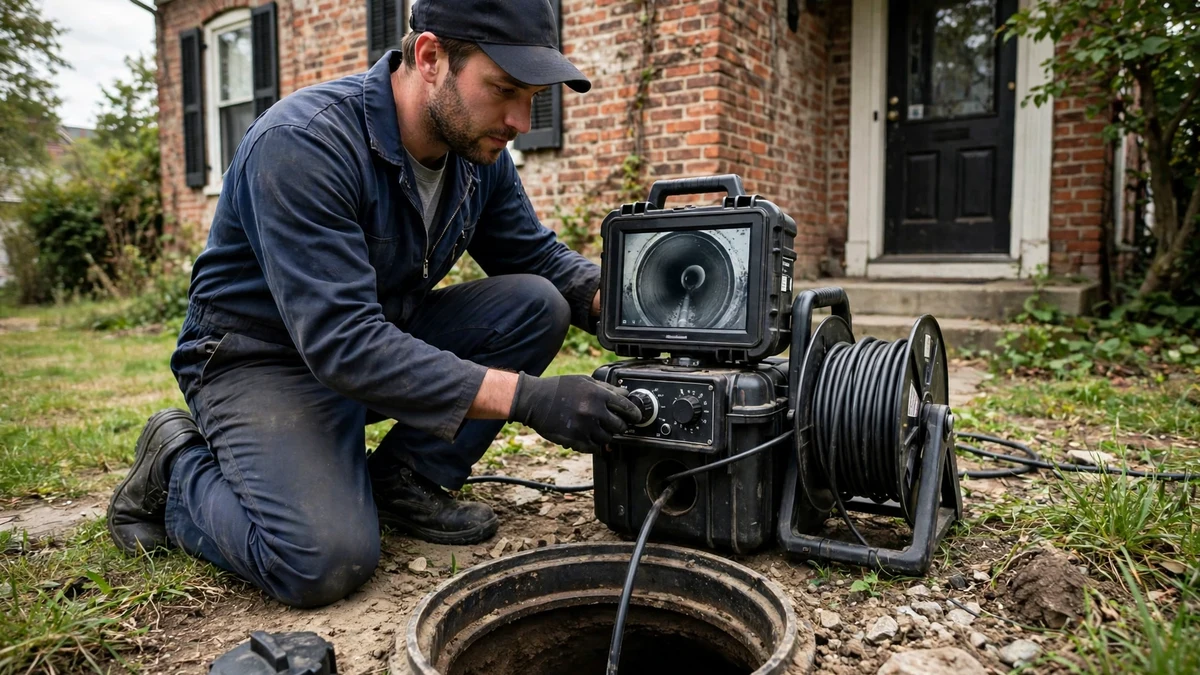
We work across the whole city, from the brick blocks of the Old Port to the wood-frame streets of Deering and Riverton, and we start the same way on every job. We run a camera through the line first, show you what it finds, and only then talk about a method. That order matters in Portland more than most places, because a street can hold three pipe eras side by side, and guessing the material from the age of the house alone is not good enough.
Where Portland Homes Sit, and Why It Changes the Pipe
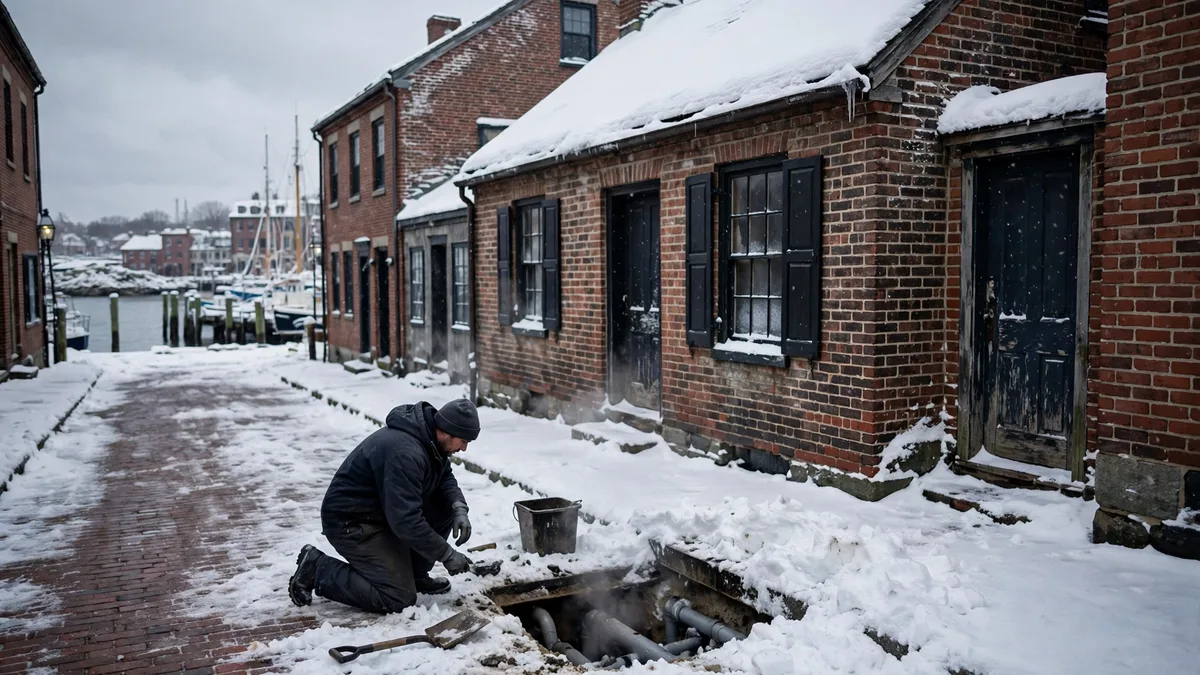
Portland's neighborhoods grew at different times, and the ground under them tells that story. The West End and Munjoy Hill hold tall brick and wood houses on tight lots, where a lateral runs a short distance to the street main but passes under walkways, steps, and mature trees. Out toward Deering, Rosemont, and Riverton the lots open up, the laterals run longer, and the trees along the street have had decades to send roots toward any joint that weeps. Back Cove adds low, wet ground to the picture, where soil stays damp and ground movement works on joints year after year.
Neighborhoods and areas we cover in Portland include Old Port, West End, East End, Munjoy Hill, Deering, Back Cove, Riverton, Rosemont, Woodfords Corner, Libbytown.
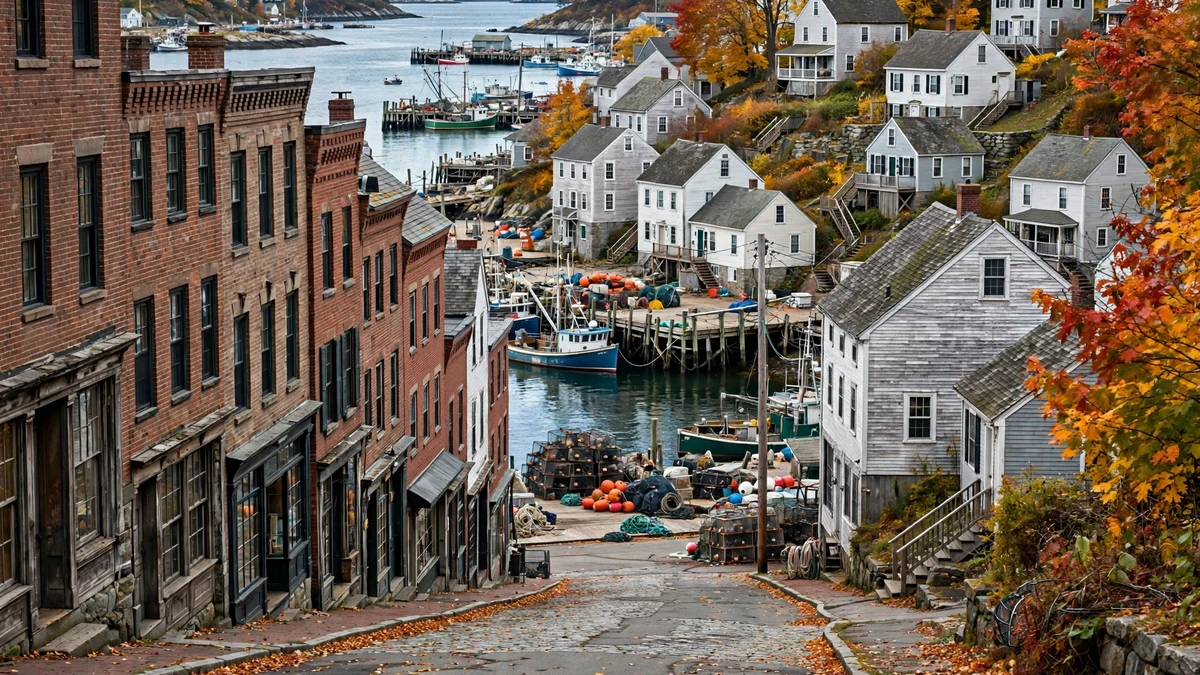
Two landmarks help people place the work: the Portland Observatory above the East End, and the working waterfront at the foot of the Old Port. Between those two points sits a dense grid of old streets, and under that grid sits an old sewer system. Portland's older neighborhoods were built on combined sewers, carrying sewage and stormwater in one pipe, and a hard rain can still push that system hard. A camera inspection is how we learn whether a given house line is coping with that load or starting to fail under it.
What Fails Under Portland, and How It Shows Upstairs
The failure chain in Portland usually starts with a joint. Clay pipe from before the 1970s was laid in short sections, so a single lateral can hold dozens of joints, and each joint is a place where the seal can give way. Once a joint weeps, moisture draws roots in, the roots thicken, and the joint opens wider. Cast iron from before the 1980s fails differently: it corrodes from the inside, channels along the bottom, and catches waste on rough scale until the wall thins and the pipe sags or breaks.
The symptom a homeowner notices first is rarely dramatic. It is a toilet that gurgles when the washer drains, a basement drain that runs slow after rain, or a backup that clears and then returns a few weeks later. Those are the signs of a line that is narrowing or losing its grade, not a drain that needs a stronger cleaner. When we camera a Portland line, we look for the exact joint or section behind the symptom, because the repair for a single failed joint is very different from the repair for a run of clay that has cracked in five places. Maine state government publishes general housing and infrastructure information through its Maine.gov site, which is a useful starting point for anyone researching how old Maine's housing stock is.
How We Work a Portland Job, Step by Step
We keep the sequence short and visible, so you always know what we found and what we are doing about it. There is no digging on a guess and no method chosen before the camera has run.
- We walk the property with you and talk through the symptoms, then find the cleanout and set up the camera.
- We run the push camera through the lateral to the main, record the footage, and mark the depth and location of anything we find.
- We show you the footage and explain it in plain words: which joints, sections, or materials are involved, and what each one means.
- We recommend the smallest repair that fits the footage, from a spot repair to lining or a full replacement, and we do that work.
Homeowners in Portland often ask whether lining can save a line that has already sagged. The honest answer depends on the footage: a line that still holds its shape can often be lined, while a collapsed section or a deep belly needs excavation. We say that plainly before work starts, because a method that does not fit the pipe is worse than no repair at all.
Every Sewer Service We Bring to Portland
Portland homes need the full range, from a camera check on a West End rowhouse to a full lateral replacement in Riverton. The cards below cover all 16 services, each with a Portland note, so you can start from the problem you have rather than guessing a method. The pre 1939 home pipe failure pattern is one we watch for here, and all work follows the Maine plumbing code and the Portland sewer use ordinance.
When a line breaks or sewage backs up and the house cannot wait, we stop the damage first and then trace the failure with a camera. That matters in Portland, where pre-1939 houses and combined sewers put an old lateral under real strain.
We run a push camera through the line and watch the footage with you, so the repair decision rests on what the pipe actually shows. In Portland we see this most often under the brick and wood streets of the West End, Munjoy Hill, and Deering.
Where the host pipe still holds its shape, we form a new pipe inside the old one through small access points, without a full trench. For a Portland property, the camera footage decides the method, never the age of the house alone.
We pull a new HDPE pipe through the path of a failed line, breaking the old pipe outward as the new one takes its place. That matters in Portland, where pre-1939 houses and combined sewers put an old lateral under real strain.
When a line has collapsed or lost its grade, we open a trench, set the new pipe at the right fall, and backfill it properly. In Portland we see this most often under the brick and wood streets of the West End, Munjoy Hill, and Deering.
When the camera shows one bad joint or one cracked section, we fix that section only and leave the sound pipe alone. For a Portland property, the camera footage decides the method, never the age of the house alone.
We replace the house-to-street segment when it has failed along its length, connecting the home cleanly to the main. That matters in Portland, where pre-1939 houses and combined sewers put an old lateral under real strain.
We scour grease, scale, and sludge from the pipe wall with high pressure water, restoring flow in a line that is still sound. In Portland we see this most often under the brick and wood streets of the West End, Munjoy Hill, and Deering.
We clear a blockage mechanically with a snake and cutter head, then check with a camera to see why it blocked. For a Portland property, the camera footage decides the method, never the age of the house alone.
We cut roots out of the line at the joints where they entered, then camera-check the joint to judge what comes next. That matters in Portland, where pre-1939 houses and combined sewers put an old lateral under real strain.
We replace clay, cast iron, and Orangeburg runs that have reached the end of their working life with modern pipe. In Portland we see this most often under the brick and wood streets of the West End, Munjoy Hill, and Deering.
Where a pipe still has its strength but seeps at joints or pinholes, we coat its inside to seal it without replacing it. For a Portland property, the camera footage decides the method, never the age of the house alone.
We inspect on a planned schedule, grade the condition over time, and catch joint wear or root regrowth while it is still small. That matters in Portland, where pre-1939 houses and combined sewers put an old lateral under real strain.
We fit a valve that closes when the street main surges, so a surge stops at the valve instead of coming up through the house drains. In Portland we see this most often under the brick and wood streets of the West End, Munjoy Hill, and Deering.
We trace a sewer smell to its source, checking traps, vents, seals, and the line itself with a camera before we recommend a fix. For a Portland property, the camera footage decides the method, never the age of the house alone.
We handle shops, offices, and larger buildings, where high use and grease put a different load on the line than a house does. That matters in Portland, where pre-1939 houses and combined sewers put an old lateral under real strain.
See every service we offer across Maine, with the same camera-first approach on each one. Start with the card that matches your Portland problem.
Call or email us about a Portland property, and tell us the symptom first. The symptom points us to the right inspection.
Find Sewer Line Repair in Portland, ME
The map below centers on Portland, Maine. If your property sits in one of the neighborhoods above and connects to public sewer, we can inspect and repair its line. If you are unsure whether a property is on sewer or septic, tell us when you call and we will help you work it out before any visit.
Primary ZIP: 04101. Our office address is 400 Congress St, Portland, ME 04101, United States, and you can reach us at (207) 819-0831 or info@sewerlinerepairmaine.com.
Frequently Asked Questions About Portland Sewer Lines
Why do Portland sewer lines fail more often than newer towns?
Portland's housing is older than anywhere else in Maine, with a median build year of 1945 and more than 40 percent of homes built before 1939. Those homes carry clay and cast iron lines that are now past their prime, so joints leak, roots enter, and walls thin.
Does a Portland camera inspection show the whole lateral?
Yes. We run the camera from the cleanout through the lateral to the street main, recording the full run so we can point to the exact joint or section behind a symptom.
Can you line a Portland sewer line without digging up the yard?
Often, yes, when the host pipe still holds its shape. A collapsed section, a deep belly, or a badly offset joint cannot be lined honestly, and in that case excavation is the right answer.
What does a combined sewer mean for my Portland home?
Portland's older neighborhoods were built on combined sewers, so one pipe carries sewage and stormwater. Heavy rain can load that system, which is why backups after storms deserve a camera check rather than a simple clearing.
Do you serve all Portland neighborhoods?
We serve the neighborhoods named on this page, including the Old Port, West End, East End, Munjoy Hill, Deering, Back Cove, Riverton, Rosemont, Woodfords Corner, and Libbytown.
Should I get a camera inspection before buying a Portland home?
It is a sensible step for any pre-1939 or mid-century Portland purchase. A camera check shows the lateral condition that a walk-through cannot, and it gives a buyer a clear picture before closing.
Ready for a Camera Look at Your Portland Line?
Tell us the street, the age of the house if you know it, and what the drains have been doing. We will start with a camera inspection and show you the footage before any repair is chosen. In Portland, that camera-first start is how every job begins.
Call (207) 819-0831 or email info@sewerlinerepairmaine.com about Portland.
Nearby Maine Cities We Also Serve
Portland sits at the center of the southern Maine cluster, and the cities around it share its old housing and old pipe problems, each with its own character.
Across the harbor from Portland, South Portland mixes old coastal streets with newer homes, and its sewer lines carry the same joint and root problems.
Westbrook is Portland's mill-city neighbor on the Presumpscot River, where mill-era housing gives way to newer streets with their own pipe stories.
Scarborough pairs fast-growing subdivisions with older streets, so its sewer work ranges from a single bad joint to an aging lateral.