01
Sewer Line Cleaning
Mechanical snaking for a line that is stopped up.
High pressure water cleaning
Hydro jetting cleans a sewer line with high pressure water. A jetter unit sends water through a pressure hose to a nozzle inside the pipe, and the nozzle's jets scour the walls as it travels, carrying grease, scale, and sludge out of the line. It is a cleaning method, not a repair method: it removes what has built up inside the pipe, and it leaves the pipe itself unchanged. That distinction matters, because jetting is the right answer for buildup and the wrong answer for a broken pipe.
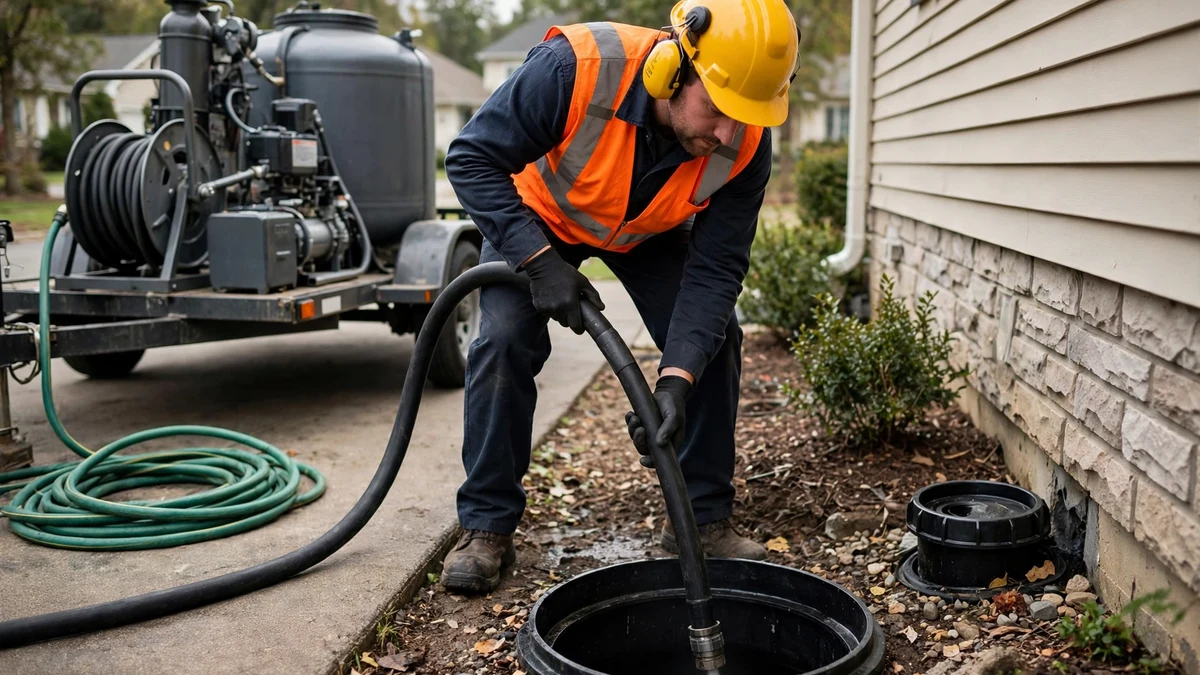
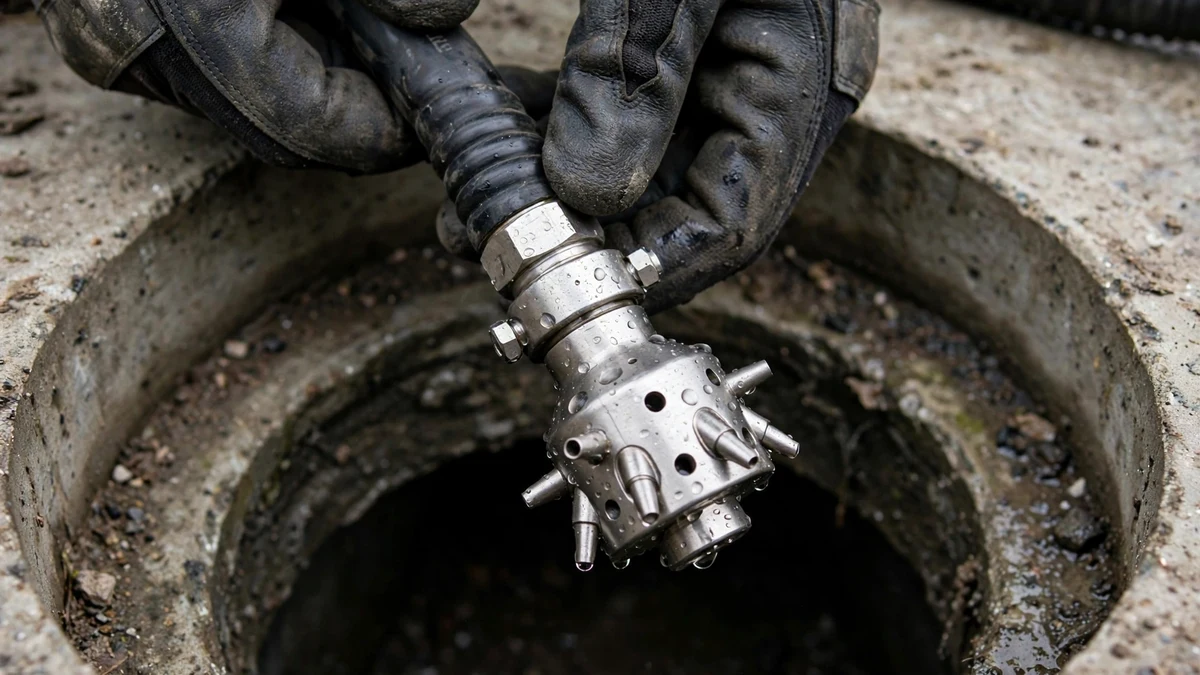
The nozzle is the tool that decides what jetting can do. A rotating nozzle jetting pass spins as it travels, so its jets sweep the full circumference of the wall rather than a single line. Different nozzles suit different buildup: a penetrating nozzle opens a path through a heavy deposit, and a rotating nozzle follows to scour the walls clean. The pressure hose carries the water to the nozzle, and the jetter unit controls the flow, so the operator can match the pass to the pipe material and the deposit rather than running one setting for every line.
Grease buildup is the classic jetting case. Grease cools and hardens on pipe walls, layer by layer, until the bore narrows and waste catches on the rough surface. Scale buildup in cast iron does the same thing by a different route: corrosion roughens the wall, and waste and mineral scale collect on that roughness until the line runs slow. Sludge deposits settle in low spots and bellies, and a jet pass can move sludge that a snake would only poke a hole through. In each case, the problem is material inside the pipe, and water under pressure is the tool that removes it.
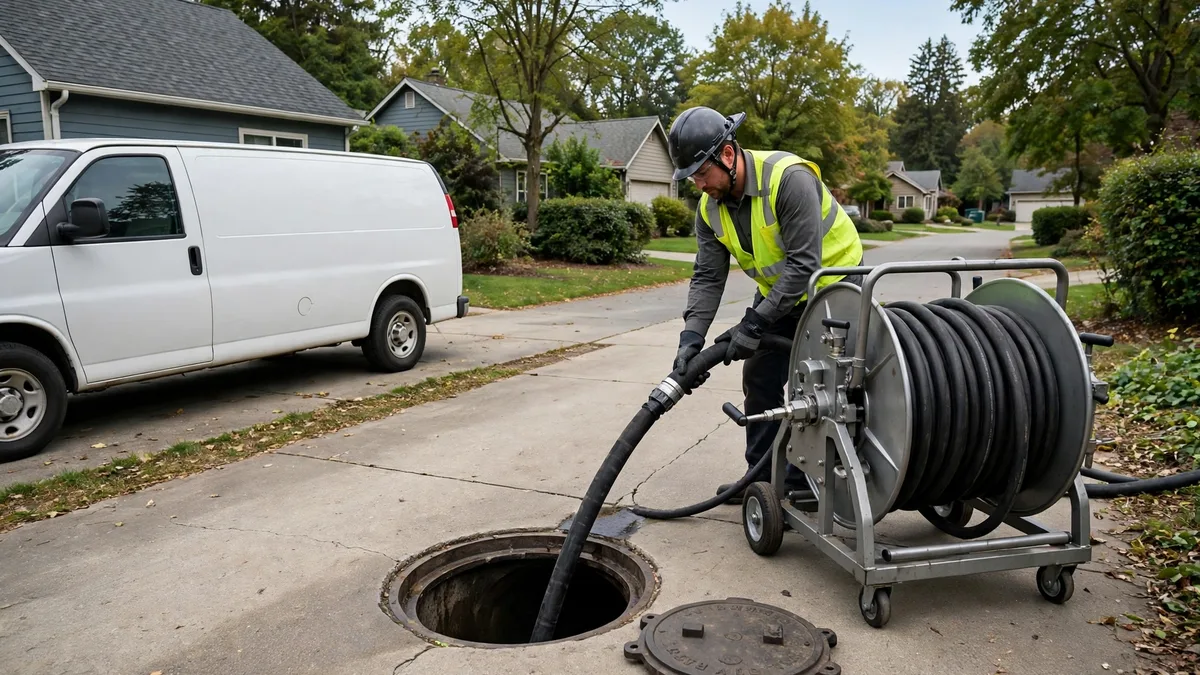
Jetting and snaking are often spoken of as if they were interchangeable, and they are not. Snaking is mechanical clearing: a drain snake or auger cable with a cutter head breaks through a blockage and pulls debris back, which suits a line that is stopped up by a solid obstruction. Jetting is water cleaning: it scours the walls along a length of pipe, which suits a line whose bore has narrowed from grease, scale, or sludge along its run.
A line that keeps blocking after snaking is often a jetting case, because the snake opened a hole through the deposit without removing the deposit itself, and the bore narrowed again as waste collected on the remaining buildup. A line that is stopped solid by a foreign object is a snaking case first, because water cannot clear an object it cannot move, and a jet pass against a solid obstruction wastes water without solving the problem. The camera shows which case a line is in, and the method follows the picture.
Our sewer line cleaning page covers the snaking-led service in full, and the two pages are deliberately kept apart: cleaning is mechanical clearing for blockages, and jetting is high pressure water for grease and scale. A job that needs both is described as both, not blurred into one service, because the homeowner deserves to know which tool did which part of the work.
A descaling jet pass is a named step inside jetting work, and it deserves its own explanation. Cast iron pipe corrodes from the inside, and the corrosion leaves a rough, scaled wall that catches waste and narrows the bore. A descaling pass uses a rotating nozzle at a setting suited to the pipe to strip that scale back to a smoother wall, so the line carries waste more freely and a later camera run can see the wall condition itself rather than the scale covering it.
Descaling is also a preparation step. Before a lining job, a scaled wall must be cleaned so the liner bonds to the pipe rather than to loose corrosion, and a descaling jet pass is often the step that prepares it. Before a coating job, the same logic applies: a sealing layer needs a clean wall to seal against. In both cases, the jet pass is named as its own step in the job, because it does different work from a general cleaning pass and it is judged by a different result: a clean wall, not just a clear bore.
Not every line needs descaling, and not every line can take it. A pipe whose wall has thinned badly from corrosion may not suit an aggressive jet pass, and the camera shows the wall thickness pattern before the nozzle goes in. That judgment, made from footage rather than from habit, is what keeps jetting a cleaning method rather than a risk to an already weak pipe.
A jetting visit starts at the cleanout, the access point that lets the hose enter the line without opening the ground. The operator feeds the nozzle in and works it along the line, watching the return water for the grease, scale, and sludge coming out. The color and texture of that return water tell the operator what the line held and whether the pass is complete, and the hose is worked back and forth over stubborn stretches rather than rushed through in a single run.
After the pass, a camera check confirms the result where the line allows. The camera shows the cleaned walls, any remaining deposits, and any damage the deposits were hiding, such as a crack or a joint gap that the grease had covered. That check matters, because jetting can reveal a repair need that cleaning alone could not, and the homeowner should hear about that damage from footage, not discover it at the next backup.
Maine wastewater discharge rules govern where the jetted material goes, and jetter safety practice governs how the high pressure equipment is handled on site. The water and the material it carries are managed rather than left to run where they fall, and the work area is left as it was found. Those rules are part of the service, not an afterthought, because a cleaning method that leaves its waste behind has not cleaned anything.
Jetting is not the answer for a broken pipe. A cracked, collapsed, or badly offset line will not be fixed by clean walls, and jetting it can push water through a crack into the surrounding soil. Jetting is not the answer for a root mass that has displaced a joint either, though it can follow root cutting to clear the debris the cutter leaves behind. And jetting is not the answer for a belly, where waste pools because the pipe sags: the jet pass clears the pool, and the pool returns, because the shape of the pipe has not changed.
In each of those cases, the camera shows the real problem, and the repair follows from it: tree root removal for roots, trenchless pipe lining for a cracked pipe that holds its shape, or excavation for a pipe that has lost its shape or grade. Jetting earns its place by doing one thing well, clearing buildup from walls, and the service is described that way rather than stretched to cover repairs it cannot make.
It is high pressure water cleaning: a jetter unit sends water through a hose to a nozzle inside the pipe, and the nozzle's jets scour grease, scale, and sludge from the walls as it travels, carrying the deposits out of the line.
They do different jobs. Snaking breaks through a solid blockage with a mechanical cable, while jetting scours buildup from the walls along a length of pipe. A line stopped solid suits snaking first, and a line narrowed by grease or scale suits jetting.
Yes. Grease cools and hardens on pipe walls layer by layer, and a rotating nozzle jet pass strips those layers and restores the bore. That is one of the strongest cases for jetting, and the camera check afterward confirms the walls are clean.
High pressure water cleaning of a sewer line. A jetter unit sends water through a pressure hose to a nozzle inside the pipe, and the nozzle scours grease, scale, and sludge from the walls.
Buildup along the walls: grease layers, scale on cast iron, and sludge deposits. Snaking opens a hole through a blockage, while jetting cleans the bore along its length.
It can if the pipe wall is already badly thinned, which is why the camera check comes first. The operator matches the nozzle and the pass to the pipe material and condition shown on the footage.
No. Jetting cleans a pipe. A cracked, collapsed, or badly offset line needs a repair method such as lining, bursting, or excavation, and jetting it would only push water through the damage.
It depends on what builds up in the line and how fast. A line with repeat grease or scale trouble may suit a repeat schedule, and a scheduled sewer inspection can track whether the buildup is returning.
Call (207) 819-0831 or email info@sewerlinerepairmaine.com, and describe the symptoms. A camera check may come first, so the buildup and the pipe condition are both known.
Start by telling us what you are seeing. We will talk through the symptoms and the next step from there.
01
Mechanical snaking for a line that is stopped up.
02
Cutting roots out before a jet pass clears the debris.
03
Repeat checks that track whether buildup is returning.
Last updated: October 28, 2026