01
Trenchless Pipe Lining
A full-length renewal when damage runs beyond one section.
Fix one bad section
A sewer line can be sound along most of its length and failed in one place. A single crack from ground movement, one joint that has opened and let roots in, or a short stretch crushed by a heavy load above it can cause backups and leaks while the rest of the pipe still has years of life. Sewer line spot repair fixes that one section and leaves the sound pipe alone, which is the right scale of work when the camera shows the damage is truly local.
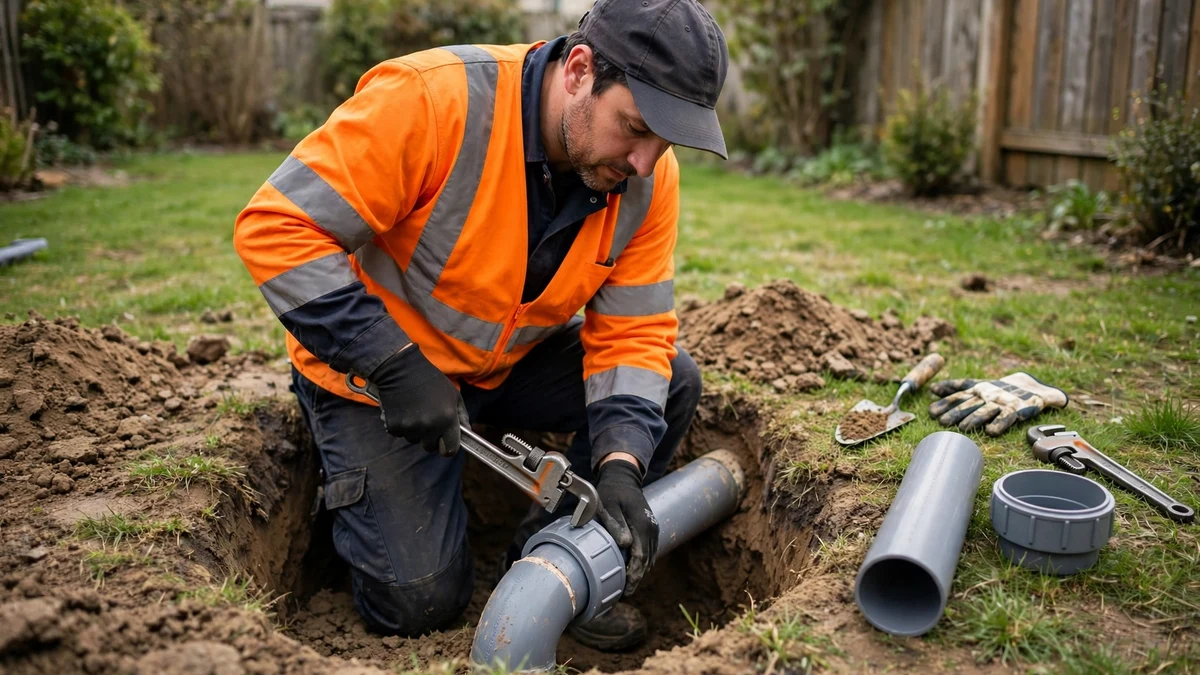
The key word is truly. A spot repair is only honest when the camera has shown the whole line, not just the bad section. If the footage shows one failed joint and sound pipe on both sides, a sectional fix is proportionate. If it shows joint after joint failing, or corrosion running the full length, a spot repair would be a patch on a line that needs replacing, and we say so rather than selling the smaller job. The inspection decides the scale, and the repair matches it.
Maine lines often present this pattern in a particular way. Clay pipe laid before the 1970s fails joint by joint, and the first joint to go is not always a sign that every joint has gone. Cast iron corrodes unevenly, and one section can channel away while the next still holds its wall. A spot camera run that maps the damaged section precisely, and a locator mark on the ground above it, are what let a sectional repair be surgical rather than approximate.
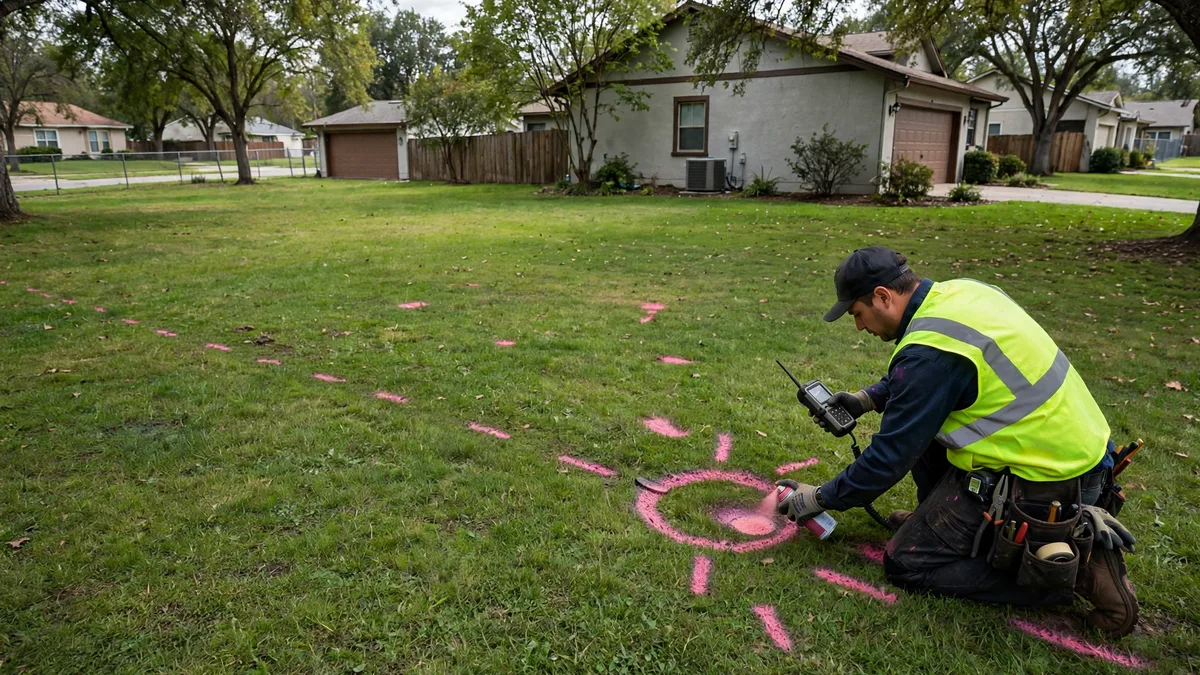
Sectional excavation is the most direct method. A small excavation opens over the damaged section, the failed piece comes out, and a new section goes in with a coupling at each end. The opening is far smaller than a full trench, because only the damaged length is exposed, and the surrounding ground stays intact. This method suits a section that is crushed, badly cracked, or offset, where the pipe itself must come out to be fixed.
A sectional lining patch is the trenchless cousin. A short patch liner is placed over the damaged section from inside the pipe and cured in place, bridging a single crack or a single failed joint without digging. A patch packer carries the patch into position and holds it against the wall while it cures. This method suits a crack or a joint gap in a pipe that still holds its shape around the damage, and it leaves the surface above untouched.
A clamp repair suits a narrow case: a clean crack or a small hole in a pipe that is otherwise sound, where a repair sleeve clamped over the damage seals it. The sleeve must match the pipe material and size, and the damage must be genuinely local, or the clamp becomes a temporary cover on a failing pipe. We use this method only where the camera shows it fits, and we say plainly when it does not.
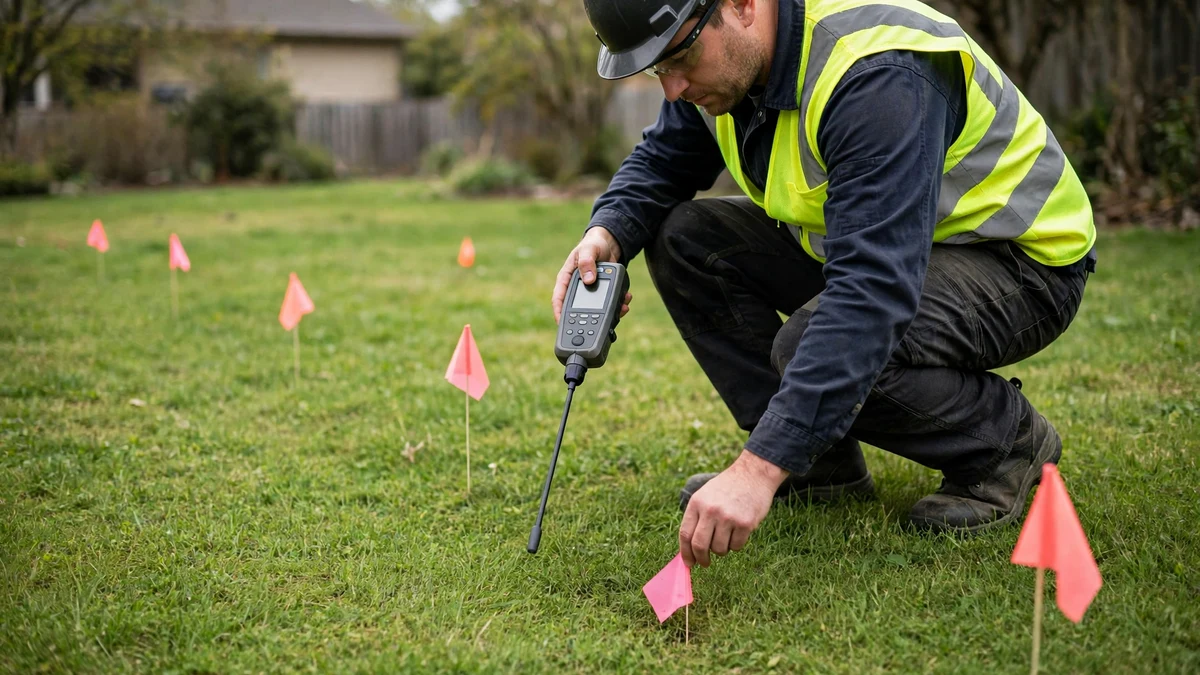
A spot repair lives or dies on location. Digging in the wrong place, or placing a patch a few feet from the damage, wastes the whole advantage of a sectional fix. The spot camera shows the damage from inside, and the locator marks its position and depth on the ground, so the excavation or the patch lands on the failed section itself. That pairing is not a detail. It is the method.
The damaged section itself is measured on the footage, not estimated. Its length decides the length of the replacement piece or the patch, and its position decides where the ground is opened. A coupling joins the new section to the old pipe at each end, and a patch liner overlaps sound pipe on both sides of the damage, so the repair does not end exactly at the edge of the crack. Those overlaps are what keep a sectional fix from becoming the next failure point.
Maine plumbing code repair provisions and ASTM sectional repair practice guide the work, and the finished section is verified by camera before the ground is closed or the job is called done. That verification run shows the new section, its couplings or its patch, and the sound pipe on both sides, so the repair is documented rather than assumed.
A spot repair is the wrong choice when the damage is not local. A line with several failed joints, corrosion along its length, or repeat root entry at joint after joint needs a fuller method, and patching one section at a time would mean returning again and again to the same line. Homeowners sometimes ask for the smaller job first, and we understand why, but a repair that is known to be temporary should be described as temporary, not sold as a fix.
It is also the wrong choice when the section cannot be located precisely. A camera run that cannot reach the damage, or a line whose path is uncertain, cannot support a surgical repair, and the honest step is further diagnosis before any repair is chosen. Guessing at a location and digging is not a spot repair. It is a gamble with a shovel.
A spot repair also preserves the parts of a line that are working well, which matters in Maine where a full replacement means opening ground that may be deep below frost and hard to restore in winter. Fixing one section now, and keeping the sound sections under watch with a camera record, is often the most sensible use of effort and disruption.
Where the damage is local and the location is certain, though, a spot repair is often the best value on the whole site. It fixes the failure, preserves the sound pipe, and leaves the homeowner with a line whose condition is known section by section. The related services tell the rest of the story: trenchless pipe lining for damage that runs longer, sewer camera inspection for the diagnosis that makes a spot repair possible, and tree root removal when the local damage is a root entry that needs cutting first.
Yes, when the camera shows the damage is confined to one section and the pipe on both sides is sound. A sectional excavation, a lining patch, or a clamp repair can fix that section alone, without replacing the whole line.
A spot camera shows the damage from inside the pipe, and a locator marks its position and depth on the ground above. That pairing lets the excavation or patch land on the failed section itself, rather than an estimate of where it sits.
When the damage is not local: several failed joints, corrosion along the full length, or repeat root entry at joint after joint. In those cases a fuller method, such as lining, bursting, or excavation, is the honest answer, and patching one section would only delay it.
It is a repair of one damaged section of a sewer line, by sectional excavation, a sectional lining patch, or a clamp repair, while the sound pipe on both sides stays in place.
A single crack, one failed joint, or a localized root entry, where the camera shows the rest of the line is sound. The damage must be genuinely local for the repair to be honest.
Sometimes. Sectional excavation opens a small area over the damaged section. A lining patch, by contrast, is placed from inside the pipe and needs no digging at the damage itself.
The new section or patch is new material joined to the existing line, and its life depends on the condition of the pipe around it. The camera verification run shows the finished section and the sound pipe on both sides.
It depends on the rest of the line. If the camera shows the remaining pipe is sound, a spot repair can stand on its own. If it shows widespread wear, we say so and talk through the fuller options.
Call (207) 819-0831 or email info@sewerlinerepairmaine.com. A camera inspection comes first, so the damaged section can be located and the repair matched to it.
Start by telling us what you are seeing. We will talk through the symptoms and the next step from there.
01
A full-length renewal when damage runs beyond one section.
02
The diagnosis that locates the failed section precisely.
03
Cutting roots out when a local entry is the cause.
Last updated: October 28, 2026