01
Pipe Bursting Replacement
A trenchless renewal for a lateral that still offers a pull path.
House to street line
The sewer lateral is the pipe that carries wastewater from a house to the public sewer main in the street. It starts at the house connection, where the building drain leaves the foundation, and runs under the yard to the curb connection, where it joins the main. It is usually the homeowner's responsibility along that run, and it is the part of the sewer system most homeowners never think about until it fails.
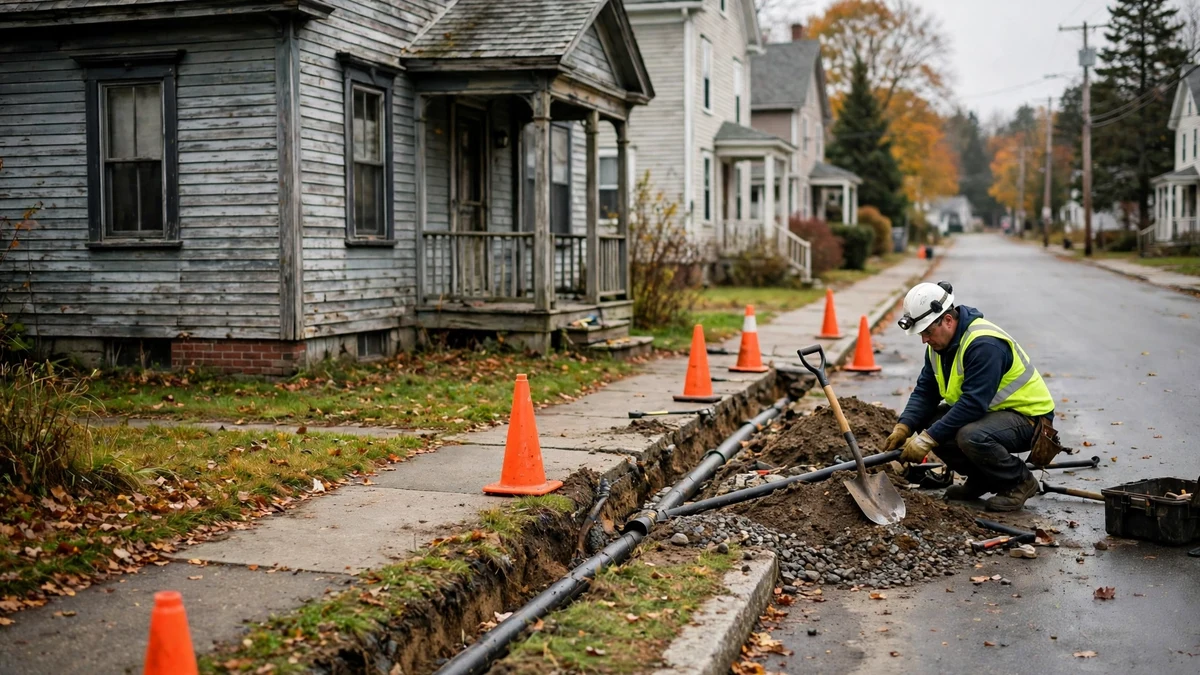
That run matters because it is the whole system for a single house. The main in the street serves the whole neighborhood, but the lateral serves one property, and when it fails, that property alone feels it. A lateral can be clay, cast iron, PVC, or HDPE depending on when it was laid and whether it has been replaced before, and its condition is independent of the main: a sound street main does not rescue a failing lateral, and a failing lateral does not mean the main is at fault.
Laterals in Maine carry the same age story as the rest of the state's lines. Maine has the oldest housing stock in the country, and a lateral laid with a house built before the 1970s is often clay with joints every few feet, while a lateral from before the 1980s is often cast iron that corrodes from the inside. The lateral's age usually matches the house, because the two were built together, and that is why an older home's lateral deserves a camera look even when the drains still seem fine.
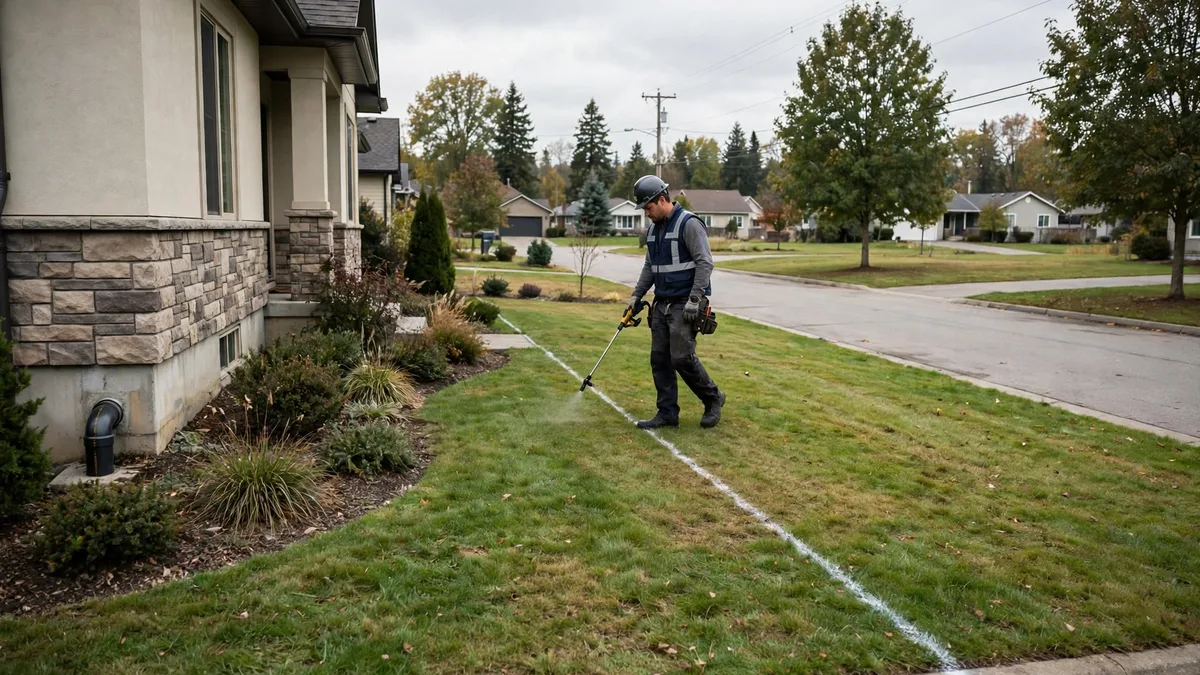
A lateral runs from the house connection through the yard to the curb connection at the street, and its exact path follows the ground between those two points rather than a straight line on a map. It usually leaves the foundation at the lowest drain level, falls steadily toward the street, and passes under the lawn, and sometimes under a driveway, a walk, or planting, on its way. Its depth follows the local frost depth, commonly four to five feet or more in Maine, so the pipe sits deep enough to stay below the freeze.
Knowing that path matters before any replacement is planned. A lateral camera run shows the inside of the run, and a locator marks its path and depth on the ground, so the replacement can be planned around what sits above it: a driveway that would be expensive to open, a tree whose roots already reach the line, or a walk that could be spared by a trenchless method. Without that map, a replacement plan is a guess about where the pipe runs.
Ownership along the run also matters, and it varies by municipality. Municipal lateral ownership rules decide where the homeowner's responsibility ends and the public system's begins, and that boundary is usually at or near the curb connection. We explain where that boundary sits for a given property before work starts, because it decides which part of the run the replacement covers and who is responsible for the rest.
The signs of lateral failure are the signs of a line that serves one house. Drains across the whole house slow together, because the lateral is the single exit for all of them. Backups repeat after cleaning, because the cause is in the pipe wall or the pipe shape rather than in a passing blockage. Gurgling spreads from fixture to fixture, and a sewer smell appears in the yard over the lateral's path, where a leaking joint lets gas escape through the soil.
Lateral joint failure shows itself first at the joints, which are the weak points of a clay lateral in particular. Each joint is a place where roots can enter and soil can wash in, and once one joint opens, the joints beside it often follow. Lateral root intrusion follows the same pattern: roots find the first open joint, grow inside, and spread along the line. Lateral sag, a dip in the run where waste pools, causes repeat blockages that cleaning clears for a while and then returns, because the shape of the pipe is the problem.
A camera inspection confirms which of these is happening and where. The lateral camera travels the run from the house connection toward the curb, and the footage shows each joint, each root mass, and each sag in order, with the locator marking the position of each finding. That ordered picture is what turns a set of symptoms into a replacement plan with a defined length and a defined method.
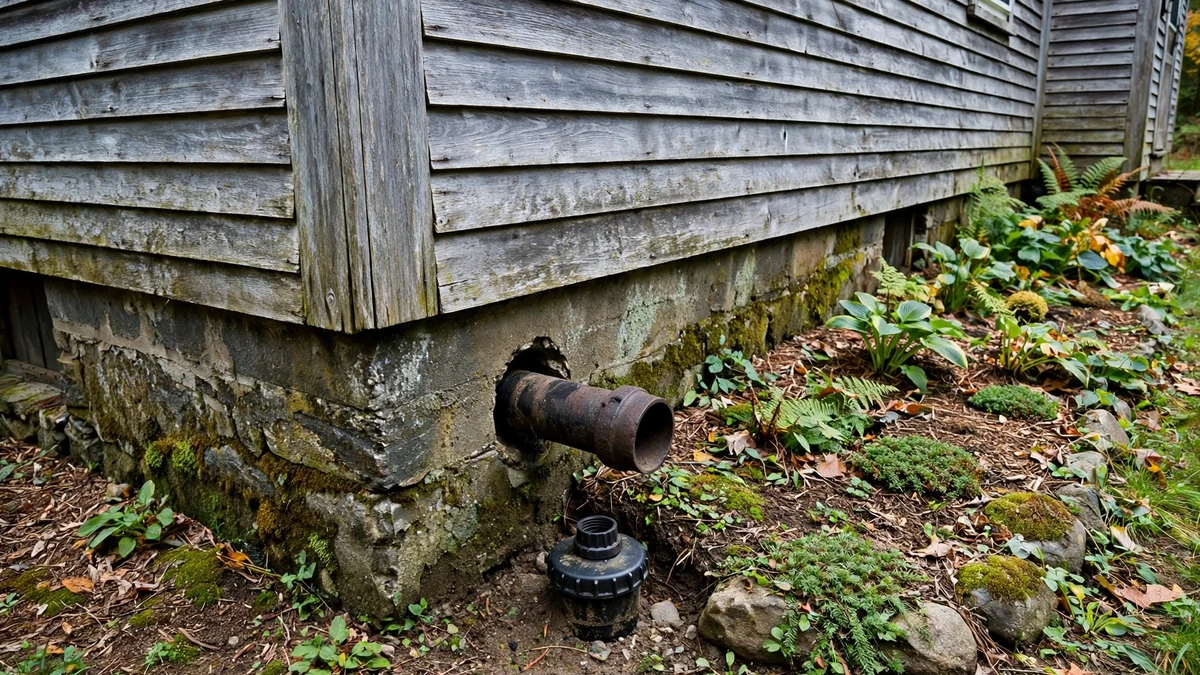
A lateral replacement follows the same method choice as any sewer replacement, applied to this one segment. Lateral excavation opens a trench along the failed run and lays a new pipe, usually PVC or HDPE, with its grade set to fall steadily toward the curb connection. Lateral bursting pulls a new pipe through the old lateral's path through entry and exit pits, sparing the ground between them. Lateral lining forms a new pipe inside the old lateral where the host pipe still holds its shape. The camera findings decide which of the three fits, and the method is chosen for the segment, not borrowed from another job.
The connections at each end deserve as much care as the run itself. The house connection must join the building drain cleanly, and the curb connection must join the public main properly, because a replacement that leaks at either end has not solved the problem. Those connections are checked by camera after the work, along with the new run itself, so the finished lateral is verified end to end.
Maine plumbing code lateral provisions guide the work, including the depth, the materials, and the connection details, and the finished lateral is recorded with its footage so future work on the property starts from a known condition. A lateral replacement is not a small job, but it is a defined one: one segment, one path, one set of connections, renewed as a whole.
When the signs of lateral failure appear, the first step is a camera inspection of the lateral itself, not a general clearing. Clearing can relieve a backup, but it cannot show whether the cause is a joint, a root mass, or a sag, and it cannot show how long the damaged stretch runs. The inspection gives the length, the cause, and the method in one visit, and the replacement decision follows from it.
The related methods each have their own page, and they are worth reading with this one. Pipe bursting replacement explains the trenchless renewal of a lateral that still offers a pull path, traditional sewer line replacement explains the open trench option for a lateral that has lost its path or grade, and sewer camera inspection explains the first step for all of them. The lateral is a segment, and this page is about that segment. The method pages are about how it is renewed.
It is the pipe that carries wastewater from a house to the public sewer main in the street, running from the house connection under the yard to the curb connection. It serves one property, and it is usually the homeowner's responsibility along that run.
Drains across the whole house slowing together, backups that repeat after cleaning, gurgling that spreads from fixture to fixture, and a sewer smell in the yard over the lateral's path. A camera inspection confirms which cause is behind the symptoms.
By excavation along the run, by bursting a new pipe through the old lateral's path, or by lining a new pipe inside the old lateral. The camera findings decide which method fits, based on the lateral's shape, damage, and path.
It connects a house to the public sewer main in the street. It starts at the house connection, runs under the yard, and joins the main at the curb connection.
Usually the homeowner, along the run to the curb connection, though the exact boundary varies by municipality. We explain where that boundary sits for a property before work starts.
Clay and cast iron in older homes, PVC and HDPE in newer work and replacements. The material usually matches the age of the house, because the two were built together.
Sometimes. Bursting and lining renew a lateral through small openings where the line qualifies, while excavation is needed when the lateral has lost its path or grade. The camera decides.
A camera inspection shows the difference. Cleaning clears a blockage, while a lateral with failed joints, root intrusion along its length, or a sag needs a renewal method, not another clearing.
Call (207) 819-0831 or email info@sewerlinerepairmaine.com. A camera inspection of the lateral comes first, and the replacement plan follows from what it shows.
Start by telling us what you are seeing. We will talk through the symptoms and the next step from there.
01
A trenchless renewal for a lateral that still offers a pull path.
02
Open excavation for a lateral that has lost its path or grade.
03
The camera run that maps the lateral before any renewal.
Last updated: October 28, 2026