01
Emergency Sewer Line Repair
Help for a sewer line that has failed suddenly and needs attention right away.
Maine Sewer Line Specialists
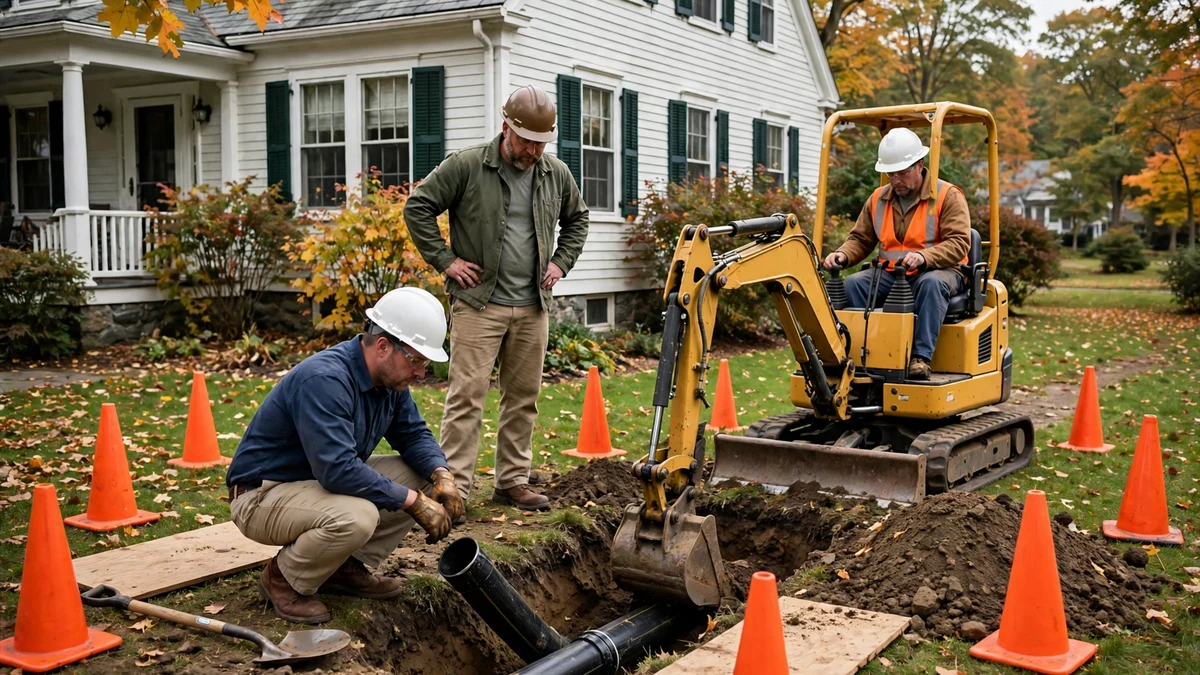
16
Sewer line services
15
Maine cities served
16
Homeowner guides
1
Trade: sewer lines only
Maine has the oldest housing stock in the country, and old houses usually sit over old pipes. Clay pipe from before the 1970s cracks at its joints and lets roots in. Cast iron from before the 1980s corrodes from the inside. Orangeburg pipe from the 1940s to the 1970s has passed its working life. We work on those lines every day, and we start with a camera, not a guess.
Our trade is narrow on purpose. We repair sewer lines and closely related work, and nothing else. That focus is what lets us give a straight answer about whether a line can be lined, burst, spot repaired, or needs excavation. The camera footage decides, and you keep that footage.
Maine's ground adds its own pressure. Frost depth commonly runs 4 to 5 feet or more, and up to 7 to 8 feet in northern Maine, so sewer lines here are buried deep and ground movement over decades takes a toll on joints and older materials. You can read more about how the state organizes its water and sewer work on the Maine state government site, which links to the agencies that oversee public systems.
Every service below is sewer line work and nothing else. Pick the service that matches the problem, and the page explains what it covers, when it fits, and what happens during the visit.
01
Help for a sewer line that has failed suddenly and needs attention right away.
02
A small camera sent down the line to show exactly what is wrong before any work starts.
03
A resin lining cured inside the existing pipe, so the yard stays mostly untouched.
04
The failed pipe is split open underground as its replacement is drawn through behind it.
05
A full dig-and-replace job, used when the old line is past any trenchless fix.
06
One bad section repaired on its own, with the healthy pipe around it left alone.
07
The section from your house to the street main, replaced when that stretch has failed.
08
A high-pressure water jet that scours grease, scale, and debris off the pipe walls.
09
Snaking and mechanical clearing that opens a line stopped up by a blockage.
10
Root masses cut out of the line, with the joints they entered through checked after.
11
New pipe in place of clay or cast iron that has simply run out of life.
12
A brush-applied seal coat for a pipe that is worn but still structurally sound.
13
Return visits on a set schedule, checking an aging line before trouble starts.
14
A one-way valve fitted to the line so a surge cannot push sewage back inside.
15
Tracing a drain smell back to the crack, dry trap, or failed joint behind it.
16
Line work sized for stores, offices, restaurants, and other business properties.
Pipe age is the story in Maine. Portland's median year built is 1945, which means half of Portland homes were built before that year, and more than 40 percent of homes in Portland and Bangor were built before 1939. Homes that old were often connected with clay or cast iron, and those materials fail in known ways: clay at the joints, cast iron along the bottom where corrosion channels the pipe, Orangeburg by flattening and collapse.
Newer pipe tells a different story. PVC and ABS pipe from the 1970s onward has tight joints and smooth interiors, and it resists roots far better than clay. When we inspect a line, the material and its age shape what we expect to find, but the camera still has the final word.

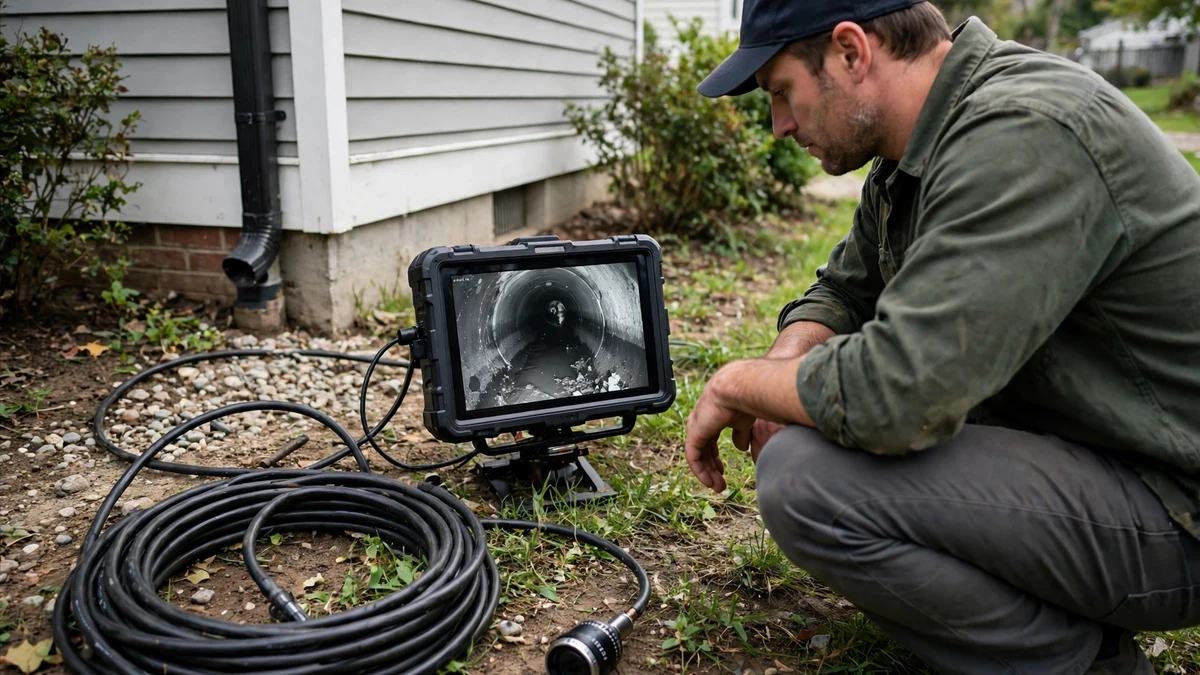
Clay, cast iron, Orangeburg, and PVC each tell a different story when a camera runs through them. Clay shows joint gaps and root entry. Cast iron shows rough scale and channeling along the bottom. Orangeburg shows deformation and flattening after decades in wet ground. PVC shows tight joints and a smooth interior, and problems there usually come from a single joint, a belly, or outside damage rather than material age. Knowing the material helps a homeowner understand why a repair is suggested, but it never replaces the footage itself.
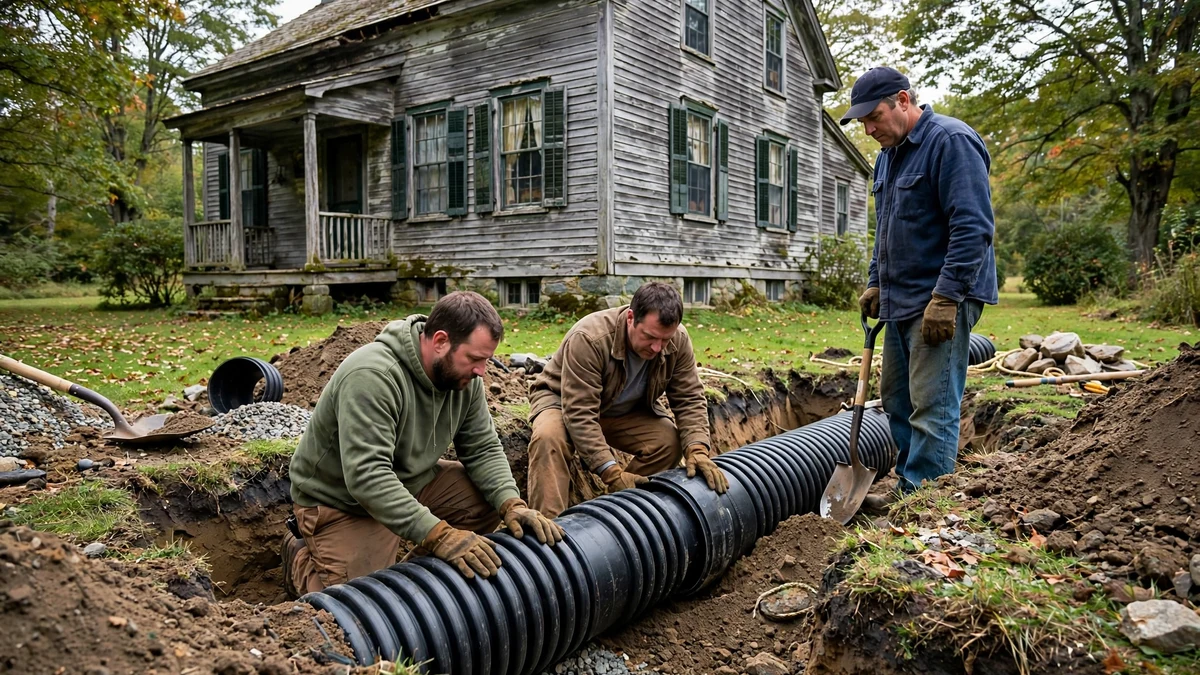
When a line is replaced, the new pipe is bedded in gravel, laid to a steady grade so waste flows downhill without pooling, and connected at the house and at the street. That grade matters as much as the pipe itself: a line laid flat or with a dip will collect waste and block again, no matter how new the pipe is.
Our service area centers on the sewered cities of Maine: the Portland metro, Lewiston and Auburn, Bangor, Biddeford and Saco, and the Kennebec Valley cities. Around half of Maine homes use septic systems, and those homes need a septic specialist, not us. Our city pages cover the places where public sewer serves homes, and each one names the city, its primary ZIP, and what to expect there.
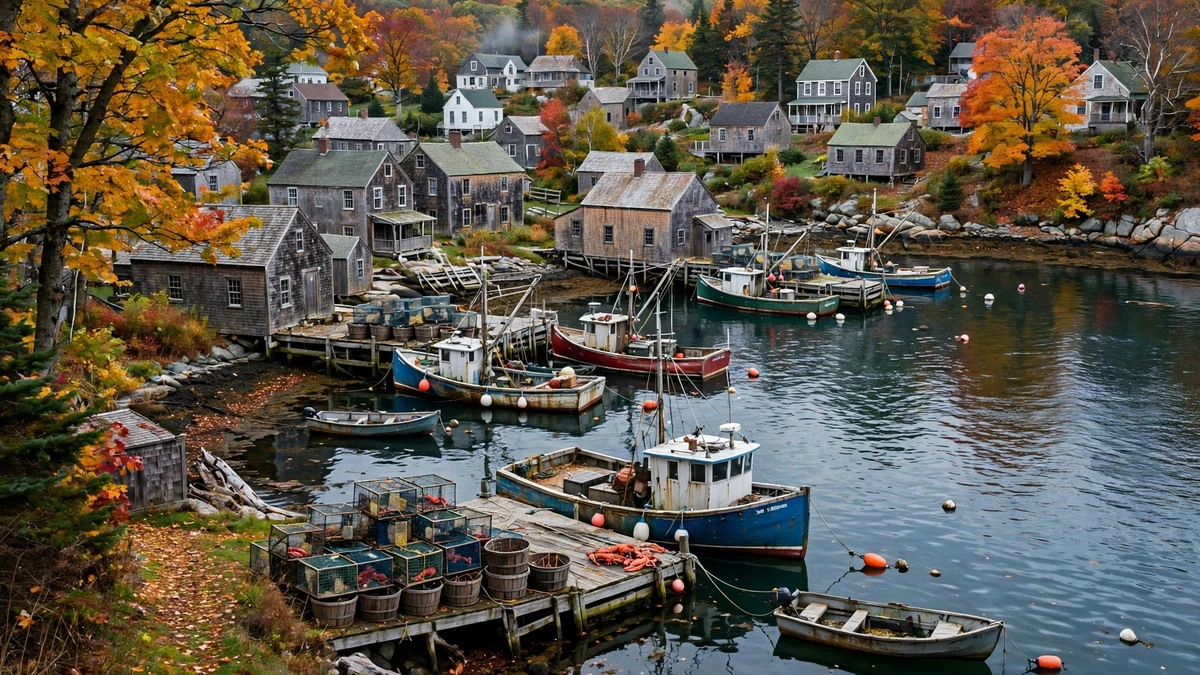
Coastal ground adds its own strain. Homes near the water often sit in soil that stays wet, and wet soil moves more with frost and thaw than dry soil. That movement works on joints year after year, which is one more reason old coastal lines deserve a camera check before they fail outright.
The state's biggest city, where brick streets and pre-war homes sit over very old pipe.
Just over the bridge from Portland, a coastal city with its own older streets.
Maine's second-largest city, a mill town on the Androscoggin with deep pipe history.
Across the river from Lewiston, sharing its mill past and its aging lines.
The Queen City of the Penobscot, anchoring the north with a sewered downtown.
A fast-growing mill city on the Saco River, old homes and new streets side by side.
A growing river city beside Biddeford, mixing old neighborhoods with new building.
Portland's mill-town neighbor along the Presumpscot, with housing from every era.
Maine's fastest-growing suburb, where new subdivisions meet long-settled streets.
A college town west of Portland where farmhouses stand beside newer developments.
York County's spread-out former mill city, with a sewered center and older neighborhoods.
Maine's capital on the Kennebec, its downtown core on the city sewer system.
A Kennebec Valley college city with a sewered center and older surrounding streets.
A coastal town with a college and its own sewer district serving the core.
A southern coastal town, about half on the sewer district and half on septic.
Slow drains, smells, and repeat backups: the warnings that show up before a failure.
What the camera actually shows you, and how to make sense of each finding.
Two ways to fix a line, and how to tell which one your situation calls for.
The way tree roots hunt for water in a line, and the damage they leave behind.
Why a basement drain pushes water back, and what each cause points to.
Septic tank or city sewer: how to work out which one your home has.
Yes. We are a statewide sewer line repair business, and our work centers on the cities and larger towns that have municipal sewer systems, including the Portland metro, Lewiston and Auburn, Bangor, and the Kennebec Valley cities.
Slow drains across the house, repeated backups, gurgling, and sewer smells are the usual signs. A camera inspection shows the line itself, so the cause is confirmed before any repair is chosen.
No. We work on sewer lines that connect to a public sewer system. About half of Maine homes use septic systems instead, and septic work is a different trade. Our blog post on sewer lines versus septic systems explains how to tell which system a home uses.
Not always. Trenchless lining and pipe bursting need far less digging than open excavation, but they do not fit every line. A collapsed pipe, a deep belly, or a badly offset joint can make excavation the honest answer, and the camera footage decides that.
We listen to the symptoms, run a camera through the line where the problem allows, and explain what the camera shows in plain words. You keep the camera footage, and the repair options follow from what it shows.
Call (207) 819-0831 or email info@sewerlinerepairmaine.com. Our office address is 400 Congress St, Portland, ME 04101, United States.
If drains are slow, backups repeat, or a smell will not go away, start with a camera inspection. It shows the line, and from there the right repair is usually clear.
Last updated: October 28, 2026