01
Pipe Bursting Replacement
A trenchless replacement for lines that still offer a pull path.
Open trench replacement
Traditional sewer line replacement means opening a trench along the failed line, removing the old pipe, and laying a new one in its place. It is the oldest method in the trade, and it remains the right answer for the hardest lines: a collapsed pipe that has lost its shape, a deep belly that has lost its grade, and a badly offset joint that no trenchless method can bridge honestly. For those lines, digging is not the fallback. It is the repair.
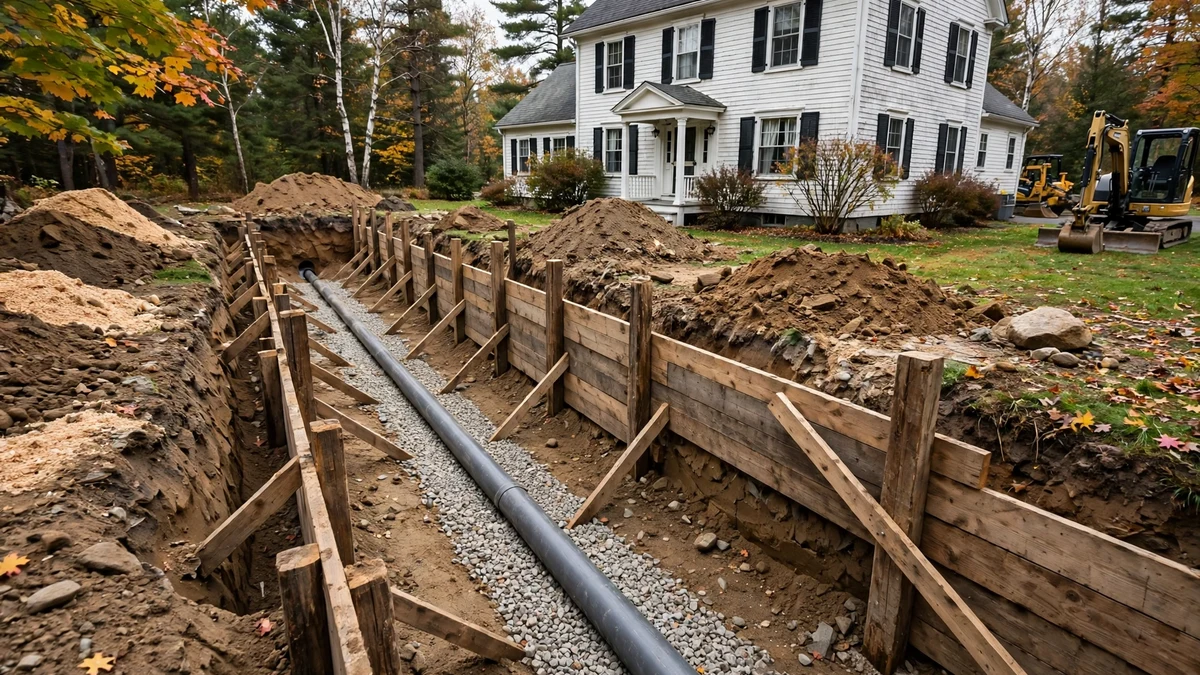
The advantage of an open trench is that everything is visible. The old pipe comes out, the trench bottom is prepared, the new pipe goes in on bedding gravel, and the grade is set and checked by eye and by level before the trench is closed. There is no guessing about what the new pipe sits on or whether it falls correctly toward the street, because both can be seen and measured while the trench is open. That visibility is worth the disruption when the line itself has failed beyond what trenchless methods can reach.
Maine conditions shape this work in specific ways. Frost depth commonly runs four to five feet or more, and northern Maine runs deeper, so a sewer line here sits deep, and its trench is a serious excavation. Maine plumbing code pipe burial provisions govern how deep the new pipe sits and how it is protected, and OSHA trench safety standards govern how the trench is held open while people work in it. Those rules are not paperwork. They are what keep a deep trench safe and a new pipe sound through freeze and thaw.
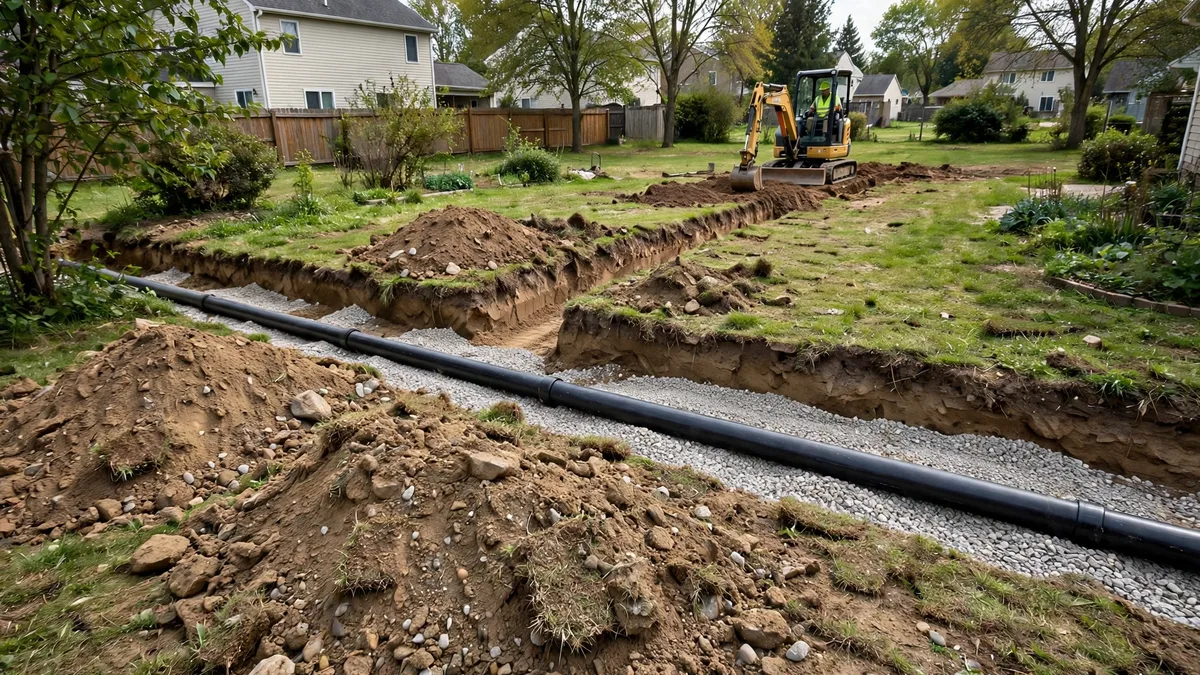
The job starts the same way every repair starts: with a camera inspection and a locator run that marks the line's path and depth on the ground. That map decides where the trench opens and how long it runs, and it keeps the excavation as short as the failure allows. A line that has collapsed along its full length needs a full-length trench. A line that has failed in one long stretch needs a trench over that stretch, and the sound sections can stay.
An excavator opens the trench, and trench shoring holds the walls where the depth or the soil calls for it. The old pipe comes out in sections, and the trench bottom is prepared with bedding gravel so the new pipe sits on a stable, even bed rather than on lumps of soil or rock. The replacement pipe, usually PVC or HDPE, goes in section by section, with ductile iron fittings where the connections call for them, and each joint is made carefully, because a joint made in a hurry in an open trench is a joint that will leak later.
Gravity grade reset is the quiet, critical part of the job. A sewer line works by falling steadily toward the street, and a line that has bellied or sagged has lost that fall. In an open trench, the grade can be reset along the full run: the bedding is shaped, the pipe is laid to a steady fall, and a level confirms it before backfill. That reset is something no trenchless method can offer a bellied line, because a liner or a bursting head follows the existing shape, dip included.
Open excavation disrupts the ground it crosses, and a homeowner should hear that plainly before agreeing to it. A trench across a lawn means turf and planting removed along the run, and a trench across a driveway means paving opened and restored. The work takes longer on the ground than a trenchless job, and the restoration, backfill in layers with a compactor, takes care to settle correctly.
We keep that disruption as small as the failure allows. The trench follows the marked line, not a wider corridor, and the excavated soil is kept in an orderly pile for backfill rather than spread across the yard. Where the line runs under a section of ground that can be avoided by a trenchless method, we say so and offer that method, because digging a line that could have been lined or burst is wasted disruption.
But where the camera shows collapse, a deep belly, or a badly offset joint, digging is the honest answer, and pretending otherwise would cost more later. A liner over a deep belly leaves the belly. A bursting head through a line that has lost its path stalls. An open trench replaces the failed pipe outright, resets its grade, and leaves a new line whose condition is known because it was seen going in.
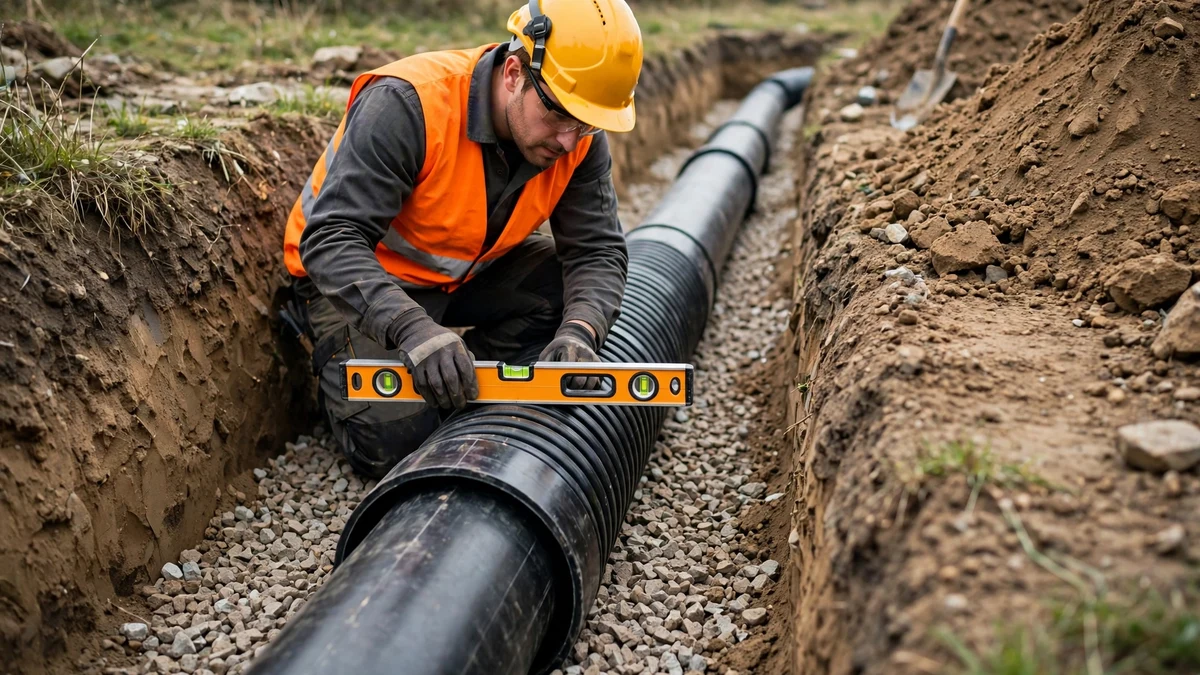
The replacement pipe goes in on bedding gravel, and a riser is set where the line needs an access point for future inspection. That riser matters more than it looks: a line that can be inspected through a proper access point can be checked with a camera in future years without digging, and a line without one cannot. Building access into the replacement is part of doing the job properly, not an extra.
Backfill follows in layers, compacted as it goes, so the ground over the new pipe settles evenly rather than sinking in a line across the yard months later. The surface is restored to match what was there, and the camera runs once more through the finished line to confirm the grade, the joints, and the connections. That final camera run closes the loop that the first inspection opened: the line that was diagnosed by camera is verified by camera.
After a traditional replacement, the rest of the system still deserves a look where it was not replaced. A line that failed in one stretch often shares its age and material with the stretches that remain, and a camera check of those stretches shows whether they need planned work or simply watching. Our sewer camera inspection page explains that check, and our pipe bursting replacement page covers the trenchless alternative for lines that still offer a pull path.
When the pipe has collapsed, when a deep belly has destroyed its grade, or when a badly offset joint cannot be bridged. Trenchless methods follow the existing pipe shape, so they cannot restore a shape or a grade that is gone. An open trench replaces the pipe and resets its fall.
Usually, yes. Maine frost depth commonly runs four to five feet or more, so sewer lines sit deep, and their trenches are serious excavations held to trench safety standards. The depth is part of why the camera and locator map the line before any digging starts.
Bedding is the gravel bed the new pipe sits on, shaped so the pipe falls steadily toward the street. Backfill is the soil returned over the pipe in compacted layers, so the ground settles evenly rather than sinking along the trench line.
It is open trench excavation: the failed pipe is dug up and removed, and a new pipe is laid in its place on bedding gravel, with its grade set and checked before the trench is closed.
When it has collapsed, when a deep belly has destroyed its grade, or when a joint is badly offset. Those conditions cannot be fixed by a method that follows the existing pipe shape.
Usually PVC or HDPE, with ductile iron fittings where the connections call for them. The choice depends on the line, the depth, and the connections at each end.
It follows the existing line, which in Maine usually sits below frost depth, commonly four to five feet or more. The camera and locator map the depth before digging starts.
Yes. OSHA trench safety standards govern how the trench is held open, including shoring where the depth or soil calls for it, and the trench is closed in compacted layers afterward.
Call (207) 819-0831 or email info@sewerlinerepairmaine.com. A camera inspection comes first, and the excavation plan follows from what it shows.
Start by telling us what you are seeing. We will talk through the symptoms and the next step from there.
01
A trenchless replacement for lines that still offer a pull path.
02
The house-to-street segment, often replaced by excavation.
03
A smaller excavation when only one section has failed.
Last updated: October 28, 2026