01
Traditional Sewer Line Replacement
Open excavation when a line has lost its path or grade.
New pipe, less digging
Pipe bursting replaces a sewer line without digging it all up. A bursting head travels through the old pipe, breaking it apart as it goes, while a new HDPE pipe follows directly behind it into the space the old pipe occupied. The old line is not removed in pieces. It is fragmented in place, and the new pipe takes its path, so the ground above the run stays largely undisturbed apart from an entry pit and an exit pit at each end.
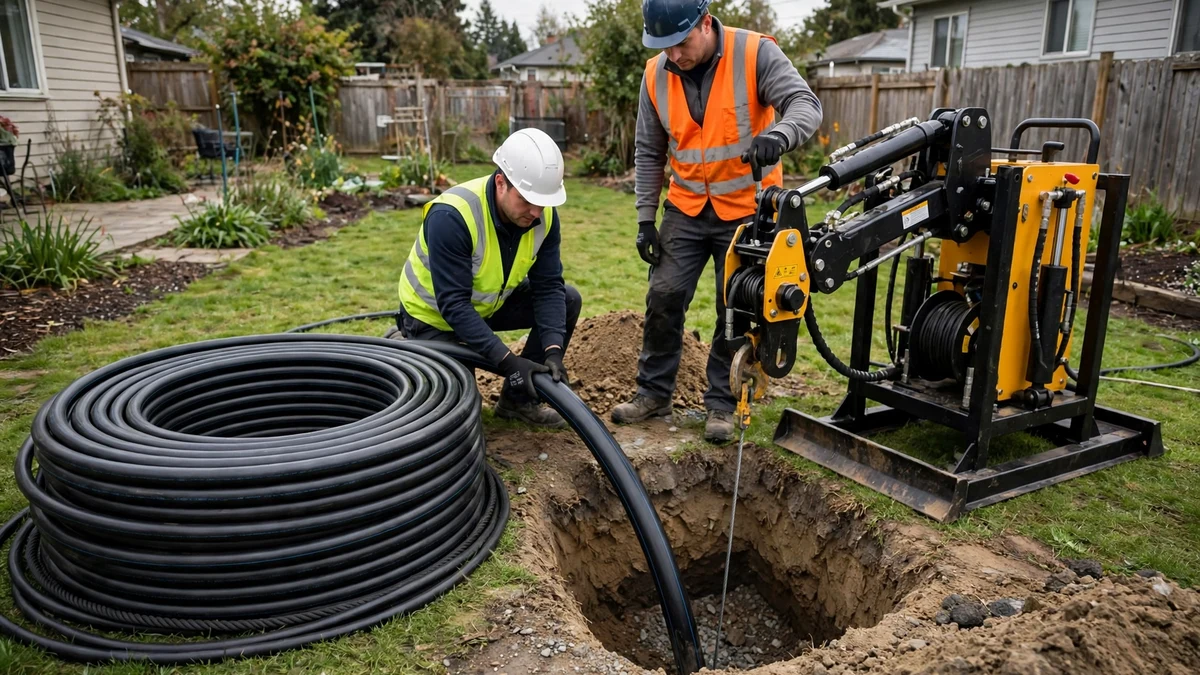
That path matters. The new pipe follows the old line's route, which means the replacement does not need a new trench across a yard, and it does not need the old pipe to be dug out first. The method suits lines that have failed structurally but still offer a path to pull through, and it is a genuine replacement rather than a repair: at the end of the job, the pipe in the ground is new from end to end.
The new pipe is usually HDPE, a tough, jointless material that resists the root entry and joint failure that ended the old line. PVC is also used in some bursting work. Either way, the replacement line has far fewer joints than the clay line it replaces, and joints were the weak point of that old line. A clay line laid before the 1970s has a joint every few feet, and every one of those joints was a place for roots and soil to enter. A continuous new pipe removes that whole pattern of weakness at once.
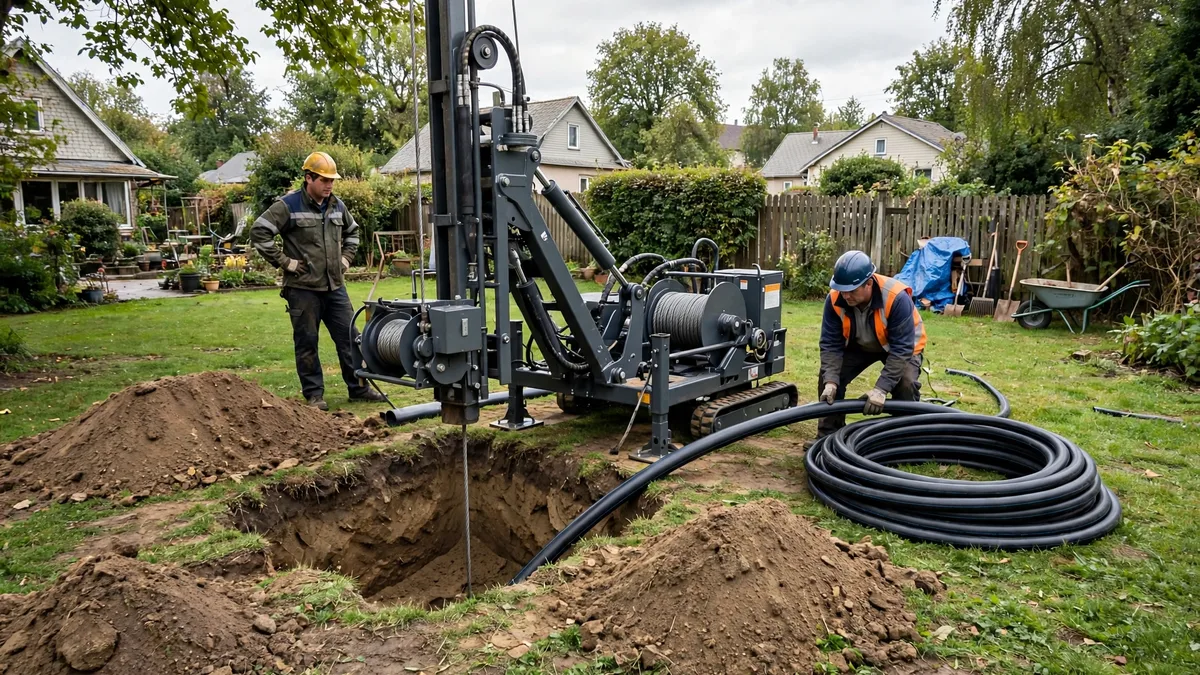
Bursting fits a collapsed clay pipe well, because the bursting head can break apart brittle clay and pull the new pipe through the fragments. It fits a failed Orangeburg line for the same reason: Orangeburg, the bituminized fiber pipe laid from the 1940s to the 1970s, deforms and collapses with age, and its softened wall breaks apart readily under the bursting head. It fits an undersized line too, because the bursting head can expand the path slightly, allowing a new pipe of the same size or a step larger to take the old line's place.
It does not fit every line. A line that has lost its path entirely, with a section so collapsed that the bursting head cannot travel, may need excavation at that point before bursting can continue. A line running very close to other buried services needs careful location work first, because the bursting head expands the ground around the old pipe as it travels. A line with a sharp bend or a badly offset joint may also resist the pull, and the camera footage shows those problems before the bursting gear is set up, not after.
That is why the camera inspection comes before any bursting decision. The footage shows the material, the collapse pattern, and the bends, and the locator marks the line's path and depth on the ground. If the footage shows a path the bursting head can follow, bursting is a strong option. If it shows a line that has lost its path, we talk about excavation instead, and the conversation is grounded in the picture, not in a preference for one method.
Two bursting methods cover most jobs. Pneumatic bursting drives the bursting head forward with a hammering action, breaking the old pipe in short, powerful strokes while the new pipe follows. Static bursting pulls the head steadily through the line with a hydraulic puller, a slower and more controlled advance that suits lines where the surrounding ground or nearby services call for a gentler approach. The expander on the head sets the size of the new path, and the puller holds the new pipe in tension behind it.
The choice between them depends on the old material, the ground, and the length of the run. Brittle clay and softened Orangeburg break well under either method. A longer run or a line in denser ground may suit the steady pull of a static system, while a shorter run in forgiving ground may suit the faster advance of a pneumatic head. The technical choice is ours to make from the site conditions, and the outcome is the same in both cases: a new pipe in the old line's place, with only the entry and exit pits opened.
ASTM pipe bursting practice guides the work, and Maine excavation safety rules govern the pits themselves, since even a small pit is an excavation that must be held safely. The pits are dug, shored where needed, and restored after the pull, and the ground between them is left as it was, apart from the new pipe now running beneath it.
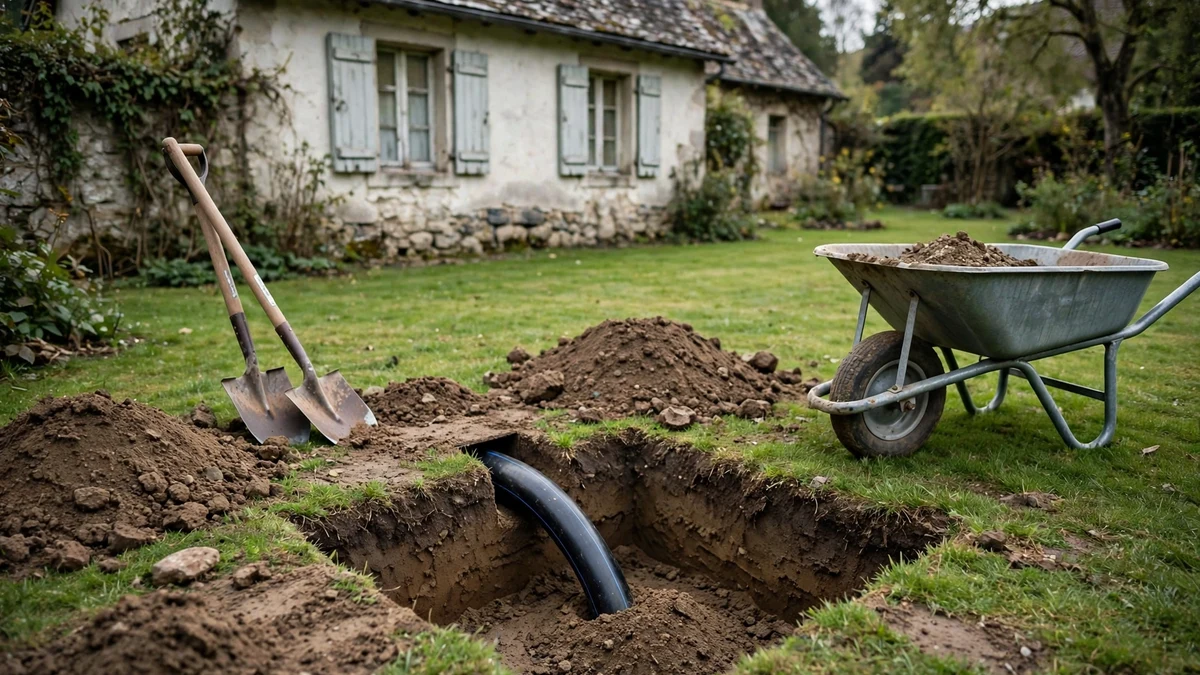
On the day, the visible work is concentrated at two points. The entry pit is opened where the new pipe will start, and the exit pit where the bursting head will arrive. Between those pits, the lawn, the driveway, and any planting stay in place, because the bursting head travels underground. That concentration is the main practical advantage over open excavation, especially where the line runs under a long stretch of finished ground.
The pull itself is steady work rather than dramatic work. The bursting head enters the old pipe, the hydraulic puller draws it forward, the old pipe fragments behind the head, and the new HDPE pipe follows into the opened path. Technicians watch the pull from both pits, checking that the new pipe advances evenly and that the line holds its grade. When the head reaches the exit pit, the new pipe is connected at each end, the connections are checked, and the pits are backfilled and restored.
Restoration after bursting is smaller than after a full trench, but it still matters. The pits are backfilled in layers and compacted, and the surface is returned to its previous state as closely as the work allows. A homeowner comparing methods should weigh that whole picture: bursting leaves two restored pits, while traditional replacement leaves a restored trench along the full run. The right choice still depends on the line itself, and the camera footage is what settles it.
Bursting sits between lining and excavation in what it does. Lining keeps the old pipe and builds a new wall inside it, which suits a damaged pipe that still holds its shape. Bursting removes the old pipe's function entirely and replaces it, which suits a pipe that has failed structurally but still offers a pull path. Excavation removes the old pipe physically and lays a new one in an open trench, which suits a line that has lost its path or its grade altogether.
For a homeowner with a collapsed clay line, that distinction is the decision. Lining cannot follow a collapsed shape. Excavation can replace it, but at the cost of a full trench. Bursting can replace it through two pits, provided the path holds. When the path does not hold, excavation is the honest fallback, and we say so from the camera picture rather than after a failed pull.
The related methods each have their own page, and they are worth reading together before deciding. Trenchless pipe lining explains the inside-the-old-pipe option, traditional sewer line replacement explains the open trench option, and sewer lateral replacement explains the house-to-street segment that bursting often renews. The camera inspection page explains the first step for all of them.
A bursting head travels through the old pipe, breaking it apart, while a new HDPE pipe follows directly behind into the same path. Only an entry pit and an exit pit are dug, so the ground between them stays largely undisturbed.
Yes, when the line still offers a path for the bursting head to follow. Brittle clay breaks apart readily under the head, and the new pipe takes its place. If the line has lost its path entirely, excavation is the honest answer instead.
It depends on the line. Bursting leaves far less surface disruption than a full trench, but it needs a pull path and clear space around the old pipe. A line that has lost its path or grade still needs excavation, and the camera footage decides which fits.
It is a trenchless replacement method where a bursting head breaks the old pipe apart underground while a new pipe is pulled into its place, with only an entry pit and an exit pit dug.
Usually HDPE, a tough, continuous pipe with far fewer joints than the clay line it replaces. PVC is also used in some bursting work, depending on the line and the site.
Yes. Orangeburg, the fiber pipe laid from the 1940s to the 1970s, softens and collapses with age, and its wall breaks apart readily under the bursting head, making it a good bursting candidate when a pull path remains.
Much less than a full trench. The visible work is concentrated at the entry and exit pits, and the ground between them stays largely as it was, apart from the new pipe running beneath it.
The camera inspection before the job is meant to catch that. If the footage shows a line that has lost its path, we talk about excavation instead, before the bursting gear is set up.
Call (207) 819-0831 or email info@sewerlinerepairmaine.com. A camera inspection comes first, and the bursting decision follows from what it shows.
Start by telling us what you are seeing. We will talk through the symptoms and the next step from there.
01
Open excavation when a line has lost its path or grade.
02
A new pipe inside the old one, for damage that keeps its shape.
03
The house-to-street segment that bursting often renews.
Last updated: October 28, 2026