01
Hydro Jetting Services
High pressure water for grease and scale on the walls.
Mechanical line clearing
Sewer line cleaning is mechanical clearing for a line that is blocked. A drain snake, a steel auger cable fed into the line through a cleanout, travels to the blockage, and a cutter head on its end breaks the obstruction apart and pulls debris back out. The line is stopped, and cleaning starts it again. That is the whole service, stated plainly, and it is the right service when the problem is a blockage rather than a broken pipe or a wall coated in buildup.
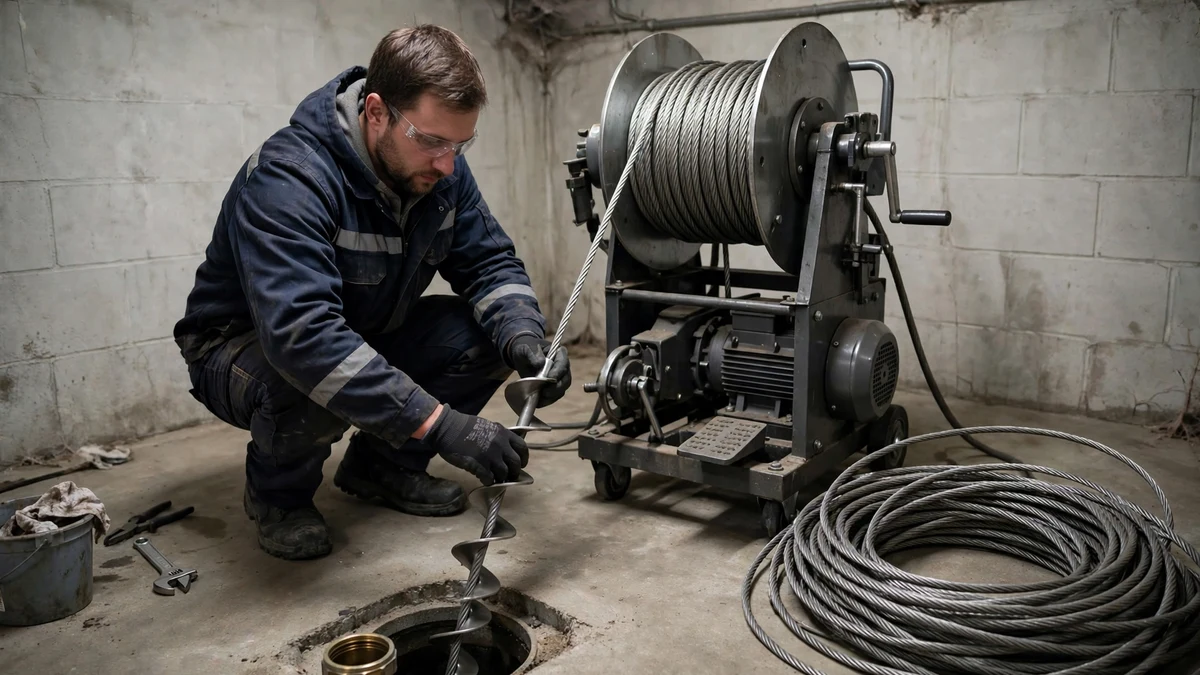
Blockages form in ordinary ways. Paper buildup collects where a pipe is rough or slightly bellied, and each flush adds to it until the bore closes. A foreign object, a toy, a cloth, or a mass of wipes, can lodge at a joint or a bend and stop the line outright. A line that keeps blocking usually has a reason behind the blockage, and cleaning addresses the blockage itself while the camera, run after the line is open, looks for that reason.
The materials of Maine lines shape how cleaning works. Clay pipe has joints every few feet, and each joint can snag paper and debris. Cast iron grows rough with corrosion, and rough walls catch waste that a smooth PVC wall would pass. PVC itself, laid from the 1970s onward, is smoother and more root resistant, but a PVC line can still block where a joint is misaligned or a foreign object lodges. Cleaning works on all three, because the snake travels the bore whatever the wall is made of, but the follow-up question differs by material, and the camera answers it.
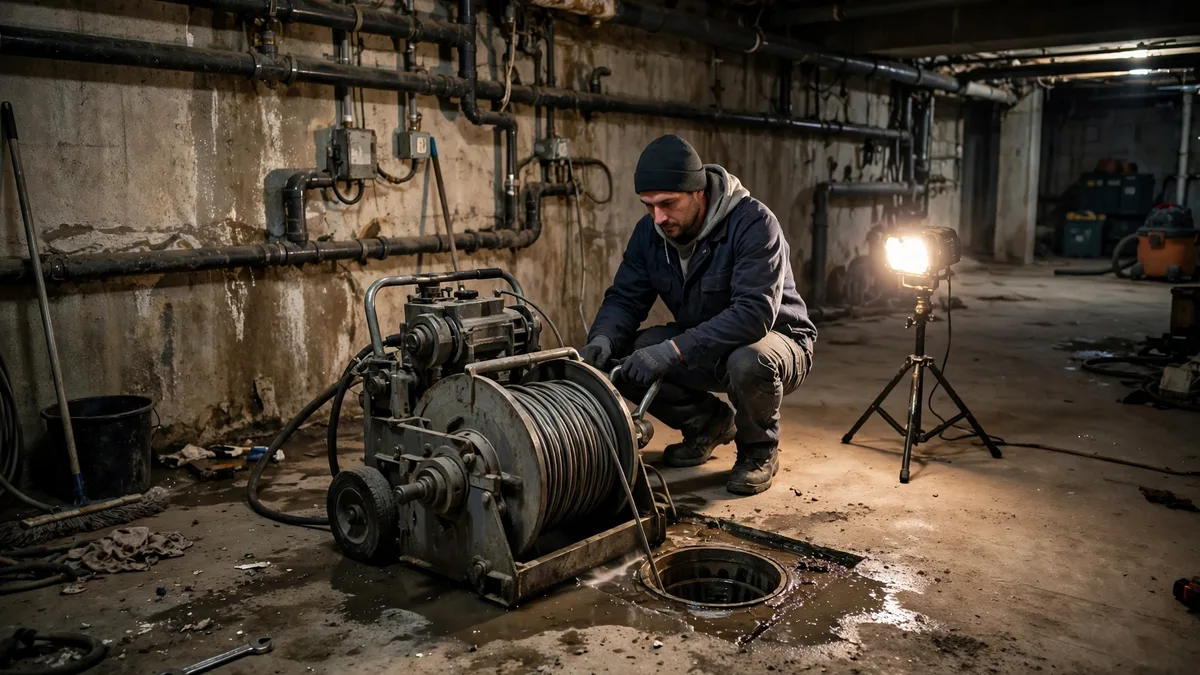
The work starts at the cleanout, the access point that lets the cable enter the main line. The auger cable goes in section by section, and the operator feels the resistance change as the cutter head meets the blockage. That feel is part of the trade: a soft, yielding resistance reads differently from a hard stop, and the operator adjusts the feed and the rotation to match, rather than forcing the cable through a resistance it cannot read.
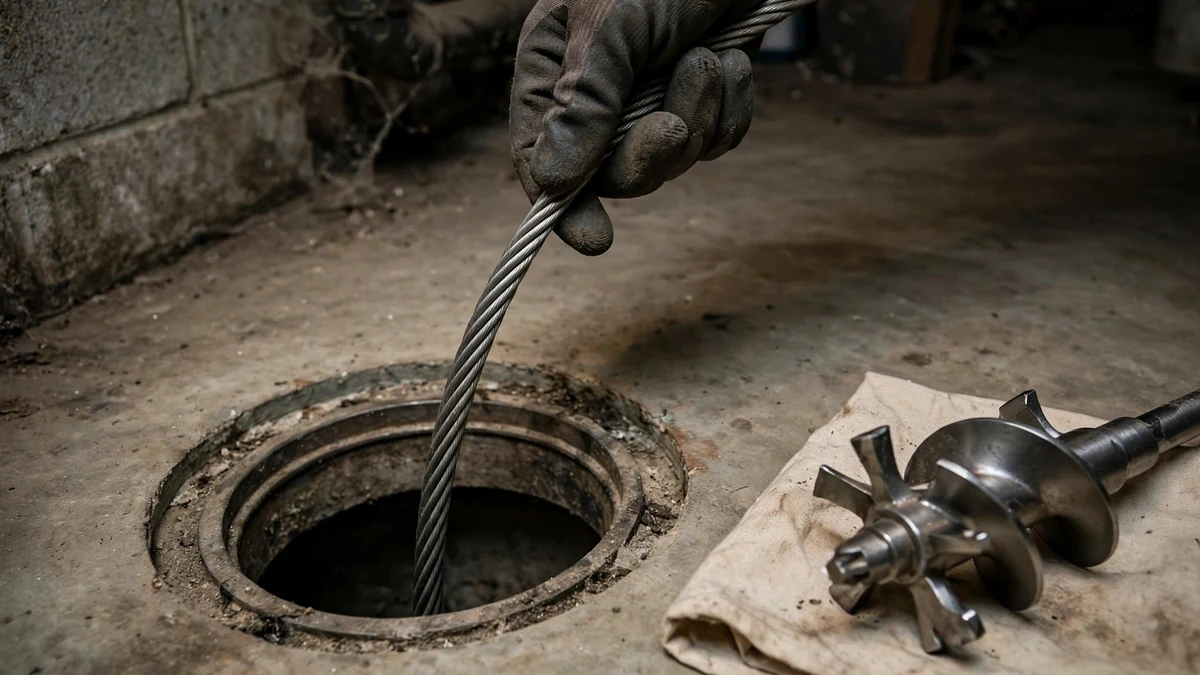
The cutter head does the breaking. Different heads suit different blockages: a blade head cuts through a mass of paper and debris, and a retrieving head pulls a foreign object back rather than pushing it further down the line. The cable is worked back and forth over the blockage until the line drains, and the debris comes back out through the cleanout rather than being pushed on toward the street, where it would become someone else's problem.
Sewer line location as a named step sits inside a cleaning visit where the blockage's position matters. A locator can mark where the cable meets the resistance, so the operator knows whether the blockage sits in the house side, in the lateral, or further out toward the main. That position shapes the next step: a blockage near the house points to a different cause from a blockage near the street, and the camera check afterward confirms which it was.
This service is snaking-led, and it is kept strictly apart from hydro jetting. Cleaning clears a blockage with a mechanical cable. Jetting cleans walls with high pressure water. A homeowner who is sold jetting for a solid blockage, or snaking for a wall coated in grease, has been sold the wrong tool, and the problem will return because the tool did not match the cause.
The test is simple. If the line is stopped, it needs clearing first, and a snake is the clearing tool. If the line runs but runs slow along its length because grease or scale has narrowed the bore, it needs wall cleaning, and a jet pass is the wall tool. If a line is stopped by grease that has hardened across the full bore, the job may need both in sequence: the snake opens the path, and the jet pass follows to clean the walls. When both are needed, both are named, not blurred into one vague service.
Scale on the walls of an old cast iron line calls for its own named step, separate from clearing a blockage. Descaling runs a jet nozzle along the line at a pressure the pipe can take, peeling the crust off the walls until the bore is smooth again. Snaking opens a stopped line; descaling restores a narrowed one, and the two are never treated as the same job. If your line needs both, the visit plan names each step, and the hydro jetting page explains the jet pass in full.
Our hydro jetting services page covers the water method in full. Reading the two pages together gives the whole clearing picture: one tool for blockages, one tool for buildup, and a camera check that decides which the line needs.
Once the line drains, the camera goes in where the line allows. That post-cleaning camera check is the most valuable part of the visit, because it shows why the line blocked. A clean bore with no damage means the blockage was a passing event, and the line can be left alone. A joint gap, a root mass, a belly, or a cracked section means the blockage will return, and the repair conversation starts from that footage rather than from another clearing.
A line that keeps blocking deserves that conversation plainly. If the camera shows a root entry, tree root removal follows. If it shows a cracked section, a spot repair or lining follows. If it shows a belly, the shape of the pipe is the problem, and excavation may be the honest answer. Cleaning buys time and restores use, but it does not fix a pipe wall or a pipe shape, and a service that pretends otherwise is selling repeat visits.
A cleaning visit also teaches the homeowner something useful about their own line: where it blocks, how often, and what comes out of it. That knowledge, kept with the camera record, turns the next blockage from a surprise into a known pattern, and a known pattern is far easier to plan around than a mystery that returns without warning.
Maine plumbing code cleanout provisions govern the access points used for this work, and drain cleaning safety practice governs how the cable equipment is handled on site. The work area is left as it was found, and the debris pulled from the line is removed rather than left behind. Those details are part of a professional visit, not extras, because a cleaning job that leaves a mess has not finished.
A steel auger cable is fed into the line through a cleanout, and a cutter head on its end breaks the blockage apart and pulls debris back out. The line is stopped before the visit and draining after it, and a camera check afterward shows why it blocked.
Because the cause is usually in the pipe, not in the blockage itself: a joint gap that snags paper, a root mass, a belly where waste pools, or a rough cast iron wall. Cleaning clears the blockage, and the camera check after it shows the cause that will block it again.
No. Cleaning is mechanical clearing with a snake, for a line that is stopped up. Jetting is high pressure water cleaning for grease and scale on the walls. They are different tools for different problems, and a line that needs both should be told so plainly.
Mechanical clearing of a blocked sewer line with a drain snake. An auger cable with a cutter head breaks the blockage apart and pulls debris back out through a cleanout.
Paper buildup at a rough joint or a belly, a foreign object lodged at a bend, or a mass of wipes. A camera check after clearing shows which cause is behind a repeat blockage.
Yes, where the line allows. The post-cleaning camera check shows why the line blocked, so a repeat blockage can be addressed at its cause rather than cleared again.
No. Cleaning clears a blockage. A cracked, collapsed, or bellied pipe needs a repair method, and the camera footage after clearing shows which one fits.
Cleaning is snaking-led clearing for blockages. Jetting is high pressure water for grease and scale on the walls. They are kept as separate services because they solve different problems.
Call (207) 819-0831 or email info@sewerlinerepairmaine.com, and describe the symptoms. Tell us which fixtures are affected and whether the blockage has happened before.
Start by telling us what you are seeing. We will talk through the symptoms and the next step from there.
01
High pressure water for grease and scale on the walls.
02
The camera check that shows why a line blocked.
03
Cutting roots out when a root entry is the cause.
Last updated: October 28, 2026