01
Epoxy Pipe Coating
Sealing a sound pipe from the inside, distinct from structural lining.
Cured in place lining
Trenchless pipe lining, often called cured in place pipe lining, forms a new pipe inside the one that is already in the ground. A felt liner or fiberglass liner soaked in epoxy resin is placed into the host pipe, pressed against its walls, and cured until it hardens into a smooth, jointless pipe within the old one. The work happens through small access points instead of a full trench, so a lawn, a driveway, and a finished basement floor can stay largely intact while the line itself is renewed.
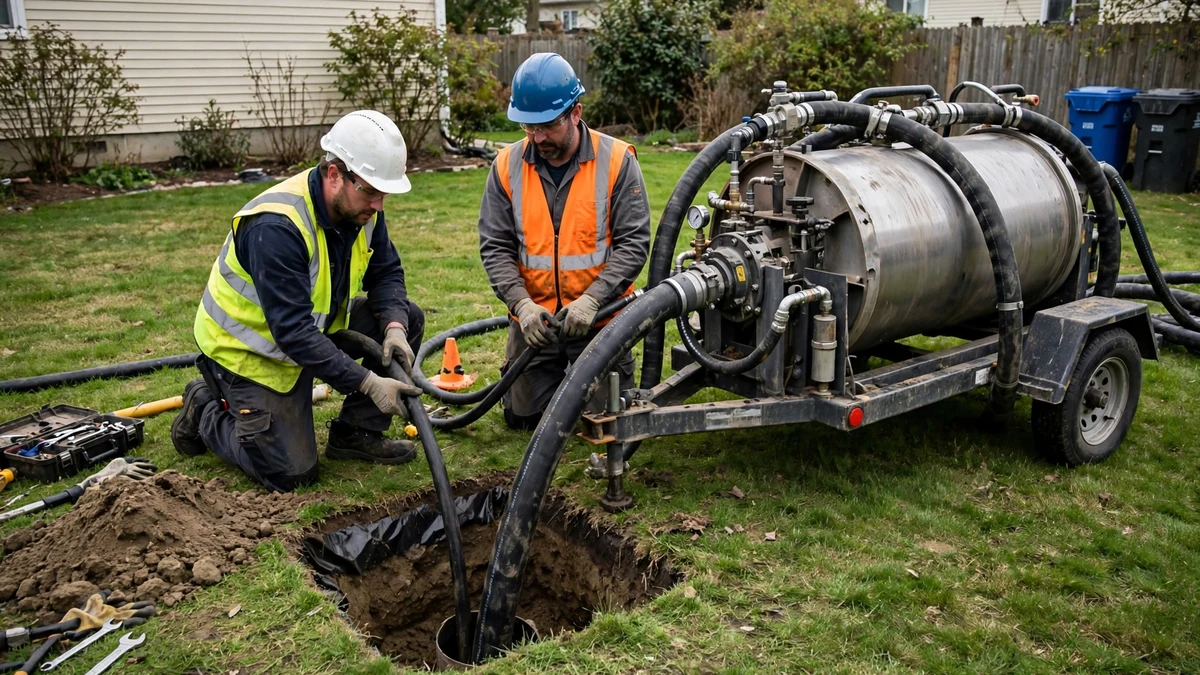
That matters most in Maine, where lines often run under ground that is expensive to open. A line under a paved drive, under a stone wall, or beneath a finished basement slab is a poor candidate for open digging, and a line under a yard that has taken years to establish is no better. Lining suits those cases when the old pipe still holds its shape, because the liner needs a host pipe to shape itself against. The camera inspection comes first, and it decides whether the pipe qualifies, since a liner cannot fix a shape that is already gone.
The materials are straightforward. Epoxy resin is the binder that hardens into the new wall, the felt liner carries it into place, and a fiberglass liner offers a thinner, stronger wall where the line needs it. The cured liner bridges cracks, seals joint leaks, and covers corrosion pitting in cast iron, turning a leaking, rough-walled pipe into a smooth channel that carries waste without catching it. The old pipe stays in the ground as the form, and the new pipe does the work.
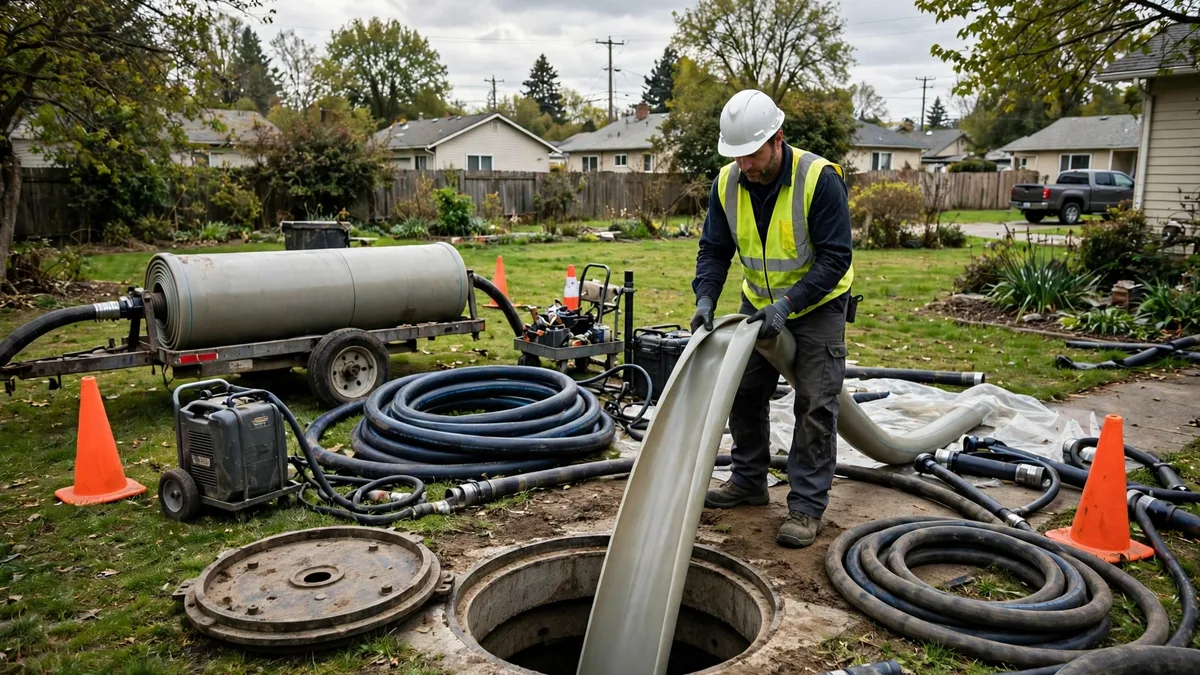
Homeowners are often offered three words as if they meant the same thing, and they do not. Cleaning clears a pipe. Lining rebuilds a pipe from the inside. Coating seals the surface of a pipe that still has its strength. Each leaves a different result behind, and each suits a different condition, so keeping them apart is the first step to choosing well.
Cleaning, whether by snaking or by jetting, removes what is inside the pipe: blockage, grease, scale, or roots. It does not change the pipe wall. When the blockage returns, it returns because the wall is still cracked, jointed, or rough, and cleaning alone will keep returning with it. Lining changes the wall itself, forming a new structural pipe that bridges cracks and closes joints, which is why it suits a damaged line that still holds its shape. Coating sits between the two in a different direction: it lays a sealing layer over a wall that is basically sound, closing pinhole leaks and minor joint seepage without rebuilding the pipe.
A useful question to ask about any proposal is what it leaves behind. If the answer is a clear pipe, that is cleaning. If the answer is a new pipe inside the old one, that is lining. If the answer is a sealed surface inside a pipe that was already sound in structure, that is coating. Our epoxy pipe coating page explains the sealing option in full, and our sewer line cleaning page covers the clearing option. When a contractor cannot say which of the three a job will produce, the job is not yet well defined.
Within lining, UV cure lining is a named variant rather than a separate service. Instead of curing the resin with hot water or steam from a curing boiler, the liner is cured by a UV light train that travels through the installed liner, hardening the resin as it goes. The result is the same kind of new pipe inside the old one, formed to the same ASTM F1216 CIPP standard, but the cure is driven by light rather than heat.
The choice between a heat cure and a UV cure depends on the line, the liner, and the access available, and it is a technical choice we make from the camera findings and the site conditions. What matters to a homeowner is not the cure method but the outcome: a continuous, jointless new wall that seals the cracks and joints the camera showed. Both variants produce that outcome when the host pipe qualifies, and neither can rescue a pipe that does not.
Sectional lining is a smaller cousin of the same idea. Where the damage is confined to one stretch, a shorter patch liner can renew that section alone, and that option is covered on our sewer line spot repair page. Full-length lining suits damage that runs along the line, and the camera footage shows which of the two fits before any liner is ordered.
Lining is a strong method, and its limits deserve the same plain treatment as its strengths. A collapsed pipe cannot be lined, because there is no host shape left for the liner to follow. A deep belly cannot be lined back to grade, because the liner follows the dip and the waste still pools in it. A badly offset joint, where one pipe section has shifted well out of line with the next, cannot be bridged honestly by a liner, because the step in the pipe remains and waste still catches on it.
In each of those cases, excavation is the honest answer, and we say so even though digging is the larger job. The camera decides, not the sales pitch: if the footage shows collapse, a deep sag, or a badly offset joint, we explain what the footage shows and talk through the excavation option instead of selling a liner that will not hold. That honesty is part of the service, because a failed liner costs more than an honest excavation planned from the start.
Other limits are subtler. A line with heavy scale may need a descaling jet pass before lining, so the liner bonds to a clean wall rather than to loose corrosion. A line whose path is uncertain may need sewer line location as a named step, marking the run on the ground so access points are placed correctly. Both steps sit inside a lining job where the camera shows they are needed, and both are discussed before the work starts, not discovered halfway through.
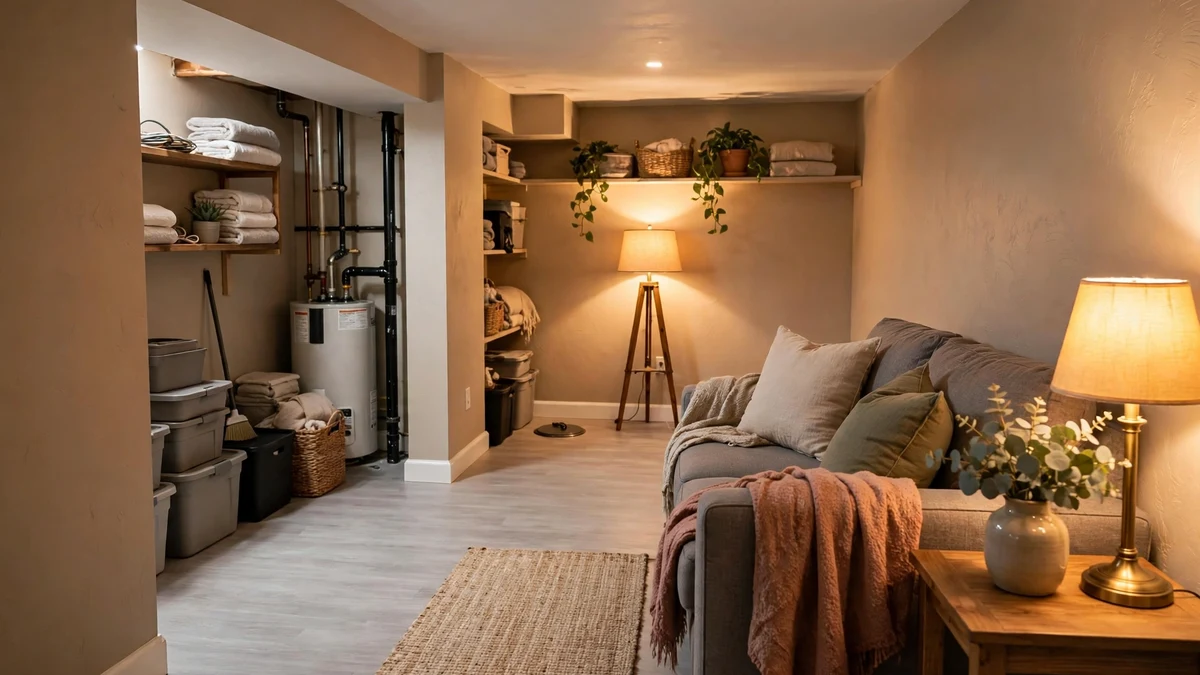
One of the strongest cases for lining in Maine is the finished basement. Many older Maine homes have basements that were finished long after the house was built, with flooring, walls, and furnishings sitting directly over the sewer line. Opening that floor to replace a pipe means tearing out finished work, and the repair cost is only part of the disruption. Lining through a cleanout access point can renew the line beneath that floor without opening it, and that single fact often decides the method.
The same logic applies to a line running under a slab, under a porch, or under a paved area. Wherever the surface above the pipe is finished, paved, or planted, a trenchless method protects that surface while the pipe itself is renewed. The access points still need care, and a small excavation at each end is normal, but the difference between two small openings and a full trench across a finished space is the difference the method exists for.
Lining also suits the rhythm of Maine winters. Frost depth commonly runs four to five feet or more, and a line buried below that frost sits deep enough that open digging in cold ground is slow and disruptive. A trenchless method that works through access points avoids much of that excavation, though the cure itself still needs proper conditions, and we plan the schedule around the season rather than pretending weather does not matter.
A lining job follows four steps, written here differently from the camera page because the work itself is different. First, we inspect. The camera run shows the cracks, joint leaks, and corrosion pitting, and confirms the host pipe still holds its shape. If it does not, we stop and talk about excavation instead. Second, we prepare. The line is cleaned, and where scale blocks the wall, a descaling pass strips it so the liner meets a clean surface.
Third, we place and cure the liner. The resin-soaked liner goes in through the access point, an inversion drum or similar placement gear presses it against the host pipe walls, and the cure follows, by heat from a curing boiler or by a UV light train for the UV cure variant. The liner hardens into its new shape inside the old pipe. Fourth, we verify. The camera runs again through the finished liner, showing the smooth new wall and the reopened connections, and that footage is part of the job record.
Maine plumbing code trenchless provisions and the ASTM F1216 CIPP standard guide the work, and the finished liner is checked against the same camera standard as the original inspection. If the verification run shows a wrinkle or a missed connection, it is dealt with before the job is called done, because a liner that has not been verified is a claim, not a result.
No. Lining needs a host pipe that still holds its shape, because the liner forms itself against the old wall. A collapsed pipe has no shape left to follow, so excavation is the honest answer, and the camera footage is what shows the difference.
Lining forms a new pipe inside the old one through small access points, while replacement removes the old pipe and lays a new one, usually by excavation or bursting. Lining suits a damaged pipe that still holds its shape; replacement suits a collapsed or deeply bellied line.
Yes, and that is one of its strongest cases. The liner goes in through a cleanout access point, so the line beneath a finished floor can be renewed without opening the floor itself, apart from small access openings at each end. That single fact often decides the method for a finished basement.
It is a trenchless method where a resin-soaked liner is placed inside the old pipe and cured into a new, jointless pipe within it. The old pipe stays in the ground as the form, and the new pipe carries the waste.
UV cure lining is a variant of CIPP lining where the resin is hardened by a UV light train that travels through the installed liner, instead of by hot water or steam. The result is the same kind of new pipe inside the old one.
A collapsed pipe, a deep belly, or a badly offset joint cannot be lined honestly. The liner follows the existing shape, so it cannot restore a shape that is gone or a grade that has sagged. Excavation is the answer in those cases.
Yes, when the host pipe still holds its shape. Lining bridges cracks in clay, seals joint leaks, and covers corrosion pitting in cast iron, turning a rough, leaking wall into a smooth new pipe.
A camera inspection comes first. The footage shows the cracks, joints, and shape of the pipe, and that picture decides whether lining, coating, bursting, or excavation fits.
Call (207) 819-0831 or email info@sewerlinerepairmaine.com, and describe the symptoms. A camera inspection is the first step, and the lining decision follows from what it shows.
Start by telling us what you are seeing. We will talk through the symptoms and the next step from there.
01
Sealing a sound pipe from the inside, distinct from structural lining.
02
The camera run that decides whether lining can work.
03
A sectional fix when only one stretch of pipe is damaged.
Last updated: October 28, 2026