01
Sewer Camera Inspection
The single camera visit that starts a scheduled plan.
Preventative line checks
A scheduled sewer inspection is a preventative, repeat camera check of a sewer line, arranged on a plan rather than after a failure. The idea is simple: a line that is known to be wearing, but not yet failed, is inspected again on a schedule, and each new inspection is compared with the last. Change over time, not a single snapshot, is what the plan watches, and the repair decision is made when the trend shows it is needed, not before and not after.
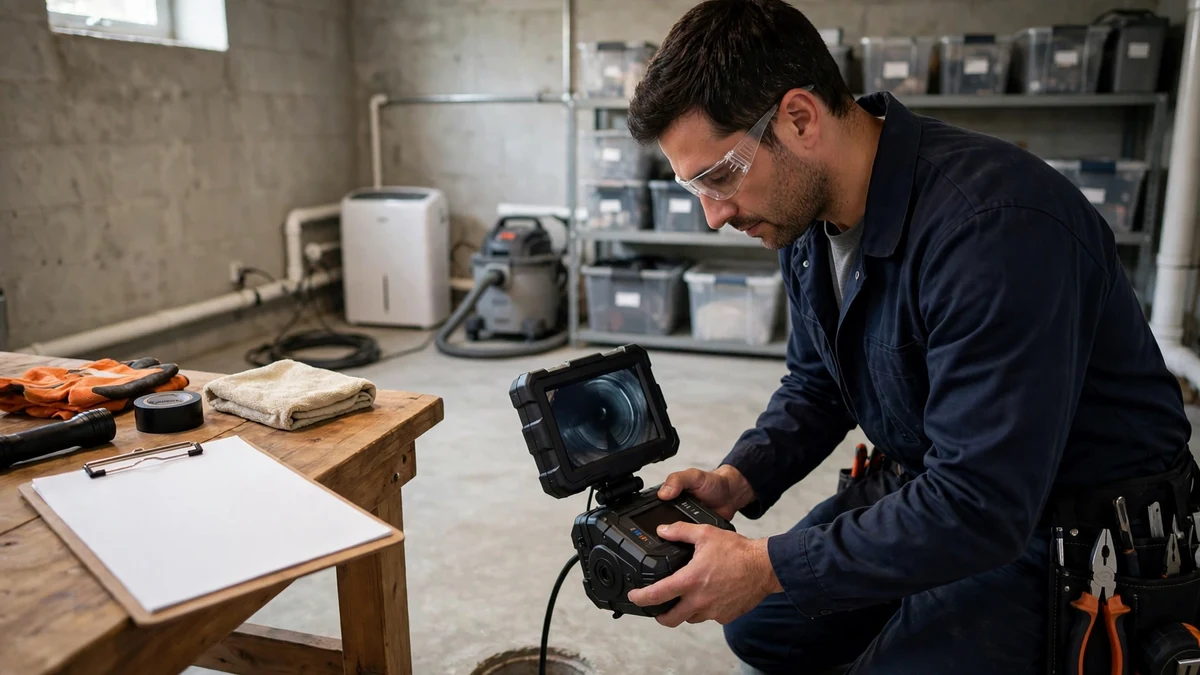
That approach suits Maine lines particularly well. The state's oldest housing stock means many lines are clay or cast iron that have been in the ground for decades, and those lines wear gradually: a joint opens a little wider, roots regrow a little further, a belly deepens a little more. None of those changes announces itself from the surface until it becomes a backup, but all of them show on a camera, and a repeat schedule catches them while they are still small.
The plan itself is straightforward. A first planned camera survey sets the baseline, recording the condition of the main line and the lateral, the materials, the joints, and any early wear. Later surveys on the agreed schedule repeat the same run, and the inspection record from each visit is kept so the next visit can be compared against it. Condition grading over time turns those records into a trend: stable, slowly worsening, or needing attention, stated plainly each time.
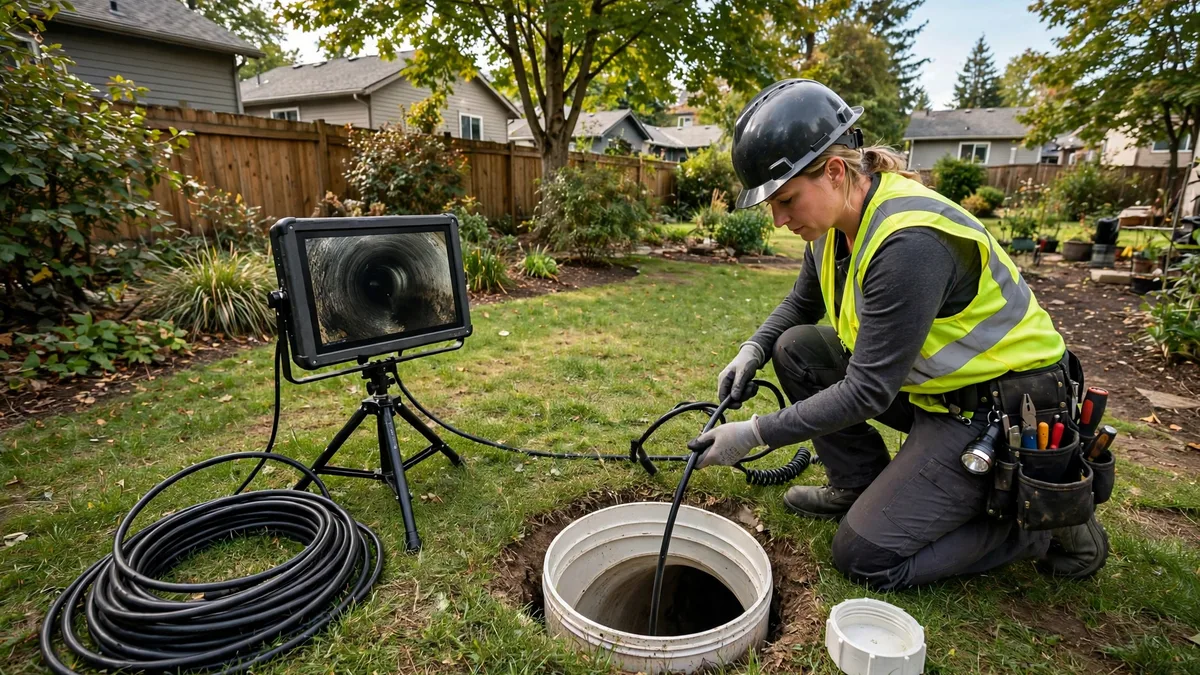
Early joint wear is the first thing a schedule watches. A clay joint that has opened slightly may not need repair now, but if the next inspection shows it wider, with soil or roots entering, the repair conversation starts before the joint fails outright. Slow root regrowth is the second: after a root cutting, the schedule shows how fast roots return to the same joints, and that rate decides whether cutting on a schedule is reasonable or whether the joints should be sealed or the line renewed.
A developing belly is the third. A shallow dip that pools a little waste may run for years without a backup, but if the dip deepens, the pooling worsens and blockages follow. A repeat camera run measures that change by showing the same dip again, deeper, and the repair decision follows the trend rather than a single alarming picture. The schedule also watches the main line and the lateral separately, because the two segments can wear at different rates, and a plan that treats them as one line misses that difference.
The materials shape the schedule too. Clay, cast iron, and PVC wear differently, and a line that mixes materials along its run needs its schedule set by its weakest segment, not its strongest. A cast iron section channeling along its bottom may need closer watching than a PVC section laid in the same run, and the inspection record notes that difference so the next visit looks in the right place first.
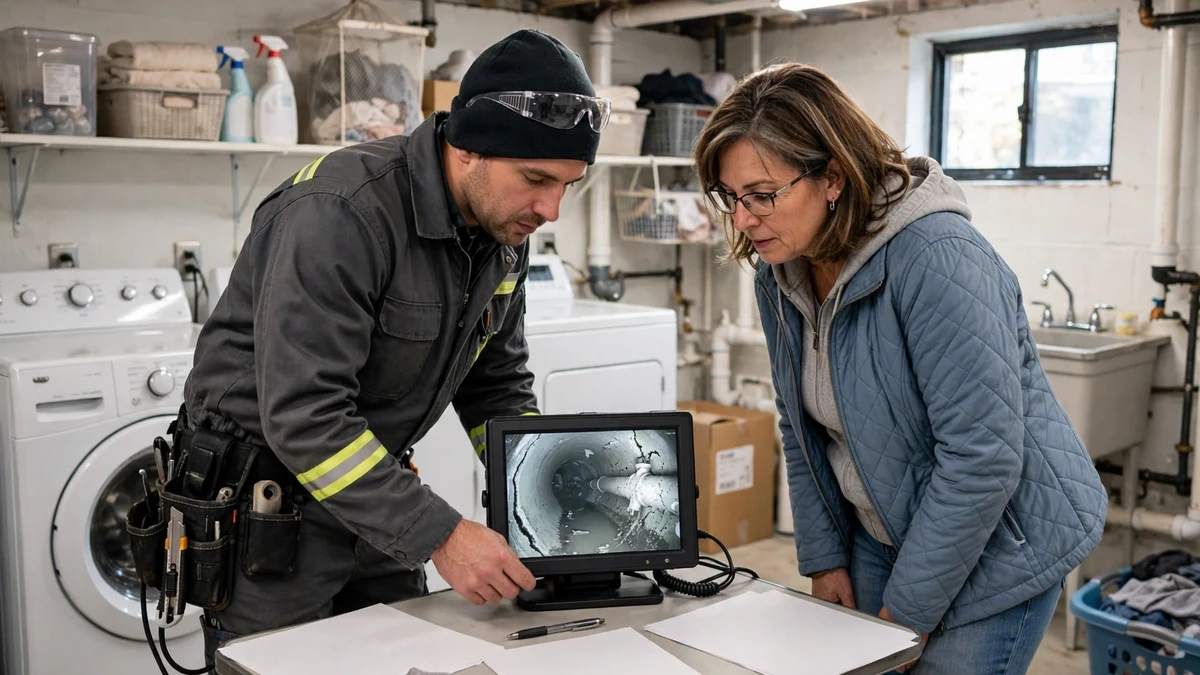
A visit on the plan follows the same careful pattern as a single inspection, with one addition: comparison. The push camera travels the line from the cleanout access, the locator marks positions, and the recording system saves the run. Then the new footage is set against the previous inspection record, and the comparison is explained in plain words: what is unchanged, what has moved, and what that movement means for the line's future.
That comparison is the value of the plan. A single inspection can say a joint is worn. A repeat inspection can say the joint is wearing, and how fast. A homeowner deciding whether to line a section, to keep cutting roots, or to wait another cycle needs that rate, not just the state, and the plan exists to provide it. The record stays with the property, so a future owner or a future tradesperson can see the line's history rather than starting from scratch.
ASTM inspection grading practice guides how findings are graded, and Maine sewer district inspection guidance shapes how inspections are recorded where a line meets a public system. Those standards keep the record consistent from visit to visit, so a comparison across years is a comparison of the line, not of changing methods.
An older home with a clay or cast iron line that is still serviceable is the natural candidate. The line is not failed, so replacement would be premature, but it is old enough that waiting for a failure would be careless, and a repeat schedule fills the gap between those two states. A home that has already had a root cutting, a spot repair, or a lining also suits a schedule, because the repaired or treated sections deserve watching to confirm they hold.
A property manager with several older properties suits a schedule for a different reason: it turns a portfolio of unknown lines into a set of records with trends, so maintenance can be planned property by property instead of reacting to backups as they arrive. A home buyer who has just had a camera inspection and found early wear, but not failure, can also start a schedule from that first inspection, using it as the baseline rather than paying for the same discovery twice.
A schedule also gives a homeowner a calmer way to plan spending on an old line. Instead of facing a sudden failure and an urgent decision, the homeowner sees the trend in the inspection record and can plan a lining, a spot repair, or a replacement for a sensible time, with the footage to justify the timing. That planning value is easy to overlook, but for a line that serves a whole house, it is often the difference between a managed renewal and a crisis.
What a scheduled inspection does not do is also worth stating. It does not promise that a line will not fail between visits, and it does not replace a repair when the footage shows one is needed. It is a watching plan with a record, and its honesty lies in saying so: the plan watches, the footage decides, and the repair follows when the trend calls for it. Our sewer camera inspection page explains the single visit that starts a plan, and our hydro jetting services and sewer line cleaning pages cover the clearing work a schedule sometimes calls for between inspections.
It is a preventative plan of repeat camera inspections on an agreed schedule, where each new run is compared with the previous inspection record. Change over time, such as a widening joint or regrowing roots, is what the plan watches, and repairs follow the trend.
It depends on the line's material, condition, and history, as shown on the first inspection. A line with early joint wear or slow root regrowth suits a repeat schedule set from that baseline, rather than a fixed interval applied to every home.
No plan can promise that. A scheduled inspection watches for change and catches wear while it is still small, so repairs can be planned before a failure, but a line can still fail between visits, and the plan does not replace a repair when one is needed.
A preventative, repeat camera inspection of a sewer line on an agreed schedule, with each new run compared against the previous inspection record to track change over time.
A single inspection shows the line's state on one day. A scheduled plan adds comparison across visits, so the rate of wear, root regrowth, or belly deepening can be seen, not just the state itself.
The footage from each visit, the condition grading of the main line and lateral, and notes on joints, roots, bellies, and materials, kept so the next visit can be compared against it.
Older clay or cast iron lines that are still serviceable but wearing, lines that have had root cutting or a spot repair, and properties where a failure would be costly to discover late.
Not automatically. If a visit shows buildup that blocks the camera's view, cleaning or jetting may be needed first, and that step is discussed before it is done.
Call (207) 819-0831 or email info@sewerlinerepairmaine.com. A first planned camera survey sets the baseline, and the schedule is agreed from what it shows.
Start by telling us what you are seeing. We will talk through the symptoms and the next step from there.
01
The single camera visit that starts a scheduled plan.
02
Jetting work a schedule sometimes calls for between inspections.
03
Clearing work that keeps a watched line running.
Last updated: October 28, 2026