By Straight Line Sewer Pros
The Short Answer Is No, Even When the Pack Says Otherwise
Municipal systems across the country report the same trouble, and the United States Environmental Protection Agency water infrastructure pages describe how wipes and similar products strain sewer systems. You can read that guidance on the EPA water infrastructure pages, which explain the problem from the public system side. This post explains it from the house side.
Why Wipes Survive the Flush
Toilet paper is made from short fibers that separate in water within seconds. Wipes are made from longer, stronger fibers, often blended with synthetic material, that resist tearing when wet. That strength is a selling point on a changing table and a liability in a pipe, because the wipe that feels sturdy in your hand stays sturdy in your line.
Once flushed, a wipe travels through the house drains and into the main line. If the line is smooth and clear, it may pass. If the line has any rough spot, and most old lines do, the wipe snags. That snag is the start of a blockage, and the next wipe snags on the first, building a mass that paper alone would never form.
What Else Should Not Be Flushed
Wipes are the most common culprit, but they are not the only one. Paper towels, facial tissues, cotton swabs, dental floss, hair, grease, and hygiene products all resist breaking down or snag in the same way. Floss is especially troublesome, because it wraps around roots and joints and binds a mass together.
The rule is simple: flush only human waste and toilet paper. Everything else belongs in the trash, even if its packaging suggests otherwise. That rule protects a house line, and it protects the municipal system downstream, where wipes combine into larger masses that strain pumps and treatment equipment.
- Flush: human waste and toilet paper only
- Trash: wipes of every kind, including those marked flushable
- Trash: paper towels, tissues, cotton swabs, and dental floss
- Trash: grease, hair, and hygiene products
If Wipes Have Already Caused a Blockage
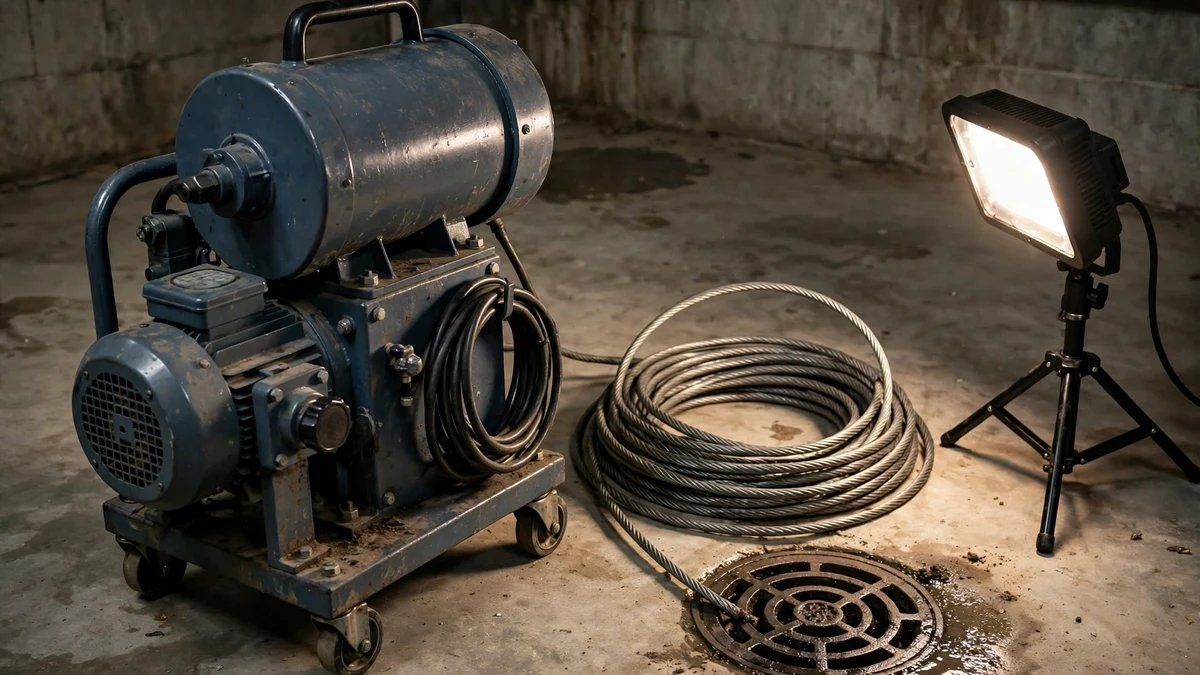
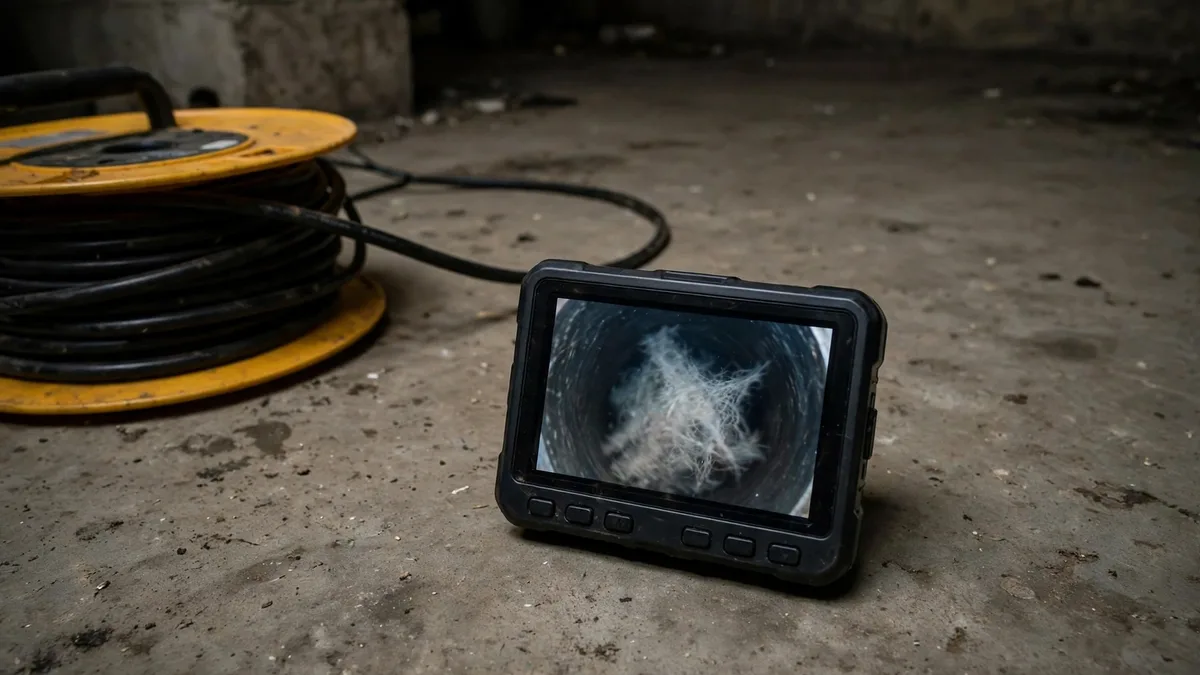
If wipes have already blocked a line, stop flushing them and stop running water until the line is cleared, since more water only pushes the mass further. A snake clearing removes the mass, and a camera check after clearing shows the snag point behind it. In some cases a hydro jetting service follows, since high pressure water clears grease and scale that a snake leaves behind.
After clearing, the habit change matters as much as the clearing. A line that blocked once from wipes will block again from wipes, because the snag point is still there. Put a small trash bin beside every toilet, and the habit becomes easy to keep. That bin is the cheapest sewer protection a house can buy, in the sense that it costs nothing beyond the bin itself.
If your drains have slowed since wipes became a habit, call us at (207) 819-0831 or use our contact page. We serve homes across Maine from 400 Congress St, Portland, ME 04101, and a camera check will show whether wipes, roots, or scale sit behind the slowdown.
Teaching a Household the New Rule
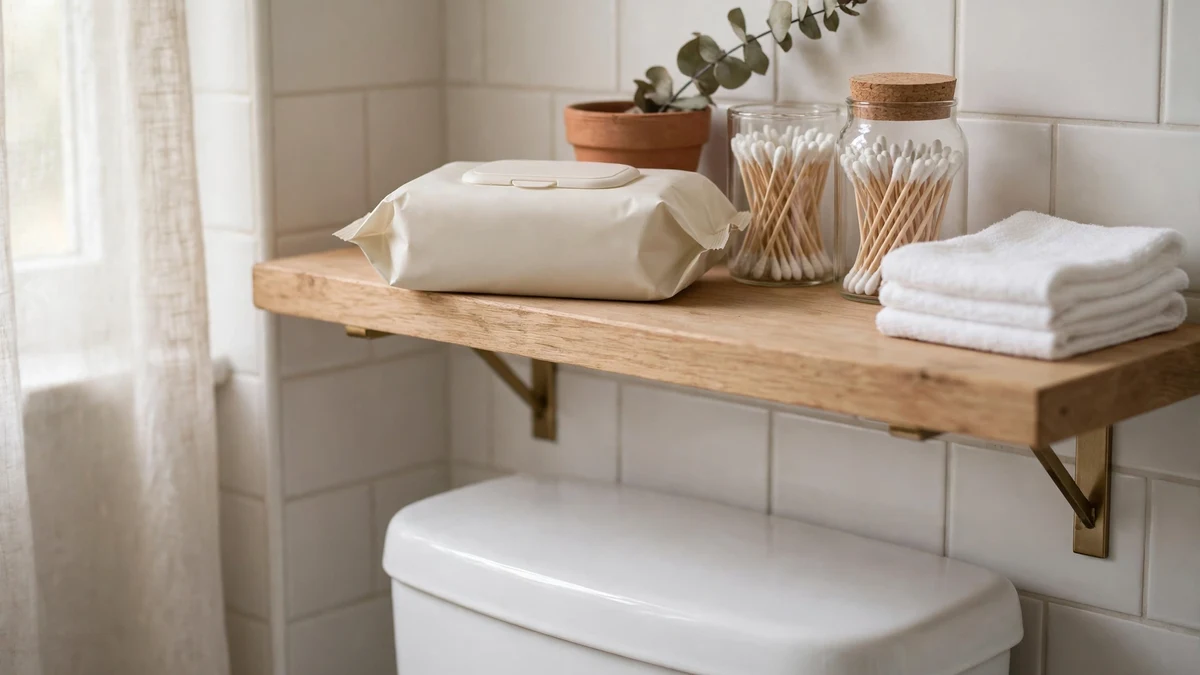
A no wipes rule only works if everyone in the house knows it, including guests and children. The simplest way to teach it is a small trash bin beside every toilet, with a lid, so the alternative to flushing is right there and easy. A bin that is visible and convenient beats a rule that lives only in conversation.
Guests deserve a gentle note, not a lecture. A small sign or a plain word when showing someone the bathroom is enough, since most guests flush wipes only because they assume the pack claim is true. Children learn the rule fastest when it is simple: only waste and toilet paper go in the toilet, and everything else goes in the bin.
Check the habit after a month. If wipes still appear in the trash rarely and drains run clear, the rule has taken hold. If drains slow again, a camera check will show whether wipes, roots, or scale sit behind the slowdown, and the household rule can be reinforced with that evidence in hand.
One place wipes hide is the bathroom of a visiting relative or a rental guest, where the rule was never mentioned. A small bin and a plain word at the door of that bathroom closes the gap, and it costs far less trouble than a second line clearing in the same season.
Finally, remember that the rule applies to every wipe, not only to the thickest ones. Thin wipes, baby wipes, and cleaning wipes all resist breaking down in the same way, and a household that bans only the thick kind still feeds the line the thin kind that causes the same snag on roots and joints.
If drains still slow after wipes are out of the routine, a sewer camera inspection will show whether a wipe snag, a root mass, or scale sits behind the slowdown, so the next step is chosen from footage.
People Also Ask
Can you flush wipes marked flushable?
No, you should not flush wipes marked flushable, since they are made from strong fibers that stay intact in water, unlike toilet paper which breaks apart quickly. Flushable on a pack means the wipe passes a test, not that it breaks down in your line before it snags.
Do wipes really clog sewer lines?
Yes, wipes clog sewer lines by snagging on scale, roots, joints, and bellies, then layering into a mass that paper alone would not form. A single wipe rarely blocks a line, but a habit of flushing wipes builds a mass that eventually stops the flow.
What happens to wipes in a sewer system?
Wipes travel intact through house drains into the main line, snag on the first rough spot, and layer into a mass that blocks flow or strains municipal pumps downstream. Unlike toilet paper, they do not break apart in water, so they arrive at every snag point whole.
Frequently Asked Questions
Are baby wipes worse than other wipes for sewer lines?
Baby wipes and other wipes cause the same trouble, since all of them use strong fibers that resist breaking down in water. The brand and the purpose do not change the fiber, so every wipe belongs in the trash rather than the toilet.
Can a sewer line handle an occasional wipe?
An occasional wipe may pass a smooth, clear line, but it still risks snagging on scale, roots, or a joint, and the risk grows with every wipe. A line that handles one wipe without trouble can still block after many, since each wipe adds to the mass at a snag point.
Do wipes damage septic systems too?
Wipes damage septic systems as well, since they do not break down in a tank and can clog pumps, filters, and drain field lines. The rule is the same for both systems: flush only human waste and toilet paper, and put everything else in the trash.
How do I clear a wipe blockage?
A wipe blockage is cleared with a snake that breaks up and removes the mass, followed by a camera check to find the snag point behind it. Hydro jetting may follow to clear grease and scale that a snake leaves behind, so the mass has less to catch on next time.
Why do wipe packs say flushable if wipes clog pipes?
Wipe packs say flushable when a wipe passes a manufacturer test for passing through a toilet, but that test does not prove the wipe breaks down in a real line with scale, roots, and joints. Public sewer agencies and sewer companies see the result daily: wipes that survive the flush and snag downstream.
What should I do with wipes instead of flushing them?
Put wipes in the trash, and keep a small bin beside every toilet so the habit is easy. That single change protects a house line from wipe masses and protects the municipal system from the larger masses wipes form downstream.