A single slow sink usually points to that one fixture. A sewer line problem shows up as a pattern instead, with several fixtures acting up at the same time or the same trouble coming back after a clearing. That pattern is the first thing we look at, because it tells us whether the trouble sits in one branch or in the main line that serves the whole house.
In Maine homes, that pattern often builds slowly. A toilet flushes a little weaker each month. A tub drains a little slower after a shower. Then a basement drain burps water when the washing machine runs. None of those moments alone proves a line has failed, but together they point below the floor, to the lateral and the main line that carry everything out to the street.
Use the lists below as a way to read your own house. Note when each sign started, which fixtures it touches, and whether it comes and goes. That record helps a camera diagnosis later, because it tells us where to look first and what kind of failure to expect.
Slow Drains Across the House Point to the Main Line
When every drain in a house slows down together, the blockage or damage usually sits in a pipe they all share. The main line collects water from kitchens, bathrooms, and laundry, so a narrowing or partial blockage there drags the whole house down at once. A single slow drain, by contrast, usually traces back to its own trap or branch.
Watch how the slowness behaves. If drains speed up again after a day and then slow down, waste may be catching on a rough spot or a partial obstruction and then washing past. If they only get worse, the opening may be shrinking as roots thicken, scale builds, or a section sags. Either way, a house-wide slowdown deserves attention before it turns into a backup, and a sewer camera inspection can show the exact spot.
Gurgling, Smells, and Wet Patches Each Tell a Different Story
Gurgling is air moving where it should not. When water drains, it pushes air ahead of it, and a healthy line vents that air up through the roof. A partial blockage traps air and forces it back through a trap, so a toilet gurgles when a tub drains or a sink bubbles when a toilet flushes. That sound is a useful clue, and it often appears well before a full backup.
A sewer smell indoors points to a different kind of opening. A dry trap, a cracked vent, or a failed seal lets sewer gas into a room, and the smell often comes and goes with wind or with use of a nearby fixture. Outdoors, a wet patch or a strip of grass that stays green and soft above the line can mean water is escaping underground. None of these signs alone names the repair, but each one narrows the search.
Repeat Backups Are the Loudest Warning
One backup after a heavy use day can come from a simple blockage. A backup that returns to the same drain, or that returns within weeks of a clearing, points to a defect that clearing cannot fix. Roots grow back through a joint. A belly holds waste and refills. A cracked section catches paper again and again. The repeat is the message.
Keep track of which drain backs up first. The lowest drain in a house, often a basement floor drain, usually shows trouble first because it sits closest to the main line. If that drain backs up while upper fixtures still work, the problem likely sits downstream of it. If upper fixtures back up too, the trouble may sit further along the line. That detail shapes where a camera run starts.
Backups that return to the same drain after a clearing
Backups that follow heavy water use, such as laundry day
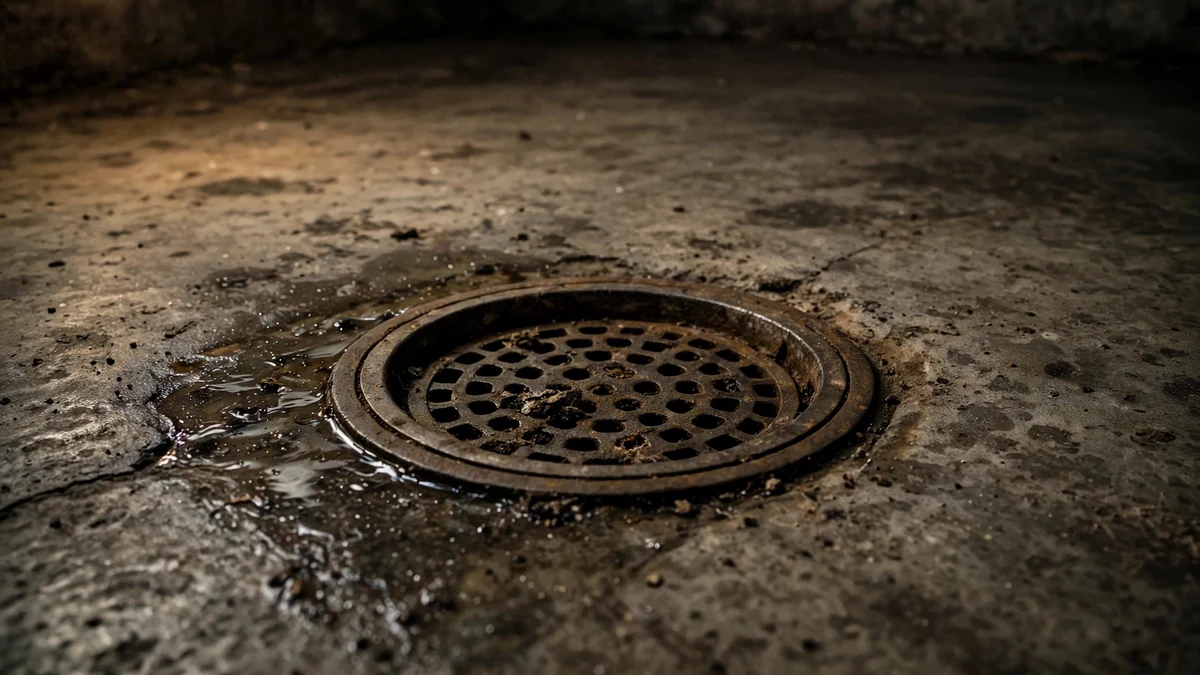
Water that appears at a floor drain when a toilet flushes upstairs
Sewage odors that arrive with the backup and linger after it clears
Why Maine Lines Show These Signs First
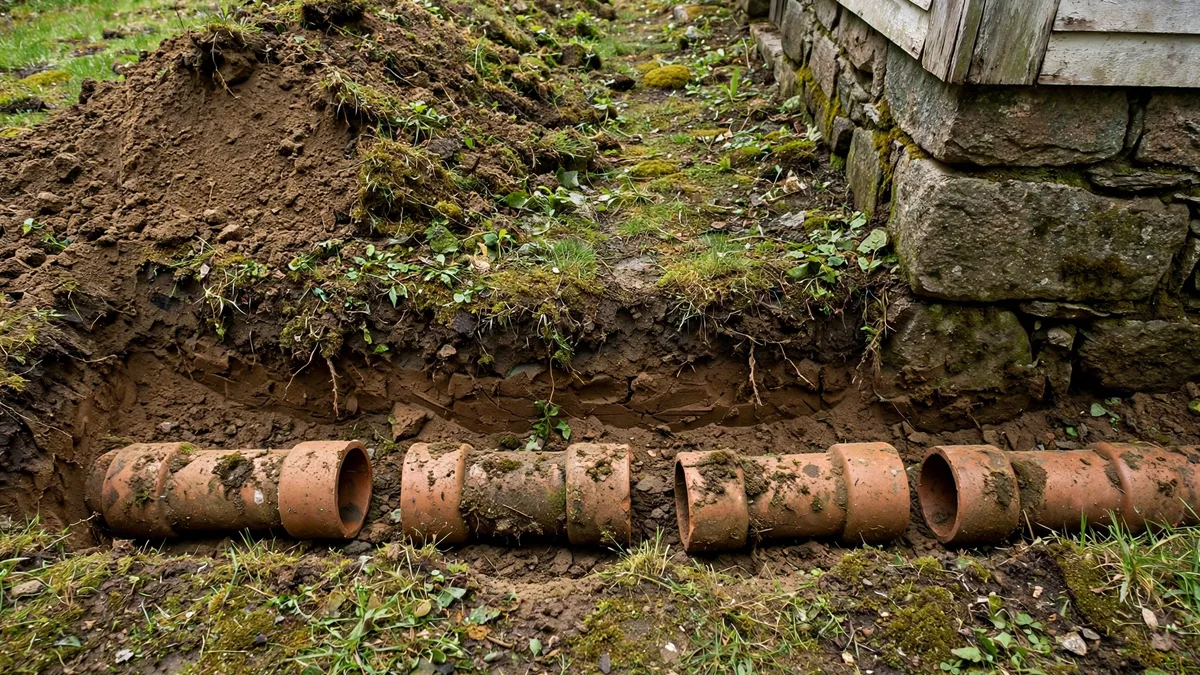
Maine has the oldest housing stock in the country, and many sewer lines here are as old as the houses above them. Clay pipe from before the 1970s was laid in short sections with many joints, and those joints are where roots enter and where ground movement opens gaps. Cast iron from before the 1980s corrodes from the inside, so its walls thin and its inner surface roughens and catches waste.
Age alone does not condemn a line, and many old lines still work well. What age does is raise the odds that a symptom traces back to the pipe itself rather than to a fixture. The Maine plumbing code sets the rules for how these lines are built and repaired, and we work to those rules on every job, from a spot repair on one section to a full replacement.
What a Camera Check Adds After the Symptom Review
A symptom review tells us where to look. A camera tells us what is actually there. We run a camera through the line from a cleanout and watch the pipe wall, the joints, and the grade on a monitor, and we record the run so the findings can be reviewed. A root mass looks different from a belly, and a belly looks different from a break, and each one leads to a different repair.
That distinction matters because the cheapest fix is not always the right one. A line with one failed joint may suit a sewer line spot repair, while a line with several failed sections may need a larger repair. Without the camera, that choice would rest on guesswork. With it, the homeowner sees the same footage we see and the decision rests on evidence.
If you notice two or more of the signs in this post, call us at (207) 819-0831 or visit our contact page. We serve homes across Maine from our office at 400 Congress St, Portland, ME 04101, and you can also read the guide to reading camera footage before your visit so you know what to ask.
Keep a Short Log of What You Notice
A short log turns vague worry into useful evidence. Each time a symptom appears, write the date, the fixture involved, and what was happening at the time, such as laundry running or a toilet flushing upstairs. Over a few months that log shows whether trouble is spreading, staying local, or following a pattern tied to water use.
Bring that log to a camera visit. A technician who reads it can start the camera run where your notes point, and can compare what the camera shows against what you recorded. A log also helps you judge whether a clearing held or whether the same symptom returned, which is the distinction that separates a simple blockage from a line defect.
Keep the log simple enough to maintain. A few lines in a notebook or on a phone, updated when something happens, beats a detailed form that gets abandoned after a week. The goal is a dated record, not a diary, and even a short record gives a camera diagnosis a head start.
If your log shows the same symptom returning after a clearing, a sewer line cleaning may restore flow, but the log itself will show whether the trouble is a one time blockage or a line defect that needs a camera grade.
People Also Ask
What is the first sign of a sewer line problem?
The first sign is often a pattern rather than a single event, such as several drains slowing at once, a toilet that gurgles when a tub drains, or a backup that returns after a clearing. One slow sink usually points to that fixture, while house-wide symptoms point to the shared main line.
Do slow drains always mean the sewer line is damaged?
No, slow drains do not always mean line damage, since a blocked trap or a single branch can slow one fixture on its own. House-wide slowness, repeat backups, gurgling across fixtures, or wet patches above the line are stronger signs that the main line or lateral needs a camera check.
Can a sewer line problem fix itself over time?
A sewer line problem does not fix itself, and most defects get worse as roots thicken, scale builds, or a sag deepens. A symptom that fades for a few days often returns, because the underlying joint gap, belly, or crack is still there and still catching waste.
Frequently Asked Questions
How do I know if slow drains are a sewer line problem or a fixture problem?
If one fixture drains slowly while the rest of the house works normally, the trouble usually sits in that fixture or its branch. If several fixtures slow together, or the lowest drain backs up first, the shared main line or lateral is the likelier source and a camera check is the next step.
What does gurgling from a toilet or sink mean?
Gurgling means air is moving back through a trap instead of venting cleanly, which often happens when a partial blockage traps air in the line. It is an early warning more than an emergency on its own, but it deserves attention when it repeats or spreads to more fixtures.
Is a wet patch in the yard a sewer line sign?
A wet patch or an unusually green strip above a buried line can mean water is escaping from a crack or a failed joint, especially if it stays wet in dry weather. It can also come from a water line or surface drainage, so a camera run and a line location check are needed to confirm the source.
Why do backups keep coming back after a drain clearing?
A clearing removes the blockage but leaves the defect that caused it, such as roots at a joint, a belly that pools waste, or a cracked section that snags paper. Until that defect is found on camera and repaired, the blockage has a clear path to form again.
Does an old Maine home always have a bad sewer line?
No, age alone does not mean a line has failed, and many old clay and cast iron lines still carry waste well. Age does raise the odds of joint wear, corrosion, and root entry, which is why older homes benefit from a camera check when symptoms appear.
When should I call instead of waiting to see if it clears?
Call when two or more signs appear together, when a backup returns after a clearing, when sewage reaches a living space, or when the lowest drain in the house backs up. Waiting risks a larger backup, and a camera check gives a clear answer either way.
A pattern of slow drains, gurgling, smells, or repeat backups points to the line below the floor. We run a camera first, show you what it finds, and talk through the repair that fits that footage.