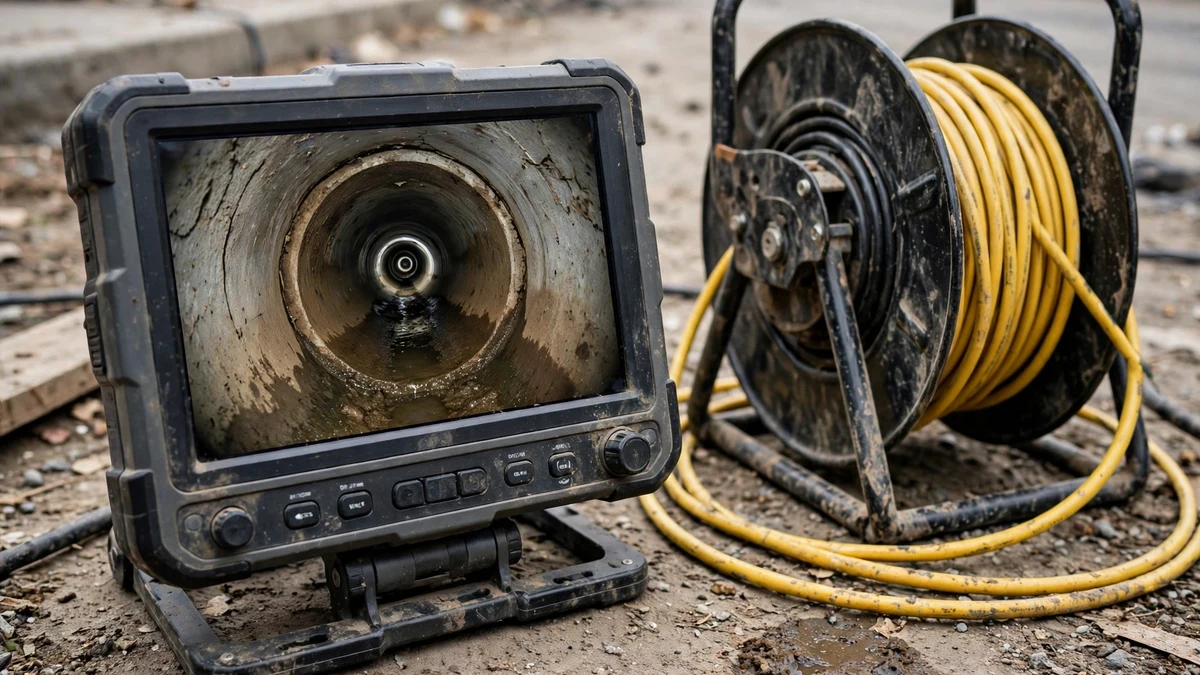
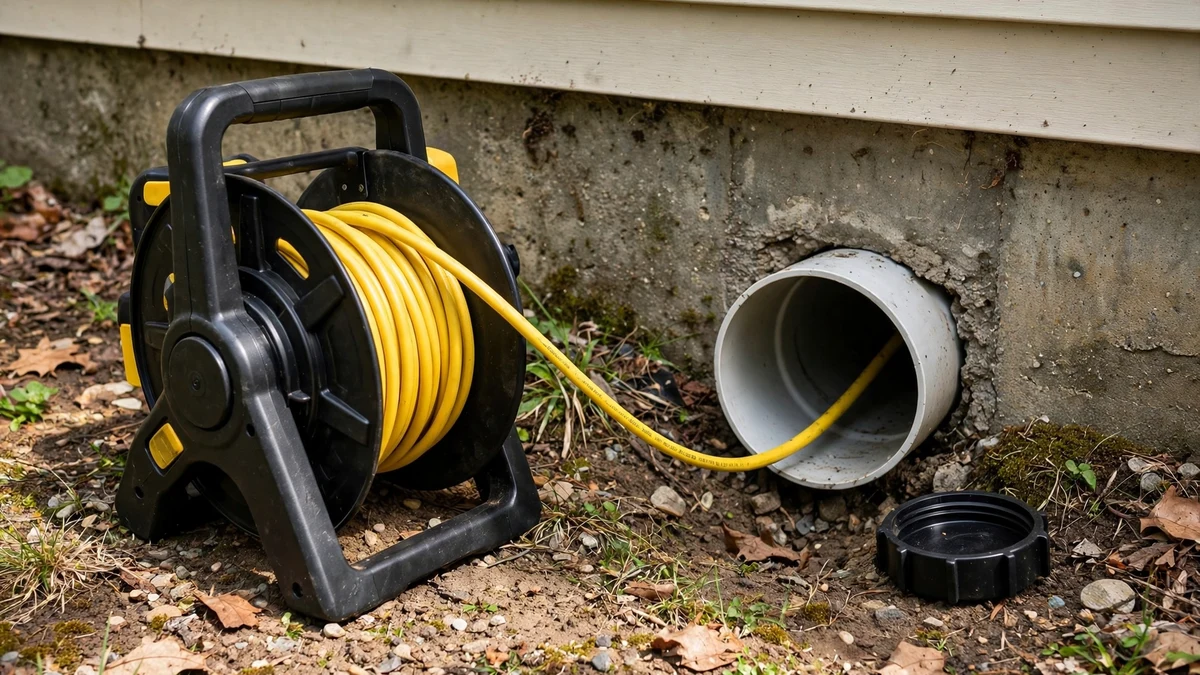
A sewer camera is a small camera on the end of a push rod cable, fed into the line through a cleanout. As it travels, it sends live video to a monitor above ground, and the run is recorded so you can watch it again. You keep that footage, and it becomes the record of what your line actually looks like inside.
Watching the footage for the first time can feel strange, because the inside of a pipe looks nothing like the diagrams in a brochure. The walls curve, the light falls off with distance, and water pools in low spots. This post explains what you are seeing, in plain words, so the video feels like evidence instead of a mystery.
Start by Noticing the Pipe Material on Screen
The first thing to notice is the material. Clay pipe shows as short sections with a visible joint every few feet, and its inner surface looks brown and slightly rough. Cast iron looks darker, with a rougher, scaled surface where corrosion has built up. PVC looks smooth and pale, with joints spaced much further apart.
Material matters because each one fails in its own way. Clay joints open and let roots in. Cast iron thins along the bottom where corrosion channels the pipe. PVC rarely fails by age alone, so a problem in a PVC line often traces back to a joint, a grade issue, or damage from above. Knowing the material helps you judge how serious a finding is.
Joint Gaps on Video: Small Lines With Big Consequences
A joint gap shows up as a dark ring or a step between two pipe sections, sometimes with fine roots or a trickle of water at the seam. Small gaps are common in old clay lines, and a single small gap may only need watching. A gap that has shifted, so one section sits higher than the next, is a different matter, because waste catches on that step.
When we grade footage, we look at how many joints show gaps and whether those gaps are growing. One gap in a long run is a local issue. Gaps at joint after joint suggest the line as a whole is moving or aging out, and that pattern changes the repair conversation from a patch to a larger plan.
Roots on Screen: From Fine Hairs to a Full Mass
Roots first appear as fine pale hairs hanging from a joint, almost like cobwebs. Left alone, they thicken into strands and then into a mass that fills part of the pipe and catches paper and waste. The camera shows this growth clearly, and the footage also shows whether roots come from one joint or from many.
A root mass at one joint is a local problem with a local answer. Roots at many joints tell a wider story about the line, and cutting them without addressing the joints only buys time until they grow back. That is why a sewer camera inspection pairs so naturally with a root finding: the footage shows the full extent before anyone picks a repair.
A Belly on Video Looks Like a Pond in the Pipe
A belly is a sagging section where the pipe dips below grade, and on video it looks like a pond: water sits in the dip and the camera passes through it, with the far side of the pipe rising out of the water. The camera may also show waste settling in that pool. A shallow belly that still drains can be watched, while a deep belly that holds waste will keep blocking.
Belly footage is also where condition grading earns its keep. We note where the belly starts and ends, how deep it reads, and whether waste is pooling or passing through. Those details decide whether the section can be lined, needs a spot repair, or needs excavation to reset the grade, and you can read more about that problem in our guide to sewer line bellies and sags.
Cracks, Breaks, and Collapses Read Differently
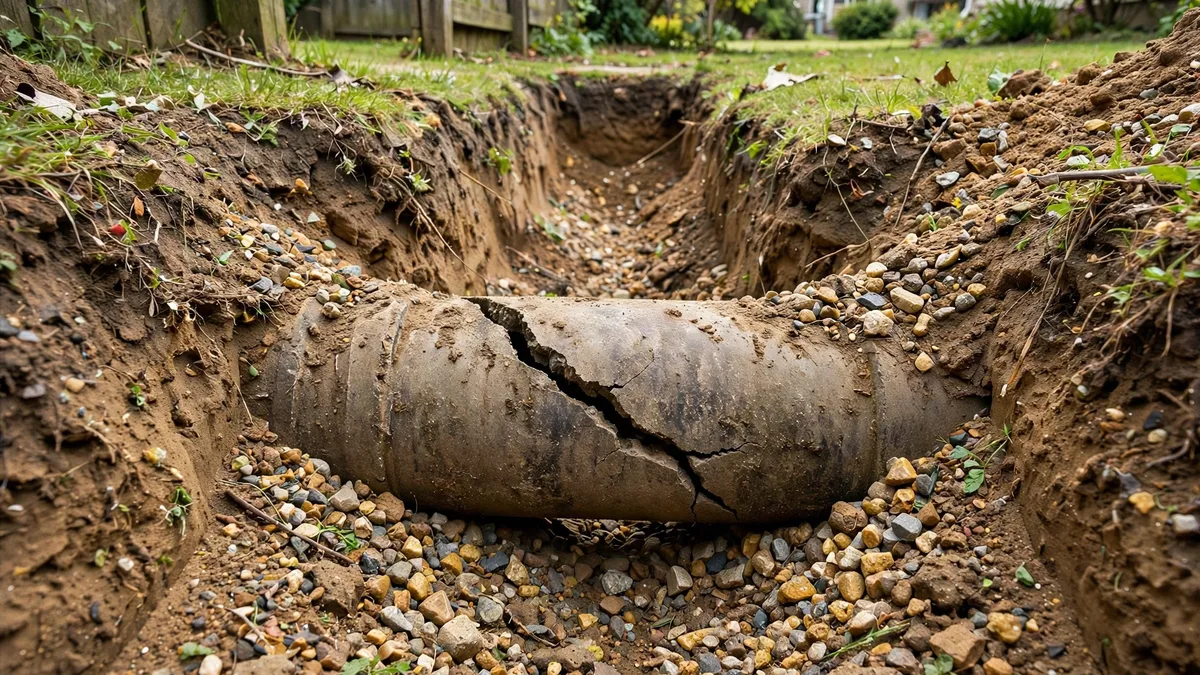
A crack shows as a thin dark line across the pipe wall, sometimes with soil or a root visible through it. A break is wider, with a missing piece or a shifted section. A collapse is unmistakable: the camera meets soil or a flattened pipe and cannot pass. Each stage calls for a different response, and the footage keeps that response honest.
One useful habit is to ask where the camera stopped, if it stopped at all. A camera that travels the full line and exits at the street connection has surveyed the whole lateral and main line. A camera that stops early has found an obstruction worth understanding before any repair is planned, and a repeat run after a clearing can complete the picture.
What to Ask When You Watch Your Footage
When you sit down with your footage, ask four questions. What material is the pipe, and how old does it look? How many joints show gaps or roots, and are they local or widespread? Is there a belly, and does waste pool in it? Did the camera reach the street, or did it stop somewhere? Those answers turn a video into a plan.
We also recommend a scheduled sewer inspection for older lines, because comparing footage over time shows whether a joint gap is stable or growing. A single video is a snapshot. Two videos, a year or two apart, show a trend, and trends are what let a homeowner plan a repair instead of reacting to a backup.
If you have footage from another visit and want help reading it, call us at (207) 819-0831 or reach us through our contact page. We serve homes across Maine from 400 Congress St, Portland, ME 04101, and we are glad to walk through a video line by line.
Keep Your Footage and Compare Later Runs
Ask for a copy of your camera recording and keep it with your home records. A video file on a phone or a computer is easy to lose track of, so store it where other home records live, with the date and the name of the line section it covers. That copy is yours, and it is the baseline for every later comparison.
When a later run is recorded, watch the two videos side by side at the same locations, especially at joints that showed gaps or roots. A gap that looks the same two years later is stable. A gap that has widened, or a root mass that has thickened, shows a trend that a single video cannot show. Trends, not snapshots, drive good repair timing.
If you sell the home later, that footage also helps a buyer, since it documents the line condition with dates rather than claims. A buyer who sees a dated baseline and a later run showing stability has more confidence than a buyer who hears only that the line was checked once.
Footage that shows a single cracked or shifted joint may lead to a sewer line spot repair on that joint alone, while footage that shows sound pipe throughout may lead to no repair at all, only a planned recheck.
People Also Ask
What details does a sewer camera recording capture?
A sewer camera shows the pipe material, the condition of each joint, roots, cracks, breaks, bellies, and blockages, along with how far the camera traveled. The recorded video becomes a record of the line, and a condition grade turns what the camera saw into a clear repair plan.
Can I watch my own sewer camera footage?
Yes, you can watch your own footage, and you should keep a copy of the recording. The video shows the pipe wall, joints, and any defects in order from the cleanout to the street, so you can see the same evidence your technician used.
Does a sewer camera find every problem in a line?
A camera finds most problems inside the pipe, including cracks, roots, bellies, and breaks, but it cannot see outside the pipe wall or judge soil conditions directly. A camera that stops early also leaves the rest of the line unseen until the obstruction is cleared.
Frequently Asked Questions
How do I tell a crack from a joint on camera footage?
A joint is a regular ring between pipe sections that repeats along the run, while a crack is an irregular dark line across the wall that does not repeat. Joints appear at even intervals in clay pipe, and cracks often show soil, roots, or water seeping through the wall.
What does standing water in the footage mean?
Standing water usually means a belly, a sagging section where the pipe dips below grade and water pools. A small pool that still drains may only need watching, while a deep pool that holds waste points to a section that will keep blocking until its grade is fixed.
Why does the camera picture go dark in places?
The picture darkens when the camera enters a larger space, passes through standing water, or reaches a section coated with scale or debris. Darkness alone is not a defect, but darkness paired with a visible obstruction or a stop in travel deserves a closer look.
What is condition grading on a sewer camera report?
Condition grading is a simple rating of what the camera found, from sound pipe to a section that needs repair, recorded joint by joint. It turns a long video into a short summary, so a homeowner can see which sections are sound and which ones need work.
Should I get a camera inspection if I have no symptoms?
A camera check makes sense before buying an older home, after repeat blockages, or when a line is old enough that its material is near the end of its working life. Without symptoms, it is a planning tool, not an emergency, and it gives a baseline for later comparison.
Can camera footage tell me which repair I need?
Footage narrows the repair choices a great deal, since a single bad joint, a belly, and a collapse each lead to different work. The final choice also weighs the line material, the extent of damage, and access, which is why footage is paired with an on-site review.