01
Hydro Jetting Services
Clearing the grease and scale commercial lines accumulate.
Shops offices restaurants
A sewer line problem in a commercial building stops work, not just water. A restaurant with a backed-up line cannot serve, an office with a failed lateral cannot open its washrooms, and a shop with a sewer smell loses customers before it loses a pipe. Commercial sewer line services exist for that difference in stakes: the same sewer work as a home, carried out around a business that needs to keep running, with the disruption planned rather than discovered.
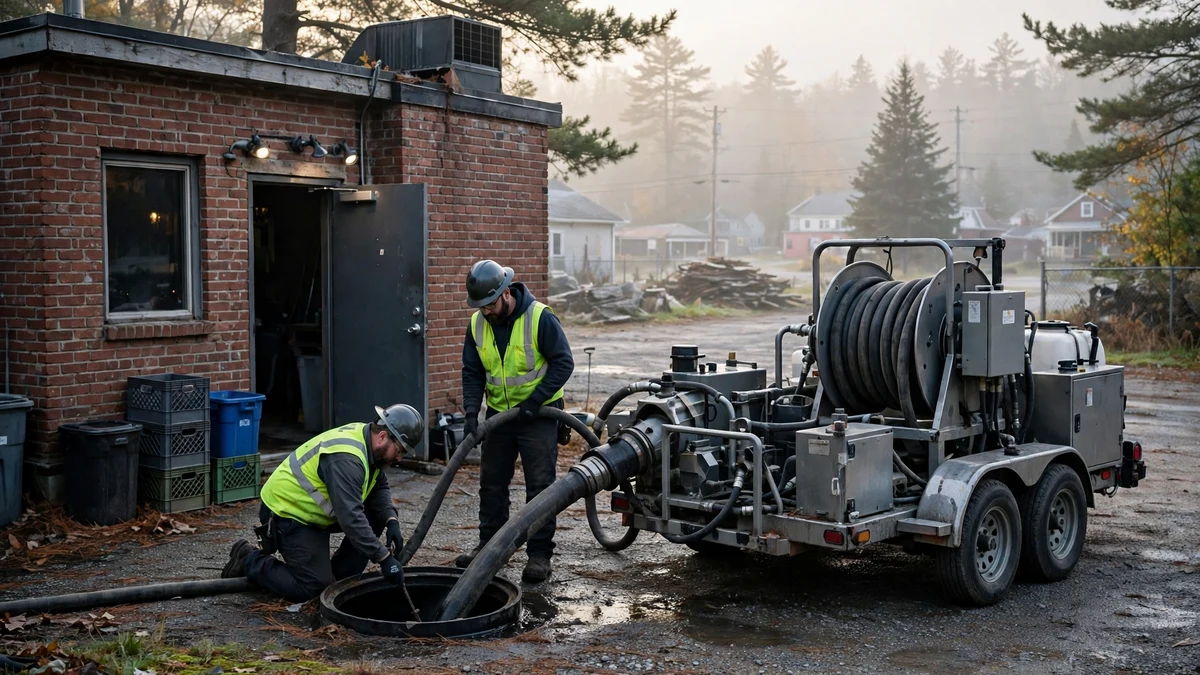
The lines themselves differ from house lines in scale and in use. A commercial lateral carries the waste of many people rather than a household, and a restaurant line carries grease at a rate no home line sees. High use blockage follows from that volume: a line that serves dozens of people a day blocks faster than a line that serves a family, and a grease line failure in a restaurant follows from grease that a home kitchen never produces in that quantity. An aging commercial lateral, laid when the building was built and never renewed since, carries the same material story as a home line, clay or cast iron from an older era, but with more waste passing through it every day.
The work therefore starts with the business, not just the pipe. We talk through the building's hours, its busiest periods, and which fixtures and areas must stay usable, before the camera goes in, because a commercial job planned around a business's day is a different job from one planned around a house's day. That conversation is part of the service, not a courtesy, because a repair that closes a business for longer than it must has failed in a way a home repair cannot.
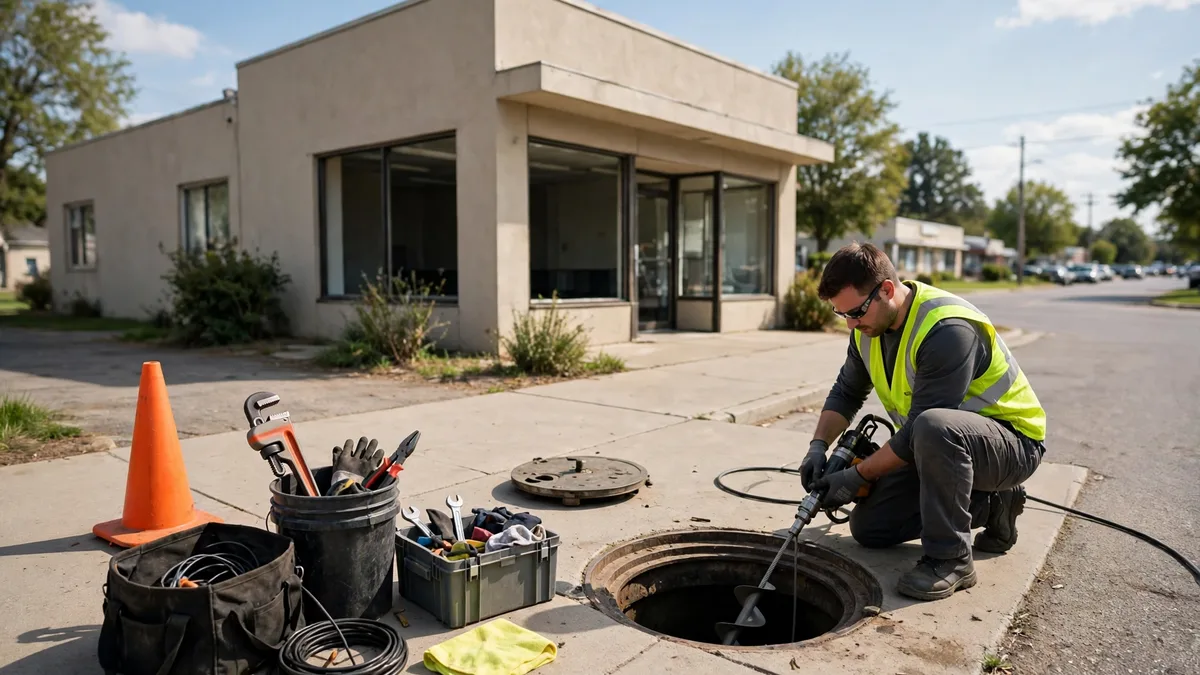
A commercial camera survey uses the same principle as a home survey, scaled up. A large camera travels the commercial lateral and the main connection, showing the joints, the grease deposits, and the wear along a line that serves a whole building. The footage is recorded, and the findings are explained in plain words to the person responsible for the building, so a facilities manager or an owner can see the problem rather than take it on trust.
Commercial lining renews a line that is damaged but still holds its shape, without opening the ground under a trading floor or a car park. The access points are planned around the building's layout, and the cure is scheduled around its hours, because a lining job that blocks a restaurant's kitchen during service is a job planned badly. Commercial excavation, where a line has collapsed or lost its grade, opens the ground over the failed run and lays a new pipe, with the trench planned to keep access to the building open where the site allows.
The grease interceptor line deserves its own mention in restaurant work. The line from the kitchen to the interceptor, and from the interceptor to the main, carries the heaviest grease load in the building, and it is the line most likely to narrow and block. A commercial jetter pass clears that line's grease, and a camera check afterward shows whether the narrowing is grease alone or whether the line itself has failed under the load. That distinction decides whether the restaurant needs cleaning on a schedule or a renewal of the line.
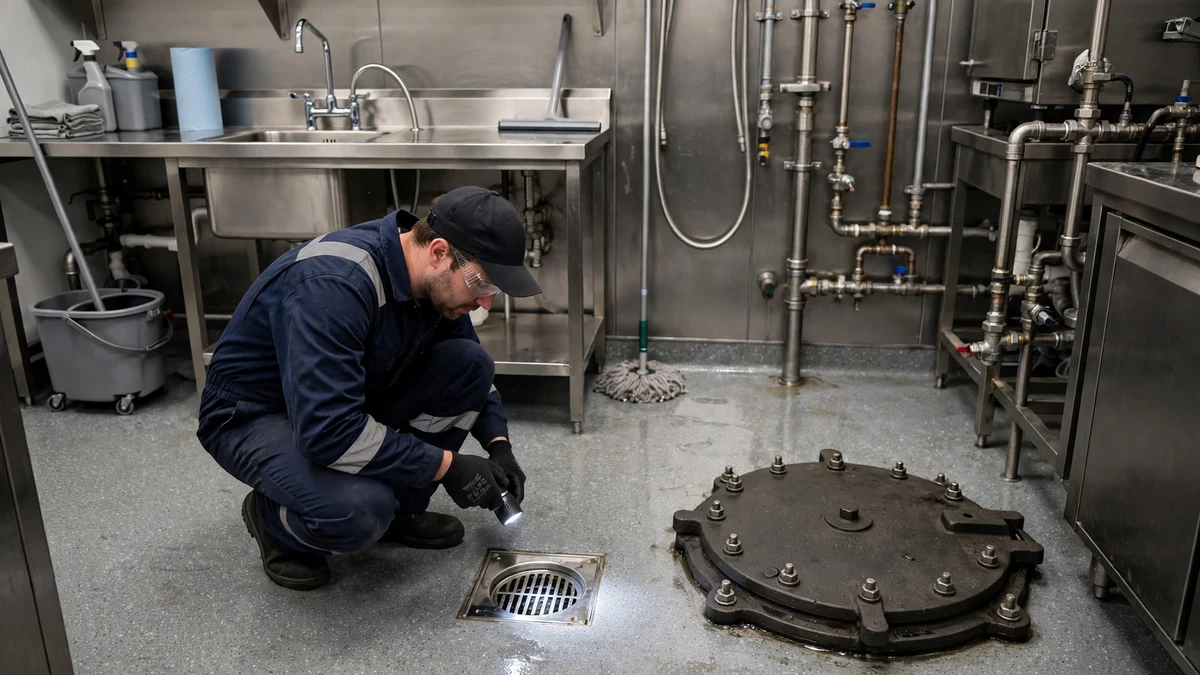
A restaurant's sewer trouble is usually grease first. Kitchen waste, dishwashing, and food preparation all send grease into the line, and grease cools and hardens on the walls until the bore narrows and waste catches. The fix is usually a jetting schedule combined with a camera check, and the renewal question arises when the camera shows the line itself failing under the grease load rather than just narrowing from it. A restaurant that plans that work around its quiet hours keeps serving while its line is dealt with, and that planning is part of the job.
An office building's trouble is usually volume and age. Many people using the same washrooms, day after day, through a lateral laid decades ago, produce a steady load on a line that was never renewed. The symptoms are slower and less dramatic than a restaurant's: drains that run slow across floors, a smell that appears in a washroom and will not clear, a backup that arrives without a single obvious cause. A commercial camera survey finds the cause in that pattern, and the repair follows the footage rather than the symptom.
A shop or a smaller commercial property sits between the two: lower volume than an office, less grease than a restaurant, but the same stakes when a line fails, because a closed shop loses trade. The service scales to the building rather than imposing a commercial template on it: a small shop gets the same camera-first diagnosis and the same plain-words explanation as a large office, and the repair is sized to the line, not to the building's rent.
Maine commercial plumbing code governs commercial lines, including their sizing, their materials, and their connections, and local sewer pretreatment rules govern what a commercial property may discharge into the public system, particularly where grease is involved. Those rules shape both the repair and the ongoing care of the line: a restaurant line renewed without regard to pretreatment rules will block again, because the grease load that narrowed it has not changed, and a commercial line repaired without a record will be diagnosed from scratch at the next failure.
The record is therefore part of the service. The camera footage, the findings, and the repair are documented for the building, so the next visit, whether it is a scheduled inspection or an emergency, starts from a known condition rather than a blank page. A building with a record can plan its maintenance: a jetting schedule for a grease line, a repeat camera check for an aging lateral, a renewal planned for a quiet period rather than forced by a failure during trading.
The related services cover the methods a commercial building is most likely to need. Hydro jetting services clear the grease and scale that commercial lines accumulate, trenchless pipe lining renews a damaged line without opening a trading floor, and backwater valve installation protects a low-lying commercial basement against a municipal surge. Each is a service in its own right, and each is applied to a commercial building on that building's terms.
Any building whose line serves many people or a heavy load: restaurants with grease lines, offices with high washroom volume, and shops whose trade stops when a line fails. The work is the same sewer trade as a home, planned around a business that needs to keep running.
By a commercial camera survey first, then jetting to clear the grease line, and renewal by lining or excavation where the camera shows the line itself failing rather than just narrowing from grease. The work is scheduled around the restaurant's quiet hours where the site allows.
Yes. Local sewer pretreatment rules govern what a commercial property may discharge into the public system, particularly grease, and Maine commercial plumbing code governs the line's sizing, materials, and connections. Both shape the repair and the ongoing care of the line.
Camera surveys, cleaning and jetting, lining, bursting, and excavation for commercial properties, from a single shop to a larger office or restaurant building, planned around the business's hours where the site allows.
In scale and in reporting. A large camera travels the commercial lateral and main connection, and the footage and findings are documented for the building, so a facilities manager or owner can see the problem and plan from it.
Often, yes, where the site allows. Lining and camera work can be scheduled around quiet hours, and excavation can be planned to keep access open. The plan is discussed with the business before work starts, not after.
Grease cooling and hardening on the line walls until the bore narrows and waste catches. Jetting clears the grease, and a camera check shows whether the line itself has failed under the load or only narrowed from it.
Yes. The camera footage, findings, and repair are documented for the building, so future visits start from a known condition and maintenance, such as a jetting schedule, can be planned rather than improvised.
Call (207) 819-0831 or email info@sewerlinerepairmaine.com, and describe the building type, the symptoms, and the hours the business needs to keep running.
Start by telling us what you are seeing. We will talk through the symptoms and the next step from there.
01
Clearing the grease and scale commercial lines accumulate.
02
Renewal without opening a trading floor.
03
Surge protection for a low-lying commercial basement.
Last updated: October 28, 2026