01
Trenchless Pipe Lining
Structural renewal inside the old pipe, for a weakened wall.
Seal a sound pipe
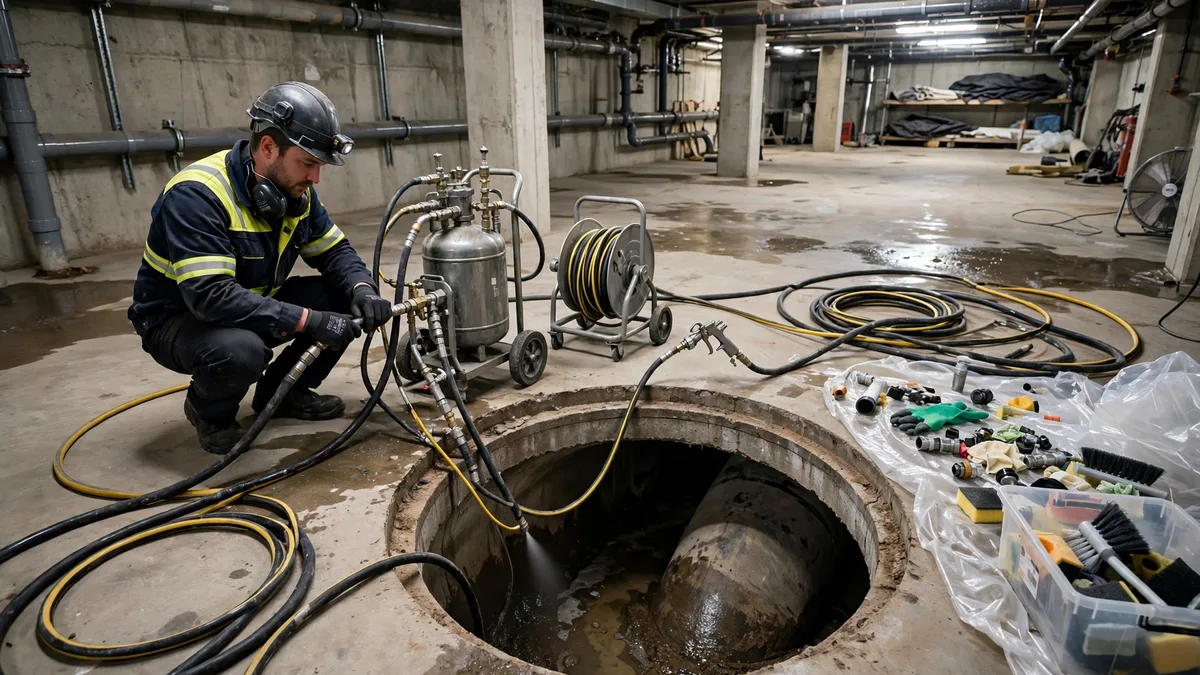
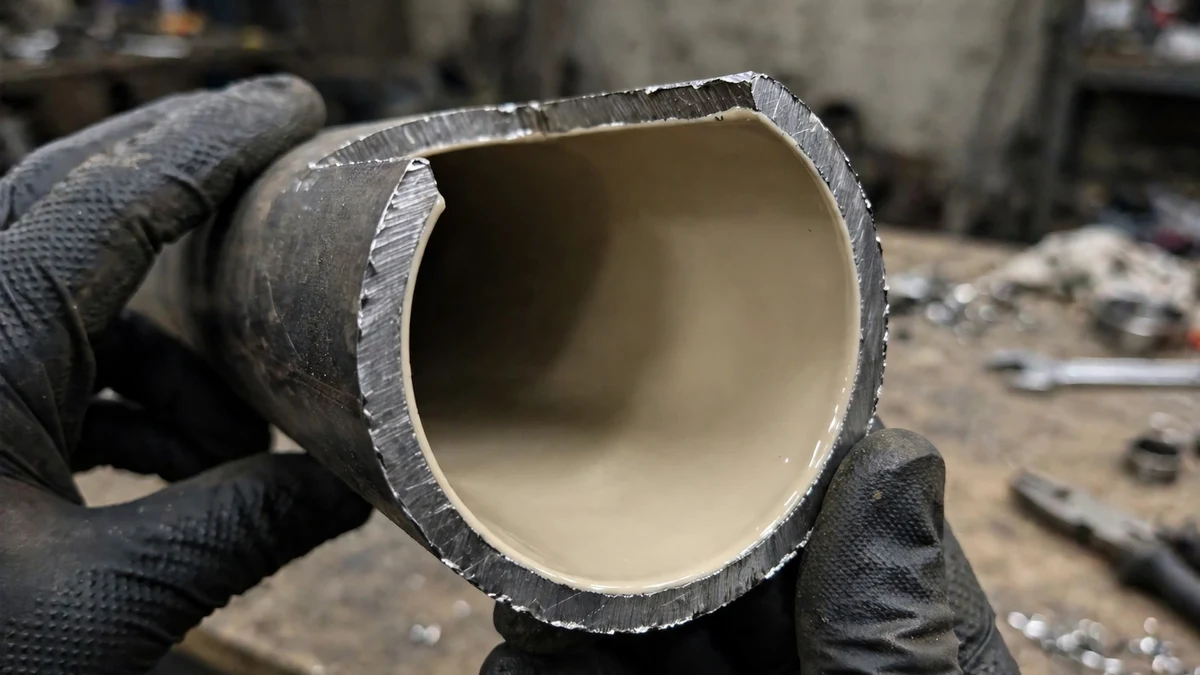
Epoxy pipe coating seals the inside of a sewer pipe that still has its strength. A spray rig applies an epoxy coating to the cleaned inner wall, and the coating cures into a smooth, continuous layer that closes pinhole leaks, minor joint seepage, and surface corrosion. The host pipe keeps doing the structural work. The coating does the sealing work. That division is the whole service, and it is what makes coating genuinely distinct from structural lining.
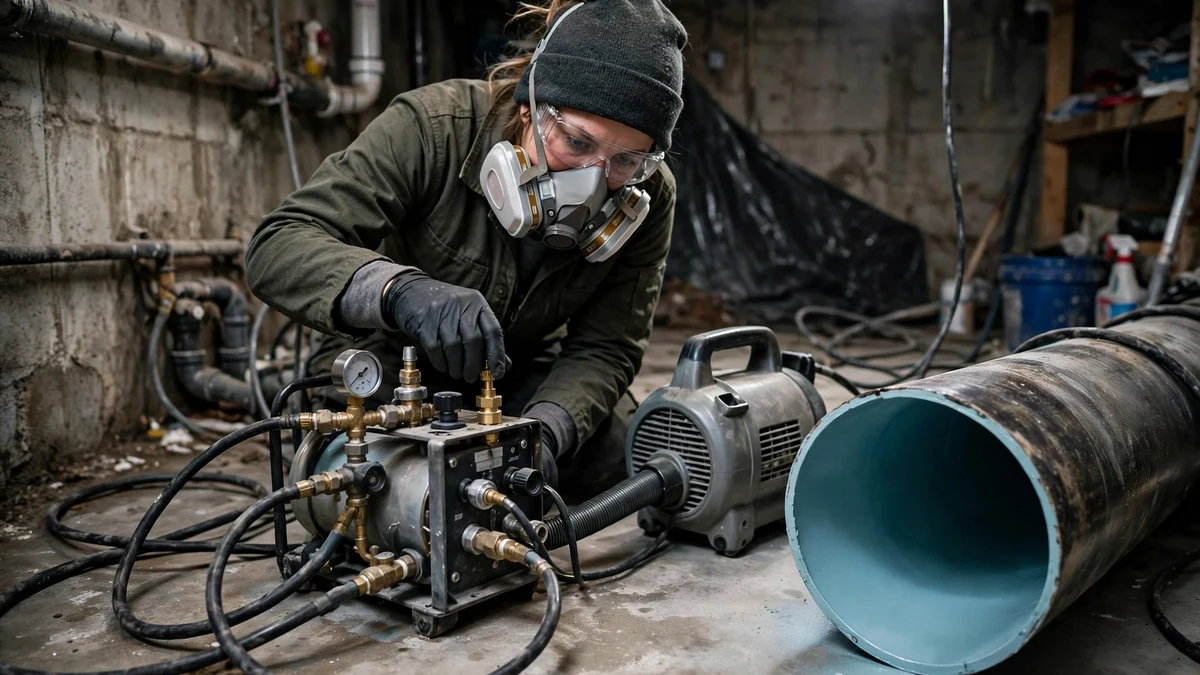
The distinction matters because the two are often confused. Lining forms a new structural pipe inside the old one, with a felt or fiberglass liner that carries load on its own. Coating lays a sealing layer on a wall that is already sound, and it does not add structural strength. A pipe that is cracked through, collapsed, or badly offset needs lining or replacement, not coating, and a pipe that is sound but leaking at pinholes and joints needs coating, not a full structural liner. The camera shows which case a pipe is in, and the service follows the picture.
The coating itself is an epoxy formulated for pipe interiors, applied in a spray coating pass or, in some cases, a brush coating pass where the access suits it. The layer is thin compared with a liner, but it is continuous, and continuity is what seals: a single unbroken layer over the wall and across minor joint gaps stops the seepage that a patchy application would miss. A coating camera runs during and after the application, showing the layer as it goes on and confirming its coverage before the job is called done.
A pipe qualifies for coating when its structure is sound and its problem is sealing. Pinhole leaks in cast iron, where corrosion has opened small holes without thinning the wall through, are the classic case. Minor joint seepage in a clay or PVC line, where a joint weeps without having opened into a gap, is another. Surface corrosion that roughens a wall and catches waste, without having channeled the wall away, is a third. In each case, the pipe holds its shape and its grade, and what it needs is a sealed surface, not a new structure.
A pipe does not qualify when its problem is structural. A crack running through the wall, a section that has sagged into a belly, a joint that has offset badly, or a wall thinned through by channeling all need a structural answer, and coating over them would hide the damage without fixing it. The camera inspection before coating is therefore a qualification check, not a formality: it shows the wall, the joints, and the shape, and it decides whether coating is honest or whether lining or replacement should be offered instead.
The host pipe material shapes the preparation. A cast iron host pipe needs cleaning and, where scale covers the wall, a descaling pass so the coating meets metal rather than loose corrosion. A PVC host pipe needs cleaning but usually less preparation, because its wall is already smooth. Either way, the wall must be clean and dry enough for the coating to bond, and that preparation is named as part of the job rather than assumed.
The job follows a clear sequence. First, the camera inspection qualifies the pipe, showing the pinholes, the seepage, and the wall condition. Second, the line is cleaned, and where the wall needs it, a descaling pass strips scale so the coating bonds to a sound surface. Third, the spray rig applies the epoxy coating in a controlled pass, with the coating camera watching the layer form on the wall. Fourth, the coating cures, helped by an air mover where the line needs airflow, and the camera runs once more to verify coverage across the full coated length.
The cleanout is the usual access point, and the work stays inside the pipe, so the ground above the line is not opened. That is a practical advantage coating shares with lining, but the two should not be confused on that account either: the similarity is in the access, not in the result. Coating leaves a sealed surface. Lining leaves a new pipe. The job record names which one was done, with footage to show it.
Epoxy coating product standards and Maine plumbing code coating provisions guide the materials and the application, and the finished coating is judged by its coverage on camera, not by a claim about its thickness. If the verification run shows a missed patch or a thin stretch, it is recoated before the job is called done, because a sealing layer with a gap is not a seal.
The three services compare cleanly once the result is named. Cleaning leaves a clear pipe: the blockage or the buildup is gone, and the wall is as it was. Coating leaves a sealed surface inside a pipe that was already sound in structure: the pinholes and the seepage are closed, and the wall carries on as before. Lining leaves a new pipe inside the old one: the wall itself is renewed, and the old pipe becomes the form rather than the structure.
A homeowner choosing between coating and lining should ask one question: does my pipe need strength, or does it need sealing? If the camera shows a sound wall with leaks, the answer is sealing, and coating is the proportionate job. If it shows cracks, joint failure, or corrosion that has weakened the wall, the answer is strength, and lining or replacement is the honest job. A contractor who offers coating for a structural failure, or lining for a sound pipe with pinholes, has the answer backwards, and the camera picture is the way to tell.
Our trenchless pipe lining page explains the structural option in full, including the cleaning-versus-lining-versus-coating comparison, and our sewer line cleaning page covers the clearing option that often prepares a pipe for coating. The three pages are written to be read together, because the choice between them is the decision most homeowners actually face.
It is a sealing layer sprayed onto the cleaned inner wall of a pipe that still has its strength. The epoxy cures into a smooth, continuous layer that closes pinhole leaks, minor joint seepage, and surface corrosion, while the host pipe keeps doing the structural work.
Coating seals a sound pipe from the inside and adds no structural strength, while lining forms a new structural pipe inside the old one. A sound pipe with leaks suits coating, and a cracked or weakened pipe needs lining or replacement instead.
Yes, when the pipe still has its strength and its problem is sealing: pinhole leaks, minor joint seepage, or surface corrosion. A collapsed, badly cracked, or deeply bellied pipe cannot be sealed back to soundness and needs a structural method.
A sealing layer applied to the inside of a sewer pipe that still has its structural strength. The epoxy coating closes pinhole leaks, minor joint seepage, and surface corrosion, while the host pipe keeps carrying the load.
No. Coating seals, it does not rebuild. A pipe that needs structural strength needs lining or replacement, and the camera inspection before coating decides which case a pipe is in.
Cast iron, PVC, and other host pipes whose walls are sound but leaking or corroded on the surface. The wall must be clean for the coating to bond, and a descaling pass prepares a scaled cast iron wall.
By a spray rig through a cleanout access point, with a coating camera watching the layer form, followed by a curing period and a verification camera run that confirms coverage across the coated length.
A camera inspection qualifies the pipe first. It shows the pinholes, the seepage, the wall condition, and the pipe shape, and that picture decides whether coating, lining, or replacement fits.
Call (207) 819-0831 or email info@sewerlinerepairmaine.com. A camera inspection comes first, so the pipe can be qualified for coating before any work starts.
Start by telling us what you are seeing. We will talk through the symptoms and the next step from there.
01
Structural renewal inside the old pipe, for a weakened wall.
02
Clearing and preparing a pipe before coating.
03
Repeat checks that track whether a coated line stays sealed.
Last updated: October 28, 2026