01
Traditional Sewer Line Replacement
Open excavation for an old line that has lost its shape or grade.
Clay and cast iron renewal
Maine has the oldest housing stock in the country, and its sewer lines carry that age underground. A house built before the 1970s usually has a clay lateral, a house built before the 1980s often has cast iron, and a house built from the 1940s to the 1970s may have Orangeburg, a bituminized fiber pipe whose working life of around fifty years has now run out. Each of those materials fails in its own way, and an old pipe replacement service has to understand all three, because a single property can carry more than one of them along its run.
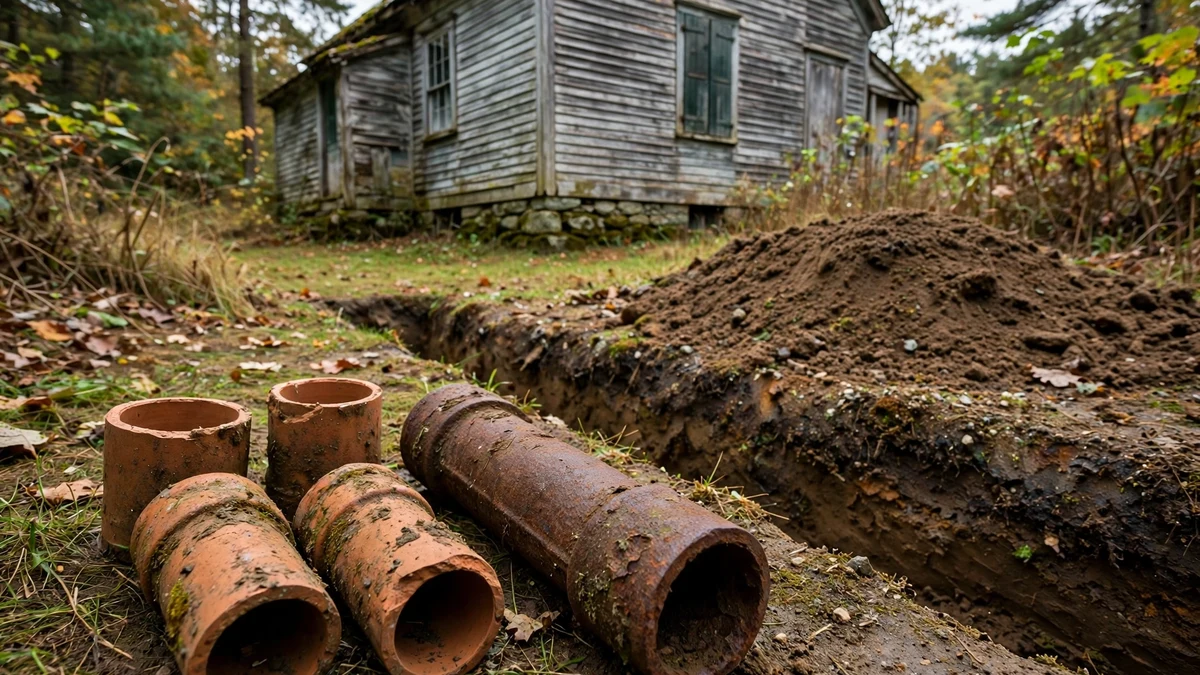
Clay fails at its joints. Short sections joined every few feet give a clay line many joints, and each joint is a place where ground movement, frost, and age can open a gap. Roots enter through those gaps, soil washes in, and sections crack under movement. A clay line does not usually fail all at once. It fails joint by joint, and the camera shows that pattern as a series of gaps and root entries along the run, rather than a single dramatic break.
Cast iron fails from the inside. Hydrogen sulphide in wastewater turns to sulphuric acid on the pipe wall, and the acid channels along the bottom of the pipe, thinning the wall until it roughens, scales, and finally gives way. That channeling is why a cast iron line can look sound from the outside and be badly worn inside, and why the camera, which sees the wall itself, is the tool that judges it. Orangeburg fails by deformation: the fiber wall absorbs moisture, softens, flattens, and collapses, so an Orangeburg line that has survived this long is living past its design life, and its failure, when it comes, is structural.
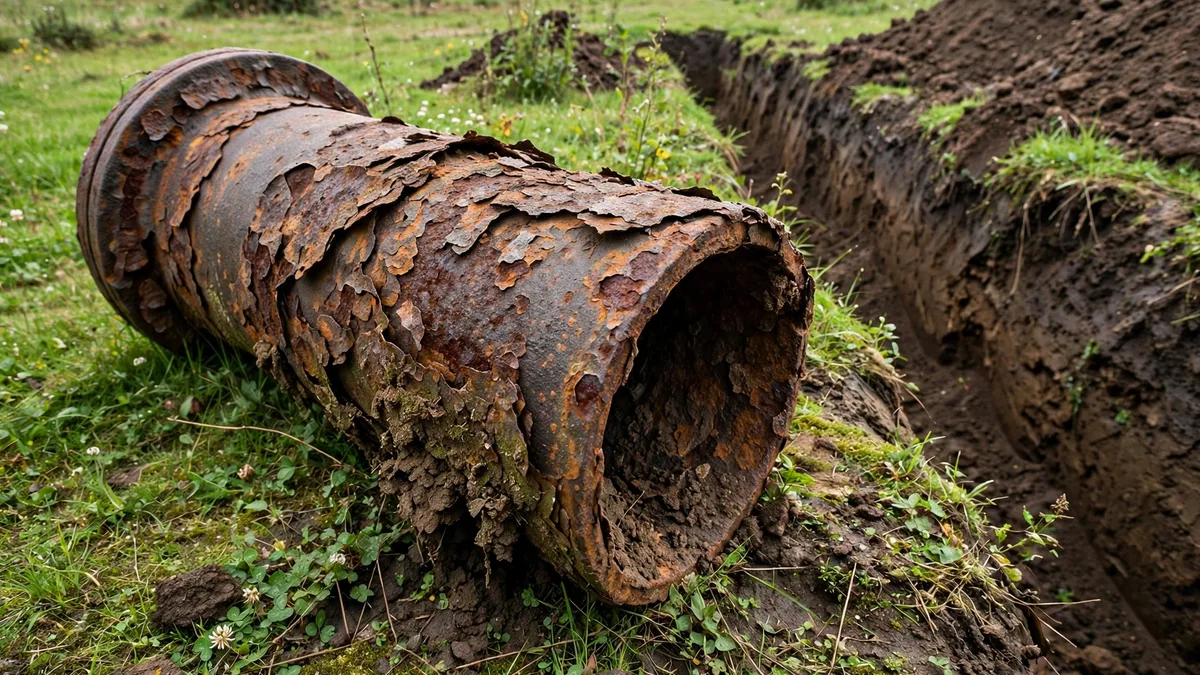
Full material replacement means the old pipe run is replaced as a whole, rather than patched section by section, and the method is chosen from the camera findings. Excavation replacement opens a trench along the run and lays a new pipe, which suits a line that has collapsed, bellied, or lost its grade. Bursting replacement pulls a new pipe through the old line's path, which suits a line that has failed structurally but still offers a pull path. Lining forms a new pipe inside the old one, which suits a line that is damaged but still holds its shape. The old line's material and failure pattern point to the method, and the camera picture settles it.
That method choice is where a merged old pipe page earns its place. A homeowner with a clay line and a homeowner with a cast iron line both face the same question, whether their old line should be renewed as a whole, and both benefit from hearing the material-specific failure modes side by side. Clay joints and cast iron channeling are different failures, but they lead to the same decision point, and describing them together keeps the homeowner from having to piece the picture together from two separate pages.
The new pipe in a full replacement is usually PVC or HDPE, with connection fittings matched to the house and curb ends. PVC offers tight joints and a smooth bore, and HDPE offers a continuous, jointless run where bursting is used. Either way, the replacement line has far fewer weak points than the line it replaces, and that reduction in joints is the real improvement, because joints were where the old line failed.
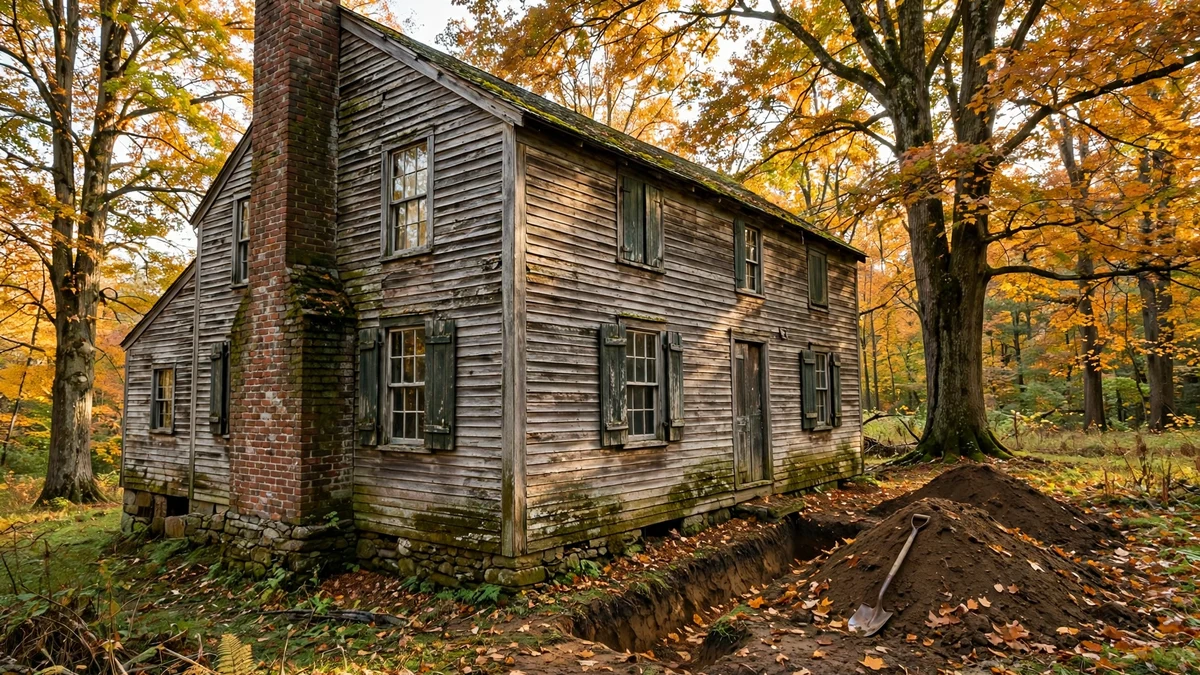
The job starts with a camera inspection and a locator run, which map the old pipe run, its material changes, and its damaged stretches. That map decides the method and the length: a full run replacement covers the whole lateral or main section, while a run that is sound in part may suit a shorter renewal with the sound sections left alone. The distinction is made from footage, not from the age of the house alone, because some old lines are in better shape than their age suggests.
An excavator opens the trench or the pits, the old pipe comes out or is burst apart, and the new pipe goes in on proper bedding with its grade set toward the street. A camera run verifies the finished line, showing the new pipe, its joints, and its connections at each end. The old pipe run, the new pipe, and the connection fitting at each end are all part of that verification, because a replacement that leaks at a connection has not finished the job.
Maine plumbing code material provisions govern which materials are used and how they are joined, and ASTM replacement pipe standards guide the pipe itself. Those standards are the reason a replacement line can be described with confidence: the materials are specified, the joints are made to a standard, and the finished line is verified by camera before the ground is closed.
Not every old line needs replacing now. A clay line with one open joint may suit a spot repair or a lining patch, and a cast iron line with patchy scale may suit jetting and watching. Replacement is the answer when the camera shows the failure pattern running along the line: joints failing in series, channeling along the bottom, or Orangeburg deformation that has already begun. At that point, patching one section at a time means returning to the same line again and again, and a full renewal costs less in disruption over time than a series of emergencies.
The timing question is also a property question. A homeowner planning to sell, to renovate over the line, or to finish a basement above it has good reason to renew a line that is near the end of its life before that work covers it. A homeowner with a line that is old but still sound on camera has good reason to watch it with a scheduled sewer inspection instead, and to replace it when the footage shows change rather than on age alone.
The related pages complete the picture. Traditional sewer line replacement explains the excavation method, sewer lateral replacement explains the house-to-street segment that is often the old line in question, and trenchless pipe lining explains the renewal option for a line that still holds its shape.
It depends on what the camera shows. A clay line with one open joint may suit a spot repair, while a clay line with joints failing in series, roots at joint after joint, and cracked sections is a candidate for full replacement, because patching it section by section means returning again and again.
Cast iron laid before the 1980s corrodes from the inside, channeling along the pipe bottom until the wall thins and roughens. The camera shows how far that channeling has gone, and that picture, not the age alone, decides whether the line needs replacing or watching.
Orangeburg is a bituminized fiber pipe laid from the 1940s to the 1970s, with a working life of around fifty years. Surviving Orangeburg is past that life, and it deforms and collapses with moisture, so a line found to be Orangeburg is usually a replacement candidate.
Full replacement of a sewer line made from an aged material, clay, cast iron, or Orangeburg, that has reached the end of its working life, by excavation, bursting, or lining, chosen from the camera findings.
At its joints. Clay is laid in short sections with many joints, and ground movement, frost, and age open those joints, letting roots and soil in and cracking sections under movement.
From the inside. Wastewater gases turn to acid on the wall, channeling along the pipe bottom, thinning and roughening the wall until it scales, catches waste, and finally gives way.
It is removed in excavation, fragmented in place during bursting, or left as the form during lining. The method depends on the line's shape, damage, and path, as shown on camera.
Usually PVC or HDPE, with connection fittings matched to the house and curb ends. Both offer far fewer joints than the clay line they replace, and joints were where the old line failed.
Call (207) 819-0831 or email info@sewerlinerepairmaine.com. A camera inspection comes first, mapping the old run and its damage, and the replacement method follows from it.
Start by telling us what you are seeing. We will talk through the symptoms and the next step from there.
01
Open excavation for an old line that has lost its shape or grade.
02
The house-to-street segment that is often the old line.
03
Renewal inside the old pipe, for a line that holds its shape.
Last updated: October 28, 2026