01
Sewer Line Cleaning
Clearing the blockage that roots cause, before cutting.
Roots out of pipes
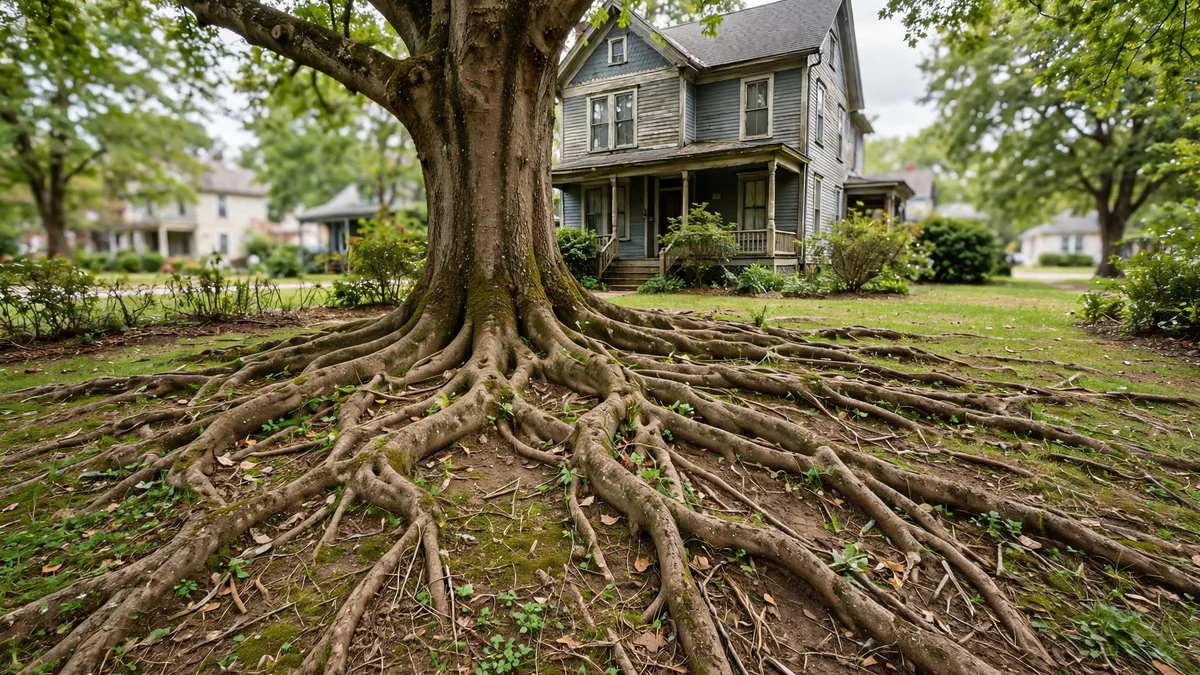
Tree roots do not break into sound pipe. They find their way into pipe that already offers an opening, and the classic opening is a clay joint. Clay pipe laid before the 1970s is made of short sections with a joint every few feet, and those joints open with ground movement, frost, and age. A fine root hair follows moisture escaping through an open joint, and once inside, it grows. What starts as a hair becomes a mass, and the mass catches paper and waste until the line blocks.
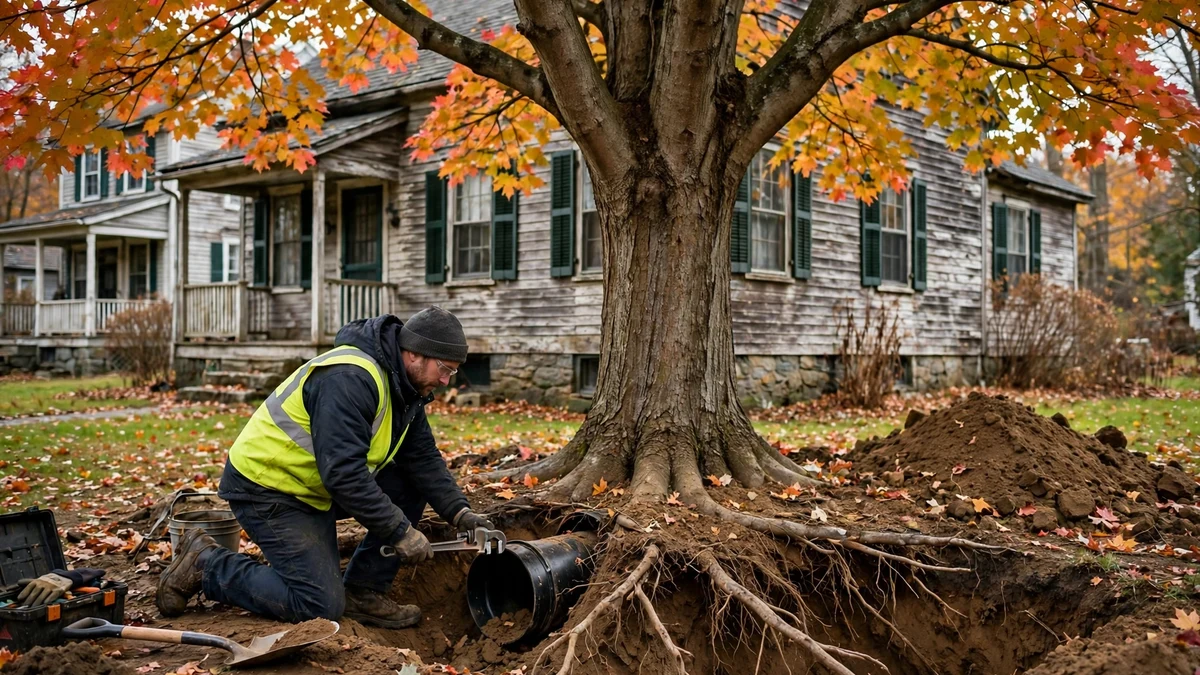
Maine's older neighborhoods are the natural setting for this. Tree-lined streets and pre-1980 homes are the highest-risk combination, because the trees are mature enough to have wide root systems and the pipes are old enough to have open joints. A maple or an oak near a lateral is not a villain in this story. It is a tree doing what trees do, and a joint doing what old joints do. The problem is the meeting of the two, and the fix has to address the pipe, not just blame the tree.
Cast iron lines suffer root entry too, though by a different route. A corroded cast iron joint or a cracked section offers the same opening as a clay joint, and roots exploit it the same way. PVC lines, with tight joints and smooth walls, resist root entry far better, which is why a replacement line in PVC or HDPE changes the root story for a property rather than just interrupting it.
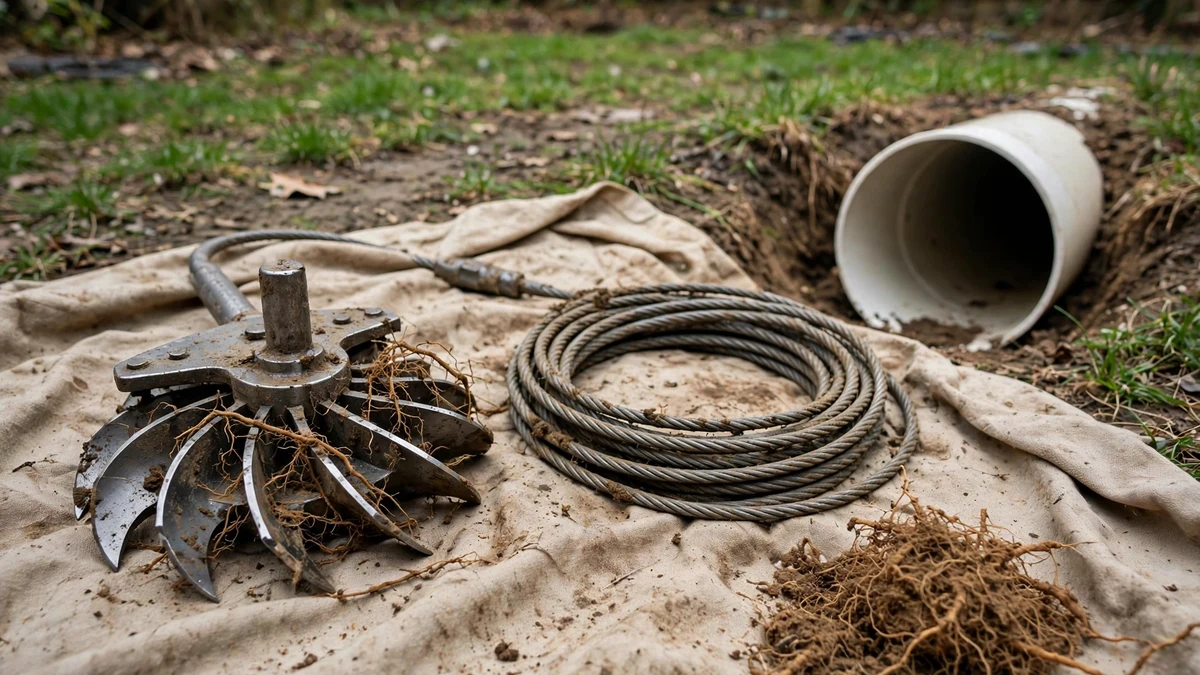
Mechanical root cutting is the removal method. A rooter cutting pass sends an auger with a root cutter head into the line through a cleanout, and the spinning cutter shears the root mass away from the walls and joints, pulling the cut material back out. The pass is worked along the affected length, not just at the blockage point, because roots spread along joints rather than sitting in one spot.
The cutter head matters. A blade head suited to fibrous roots cuts differently from a head suited to a dense, woody mass, and the operator matches the head to what the camera showed before cutting starts. Cutting blind, without a camera picture of the root pattern, risks pushing the cutter through a joint that is already displaced, and a joint displaced by roots is a joint that needs repair, not just cutting.
That is why a post cutting camera check is part of the service rather than an optional extra. After the cutting pass, the camera runs again through the cleared line, showing the joints that the roots entered, the root mass that remains if any, and any joint displacement the roots caused. The footage after cutting is what decides the next step: whether the line can be left with a plan to re-check, whether a spot repair or lining should seal the opened joints, or whether the line needs replacing.
Roots come back after cutting, and a service that pretends otherwise is misleading its customers. Cutting removes the mass inside the pipe, but it does not close the joint the roots entered through. The tree is still there, the joint is still open, and new root hairs will find the same moisture and grow again. The interval between cuttings depends on the tree, the joint, and the season, but regrowth is the normal pattern, not a failure of the cutting.
That honesty shapes the conversation after a root removal visit. Cutting restores the line's use, and for a line with one or two open joints, a repeat cutting schedule combined with a camera check can be a reasonable way to manage the problem. For a line with roots at joint after joint, cutting becomes a treadmill, and the lasting answer is a renewal method that closes the joints: lining, which forms a jointless pipe inside the old one, or replacement, which removes the jointed pipe entirely.
Our sewer line cleaning page covers the clearing side of this work, and our old pipe replacement page covers the renewal side for lines whose joints have gone beyond sealing. Root removal sits between them: it clears the immediate problem and, through the camera check, shows whether the line needs managing or renewing.
Maine tree and sewer guidance and municipal street tree rules both touch this work, because a street tree's roots and a homeowner's lateral can meet under a sidewalk or a road verge. A root problem that involves a street tree is not solved by cutting alone, and it is not solved by removing a tree without understanding the pipe. The camera footage shows where the roots entered and how far they spread, and that picture is the basis for any conversation with a municipality about a street tree, rather than a guess about whose roots they are.
Homeowners sometimes ask whether a tree should come down to save the line. That is a decision about a living tree and a property's character, and it should not be made on the basis of a blocked drain alone. The pipe can often be renewed in a way that leaves the tree standing, because a jointless replacement line resists the roots that a jointed line invited. Cutting plus renewal protects both the line and the tree, and that combination is usually the better answer than choosing between them.
A root removal visit also leaves the homeowner with a clearer picture of their own yard: which tree stands over which joint, how far the roots spread, and which joints are most vulnerable next time. That picture, kept with the camera footage, makes the next decision, whether to cut again, to seal, or to renew, a decision based on evidence rather than on a fresh surprise.
The practical advice is simpler than the theory. If a line blocks repeatedly and a tree stands over its path, get a camera inspection before the next clearing. The footage will show whether roots are the cause, how many joints they have entered, and whether the line needs cutting, sealing, or replacing. That one visit replaces guesswork with a picture, and the picture decides the rest.
By mechanical root cutting: an auger with a root cutter head travels the line through a cleanout, shearing the root mass from the walls and joints and pulling the cut material back out. A camera check afterward shows the joints the roots entered.
Yes, normally. Cutting removes the mass inside the pipe but does not close the joint the roots entered through, so new roots find the same opening and grow again. A lasting fix needs a method that closes the joints, such as lining or replacement.
Mature trees of any species can send roots toward moisture escaping from an open clay or cast iron joint. The risk comes from the combination of a mature tree and an old jointed pipe, not from one particular species, and the camera shows which joints are affected.
Mechanical cutting of roots from inside a sewer line, using an auger with a root cutter head fed through a cleanout, followed by a camera check of the joints the roots entered.
Through openings that already exist, usually open joints in clay pipe or cracked sections in cast iron. Roots follow moisture escaping through the opening and grow inside, catching paper and waste until the line blocks.
No. Cutting restores use but does not close the joint. For a lasting fix, the joints need sealing by lining or the pipe needs replacing, and the post-cutting camera footage shows which fits.
Not necessarily. A jointless replacement line resists the roots that a jointed line invited, so renewing the pipe often protects both the line and the tree. The camera picture should guide that decision.
Repeat blockages after cleaning, especially in a home with a mature tree over the lateral's path, point to roots. A camera inspection confirms it by showing the root mass and the joints it entered.
Call (207) 819-0831 or email info@sewerlinerepairmaine.com, and describe the symptoms and whether a tree stands over the line's path.
Start by telling us what you are seeing. We will talk through the symptoms and the next step from there.
01
Clearing the blockage that roots cause, before cutting.
02
The camera check that shows the joints roots entered.
03
Renewing a jointed old line that roots keep entering.
Last updated: October 28, 2026