01
Sewer Camera Inspection
Camera tracing when the smell points to the line itself.
Find the smell source
A sewer smell in a house is a symptom, and like any symptom, it points to several possible causes. A dry trap, a cracked vent, a failed wax seal, a leaking joint, and a broken line can all produce a smell that seems to come from everywhere at once, because sewer gas moves through a house along paths that have little to do with where it entered. Sewer odor diagnosis is the work of tracing that smell to its source, rather than masking it or guessing at it.
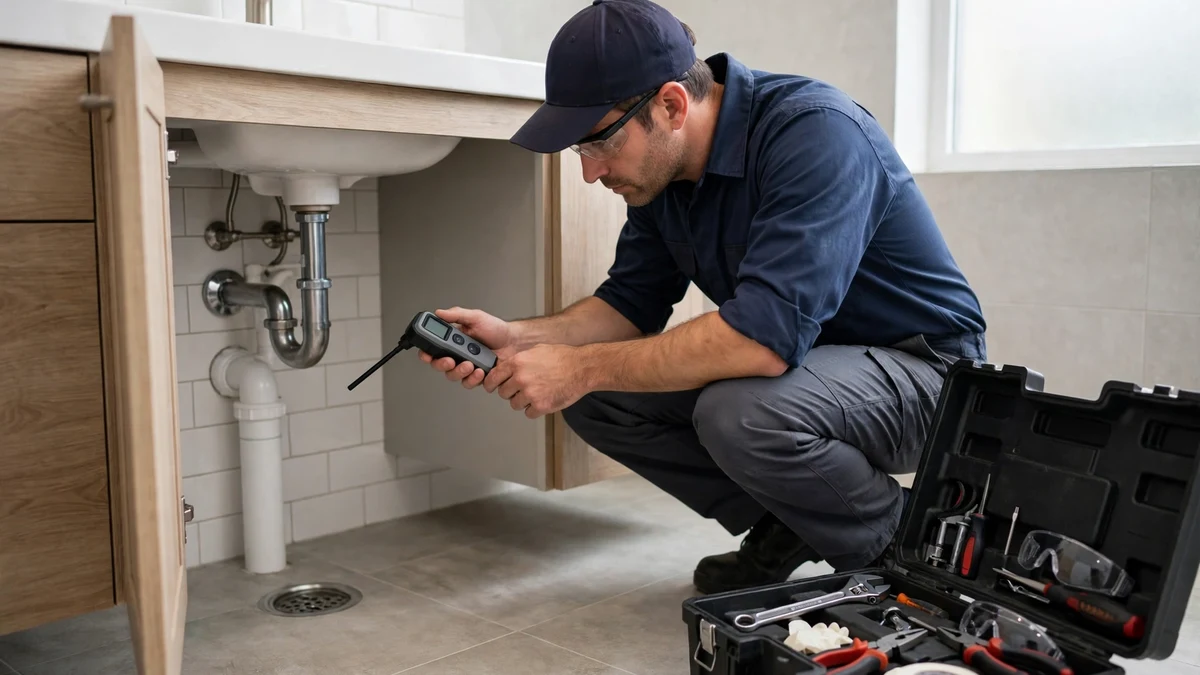
The first step is listening to the smell itself: where it is strongest, when it appears, and what makes it worse. A smell that appears after a fixture has sat unused points to a trap that has dried out. A smell that worsens on windy days points to a vent problem, because wind changes the pressure in the vent system. A smell that hangs around one bathroom points to a seal or a trap in that room. A smell that fills the whole house points further down the system, toward a joint or a line failure. Those patterns narrow the search before any tool comes out.
The tools follow the pattern. A camera traces the line and shows a cracked section or a failed joint. A smoke machine introduces visible smoke into the system, and the smoke escapes where the system leaks, marking the source directly. A gas detector measures sewer gas where it is suspected, confirming that the smell is sewer gas rather than another household odor. Each tool answers a different question, and the diagnosis uses the one that fits the pattern rather than running all of them at every house.
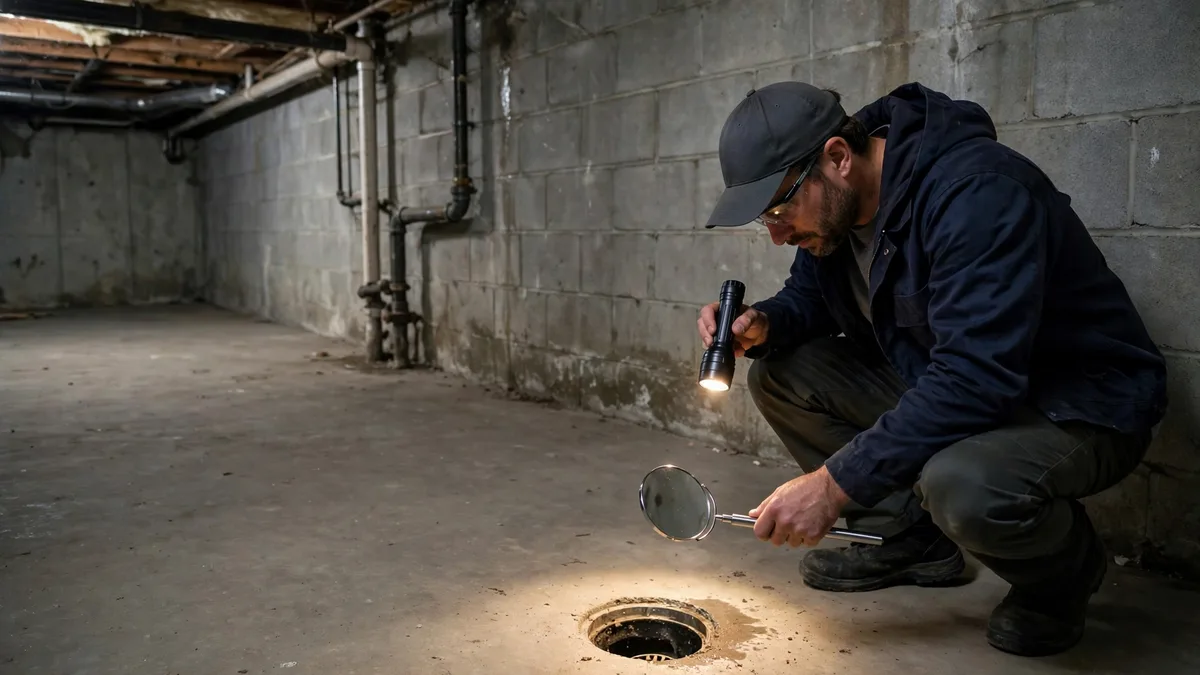
A dry trap is the simplest source and the most common in a rarely used fixture. A trap holds a plug of water that blocks sewer gas from rising into the room, and when a fixture sits unused, that water evaporates, the plug disappears, and gas rises freely. Running the fixture refills the trap and the smell stops, which is itself a diagnosis: a smell that vanishes when a tap runs was a dry trap, and the fix is use, not repair.
A cracked vent is subtler. The vent stack carries sewer gas up and out through the roof, and a crack in that stack, or a joint that has opened in an attic or a wall, lets gas escape into the house instead. The crack may be small and the smell intermittent, worsening when wind or temperature changes the pressure in the stack. A smoke test finds a vent crack well, because the smoke escapes through the same opening the gas uses, and the point where smoke appears is the point that needs repair.
A failed wax seal sits under a toilet, sealing the toilet to the floor flange. When that wax ring compresses, shifts, or dries with age, gas escapes around the base of the toilet, and the smell concentrates in that bathroom. The toilet may still flush normally, because the seal's failure is a gas failure before it is a water failure, and the smell is often the first sign. A failed seal is a small repair once it is found, but it is only found by checking the seal rather than assuming the smell comes from the drains.
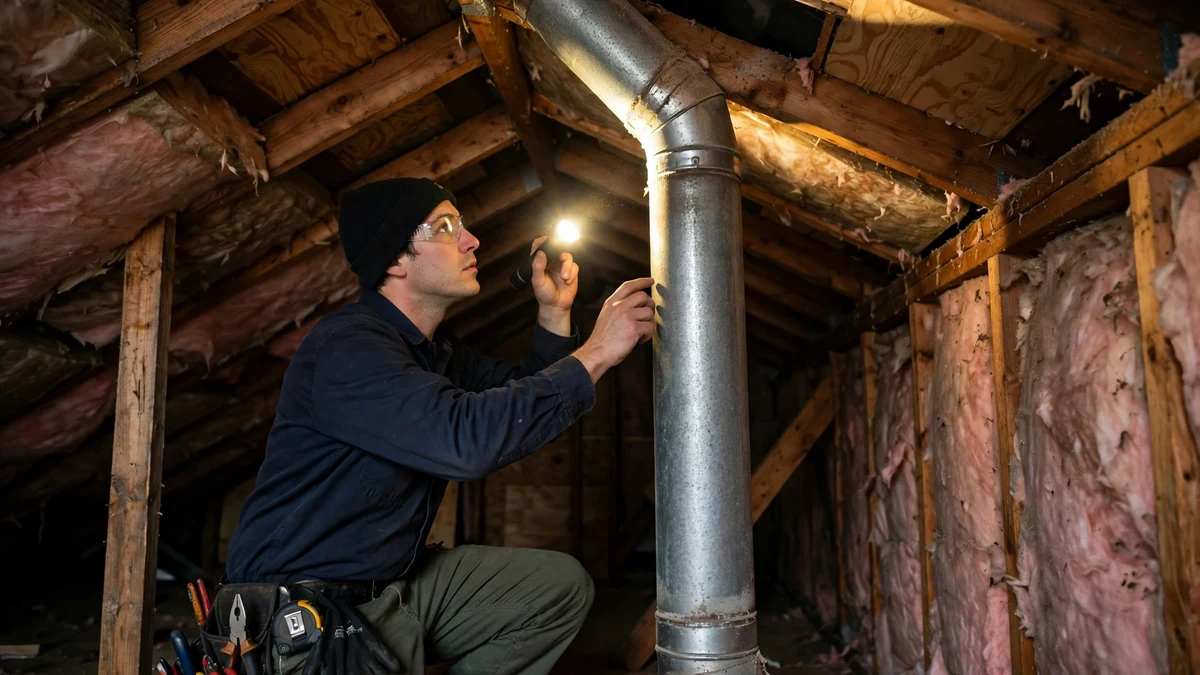
A diagnosis visit follows the smell's pattern rather than a fixed checklist. First, we walk the house with the homeowner, noting where the smell is strongest and when it appears, and checking the traps, the fixtures, and the toilet seals in the affected rooms. That walk often finds a dry trap or a failed seal without any equipment, and those finds are fixed as found rather than turned into a larger investigation.
If the walk does not find the source, the tools come out in the order the pattern suggests. Smoke testing diagnosis fills the system with visible smoke and watches for where it escapes, which marks a vent crack or a joint leak directly. Camera source tracing runs a camera through the line to show a cracked section, a failed joint, or a line failure that the smoke test pointed toward. A trap and vent check confirms that each trap holds water and each vent runs clear to the roof, because a blocked vent can pull water from traps and create a dry trap problem elsewhere in the system.
Maine plumbing code venting provisions govern how traps and vents must be arranged, and indoor air safety guidance shapes how sewer gas exposure is treated during a diagnosis. A smell that is strong, persistent, or accompanied by headaches or nausea deserves prompt attention, because sewer gas is not just unpleasant, and a diagnosis visit should not be delayed while the source is guessed at.
A diagnosis is only useful if it leads to the right repair, and the repair follows the source. A dry trap needs use, or a trap primer where a fixture will sit unused for long periods. A cracked vent needs the vent section repaired, so gas returns to its proper path out through the roof. A failed wax seal needs a new wax ring and a reseated toilet. A leaking joint or a cracked line needs a spot repair, lining, or replacement, depending on what the camera shows.
That last step is where diagnosis connects to the rest of the site. A joint leak found by smoke testing may suit sewer line spot repair if it is local, or trenchless pipe lining if it runs longer. A line failure found by camera may suit sewer camera inspection follow-up on a scheduled sewer inspection plan, where the line is watched after its repair. The diagnosis page is about finding the source. The repair pages are about what follows, and the two are kept apart so the diagnosis is not sold as a repair it is not.
Usually a dry trap, a cracked vent, a failed wax seal under a toilet, or a leaking joint. The pattern matters: a smell after a fixture sat unused points to a dry trap, while a smell that worsens on windy days points to a vent problem, and diagnosis traces the pattern to its source.
By following the smell's pattern first, then using the tool that fits: a smoke machine marks a vent crack or joint leak by where smoke escapes, a camera shows a cracked section or failed joint, and a gas detector confirms the smell is sewer gas.
It can be, especially when it is strong or persistent. Sewer gas is unpleasant and, in concentration, a health concern, so a persistent smell deserves prompt diagnosis rather than masking, and a visit should not be delayed while the source is guessed at.
Tracing a sewer smell in a house to its source, using the smell's pattern, a walk-through of traps and seals, and tools such as smoke testing, camera tracing, and gas detection where the pattern calls for them.
A dry trap in a rarely used fixture. The trap's water plug evaporates, sewer gas rises freely, and running the fixture refills the trap and stops the smell, which is itself the diagnosis.
The wax ring under a toilet that seals it to the floor flange. When it compresses or shifts with age, gas escapes around the toilet base, and the smell concentrates in that bathroom even though the toilet still flushes normally.
Introducing visible smoke into the sewer system and watching for where it escapes. The smoke leaves through the same opening the gas uses, so the point where smoke appears marks the leak or crack directly.
Diagnosis finds the source, and the repair follows the source: refilling a trap, repairing a vent, replacing a wax seal, or repairing a joint or line. The diagnosis is kept separate from the repair so the right repair is chosen.
Call (207) 819-0831 or email info@sewerlinerepairmaine.com, and describe where the smell is strongest, when it appears, and what makes it worse.
Start by telling us what you are seeing. We will talk through the symptoms and the next step from there.
01
Camera tracing when the smell points to the line itself.
02
A local fix when a joint leak is the source.
03
Watching a line after its odor-causing repair.
Last updated: October 28, 2026