By Straight Line Sewer Pros
Three Materials, Three Ways to Fail
This post compares the three materials on the points that matter to a homeowner: how they age, how they fail, what the camera shows, and what repair usually follows. It stays at the level of comparison. For lifespan detail, read our guide to how long sewer lines last.
Clay: Strong Sections, Vulnerable Joints
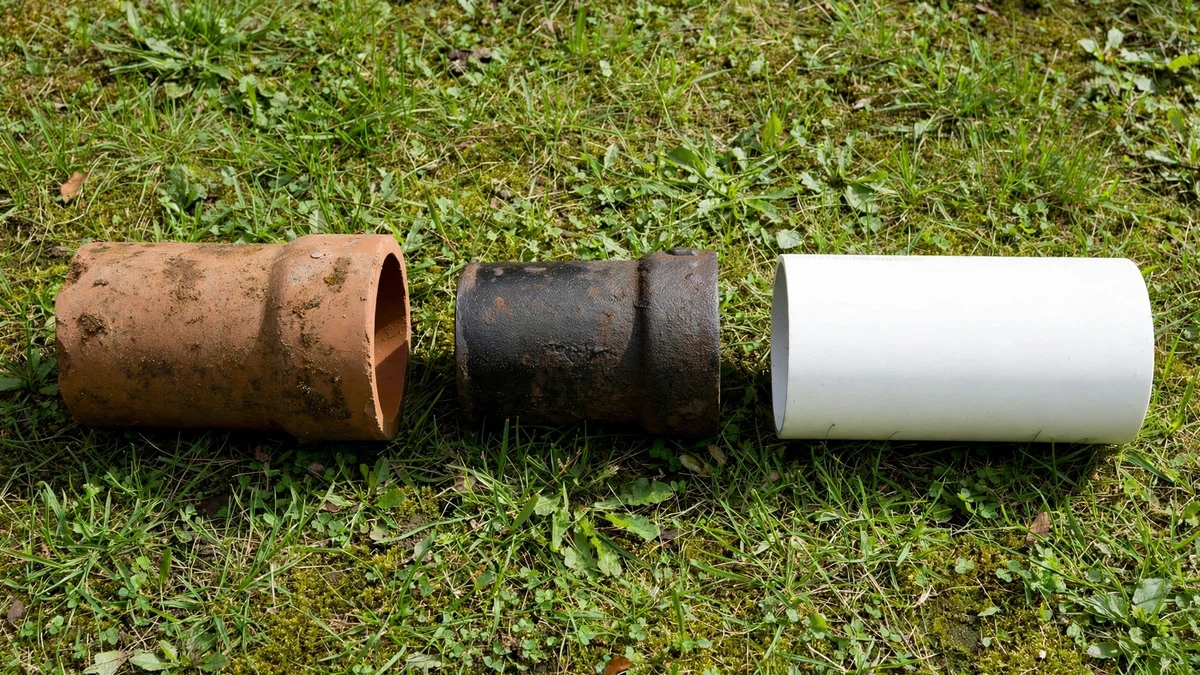
Clay pipe, common before the 1970s, comes in short sections with a joint every few feet. The clay itself is strong and resists corrosion, but those many joints are its weakness. Ground movement opens them, water leaks out, roots follow the moisture in, and waste catches on the steps between sections.
On camera, clay shows as a regular rhythm of joints, and the defects cluster at those joints: gaps, root hairs, and small offsets. A clay line with tight joints can serve for many more years. A clay line with open joints at many points is a line whose joints, not whose walls, have reached the end of their life.
Side by Side: The Three Materials Compared
The table below puts the three materials on the same points, so the contrast is easy to see. Keep in mind that a mixed line is common: an older home may have clay outside, cast iron inside, and a PVC section where a past repair was made.
| Point | Clay | Cast iron | PVC |
|---|
| Common era | Before the 1970s | Before the 1980s | 1970s onward |
| Main weakness | Many joints that open | Internal corrosion and channeling | Damaged joint or poor grade |
| Root risk | High, at open joints | Moderate, at failed joints or cracks | Low, with tight joints |
| Camera sign | Gaps and roots at joints | Scale and thinning along the bottom | Single bad joint, dip, or crushed section |
| Usual repair path | Spot repair, lining, or replacement by extent | Lining or replacement by wall condition | Spot repair of the failed joint or section |
The table also shows why a camera material identification step matters. Two lines with the same symptom can need different repairs because their materials fail differently. A root mass in clay points to joints. Scale in cast iron points to wall condition. A single bad joint in PVC points to one section.
Which Material Is Best for an Old Home?
Homeowners sometimes ask which material is best, as if they could choose the past. The useful question is different: given the material already in the ground, what does it need? A clay line with a few open joints may suit a spot repair or a lining patch. A cast iron line with deep channeling may suit lining or replacement depending on how much wall remains. A PVC line with one bad joint usually suits a single section repair.
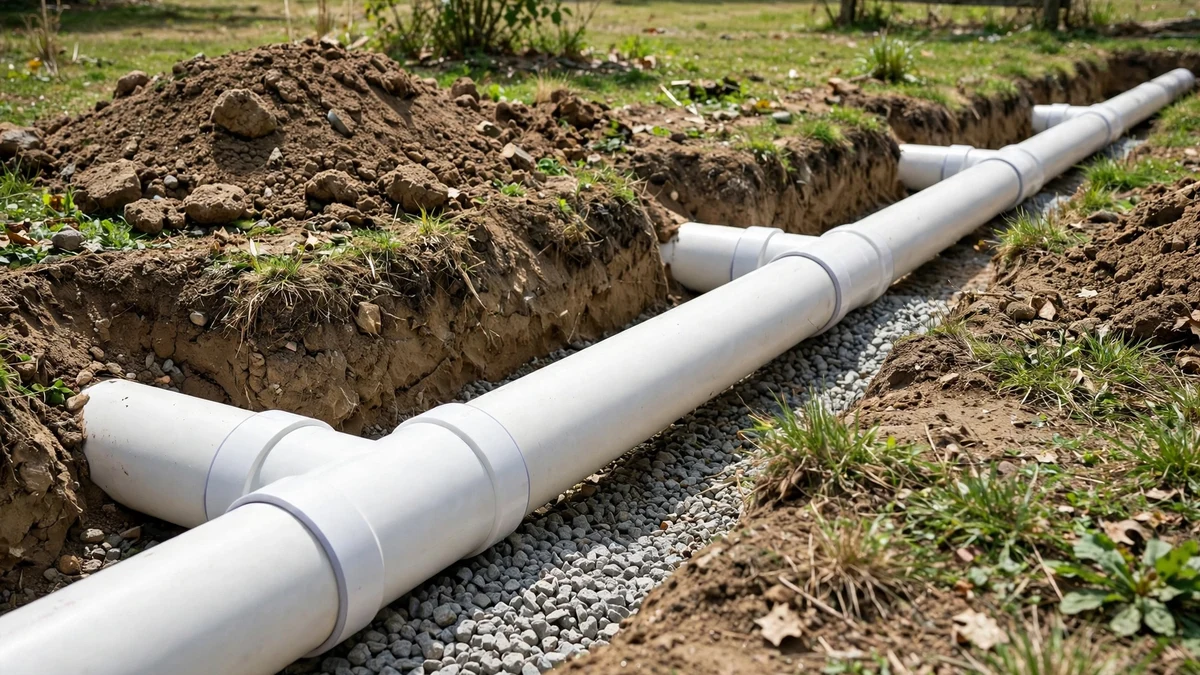
When a line is replaced, the new pipe is usually PVC or HDPE, chosen for tight joints and smooth flow. That choice is about the future, not about judging the past. Clay and cast iron served their era well, and many lines from that era still serve today. The question is never which material is best in the abstract. It is what the camera shows in this line, in this ground.
If you do not know what material your line is, a sewer camera inspection will identify it in one visit. Call us at (207) 819-0831 or use our contact page. We work across Maine from 400 Congress St, Portland, ME 04101, and we will show you the material on screen before we talk about repairs. For lines at the end of their material life, our old pipe replacement page explains the next step.
Mixed Lines: Reading a Pipe With More Than One Material
Many Maine lines mix materials, and a mixed line needs reading section by section. A common mix is clay outside, cast iron inside, and a PVC section where a past repair replaced one stretch. Each section carries its own failure pattern, so a single verdict for the whole line would mislead.
On camera, material changes show as a shift in color, joint spacing, and wall texture. Clay gives way to darker, rougher cast iron, which gives way to pale, smooth PVC. Noting each change, and grading each section on its own terms, turns a mixed line into a clear map: which sections are sound, which need watching, and which need work.
Repairs on a mixed line follow the same logic. A failed clay joint gets a joint answer, a corroded cast iron section gets a wall answer, and a bad PVC joint gets a single section answer. The material map is what keeps those answers separate instead of forcing one repair on a line that needs three different ones.
A clay or cast iron run that still holds its shape and grade may suit trenchless pipe lining, which seals its cracks and joints from inside without opening the ground along the whole run.
People Also Ask
Is clay or cast iron sewer pipe better?
Neither clay nor cast iron is simply better, since clay fails at its many joints while cast iron fails by internal corrosion along its bottom. A clay line with tight joints can outlast a corroded cast iron line, and a sound cast iron line can outlast a clay line with open joints.
Is PVC sewer pipe better than old materials?
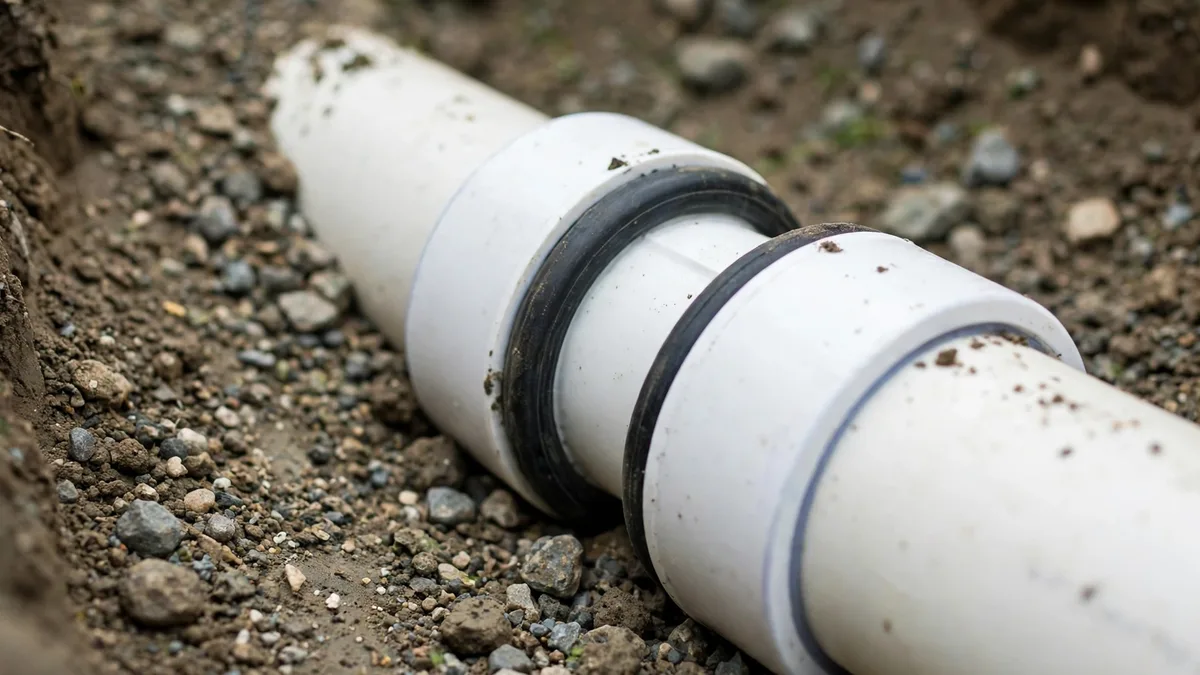
PVC sewer pipe resists roots and corrosion better than clay and cast iron, with tight joints and a smooth interior, so it has the longest horizon. It can still fail from a damaged joint, a crushed section, or a poor grade, so material alone never guarantees a sound line.
How can I tell what material my sewer pipe is?
A sewer camera inspection identifies pipe material directly, since clay shows short sections with frequent joints, cast iron looks dark and scaled, and PVC looks pale and smooth. House age hints at material, but only the camera shows what is actually in the ground.
Frequently Asked Questions
Can a sewer line mix materials?
Yes, a mixed line is common, such as clay outside, cast iron inside, and a PVC section where a past repair was made. A camera run maps each material change, and repairs are planned section by section rather than assuming one material for the whole line.
Does clay pipe need replacing just because it is old?
No, clay pipe does not need replacing for age alone, since the clay sections themselves can last many decades. Replacement becomes the conversation when joints have opened at many points, roots keep returning, or sections have cracked or shifted.
Why does cast iron corrode if it is so strong?
Cast iron is strong, but waste gases form acids that eat its inner wall, especially along the bottom where water rests. That channeling thins the wall over decades, roughens the surface, and narrows the opening, even though the pipe still looks solid from outside.
Is PVC pipe used for sewer line replacement?
Yes, PVC is a common replacement material because its joints are tight, its interior is smooth, and it resists roots and corrosion. HDPE is another common replacement choice, and the right pick depends on the method, such as bursting or open excavation.
Do pipe material standards matter for a repair?
Yes, pipe material standards, such as ASTM pipe material standards, set the requirements for pipe strength, joint tightness, and durability. A repair that meets those standards, and the Maine plumbing code, gives a homeowner a clear basis for judging the work.
Can lining fix any material?
Lining can seal cracks and joint leaks in clay, cast iron, and PVC when the host pipe still holds its shape and grade. It cannot fix a collapsed pipe, a deep belly, or a badly offset joint in any material, and those cases need excavation or bursting instead.