Homeowners often ask for one number for how long a sewer line lasts, and the honest answer is that it depends. The material sets the range, the joints and the ground narrow it, and the camera shows where a specific line sits inside that range. A line can outlast its material era, or fail early, depending on how it was laid and what the ground has done to it since.
There Is No Single Number, and That Is the Honest Answer
This post gives the useful version of the answer: how each common material ages, what failure looks like for each one, and how a lifespan assessment works in practice. It does not promise a lifespan for any single line, because no honest writer can do that without seeing the pipe.
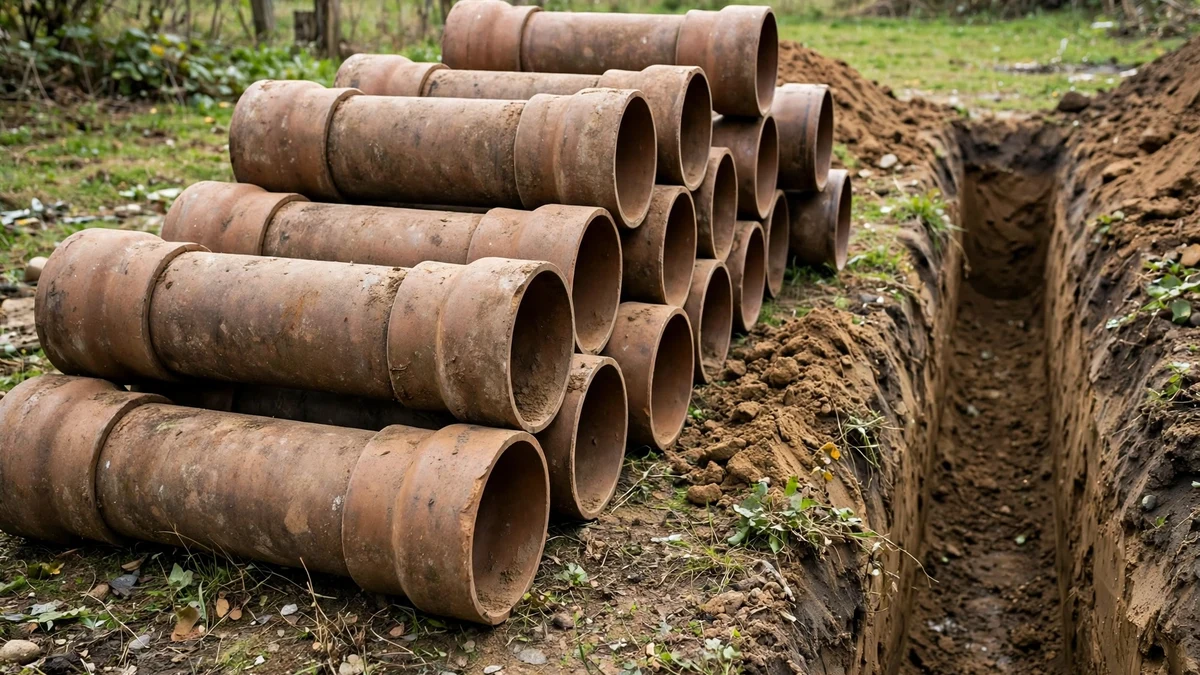
Clay Pipe: Long Lived Pipe, Short Lived Joints
Clay pipe itself is durable, and a clay section can last many decades without losing strength. Its weakness is not the clay but the joints between its short sections. Those joints were often sealed with mortar or simple gaskets, and over decades of ground movement they open, leak, and admit roots.
A clay line therefore rarely fails because the clay wore out. It fails because its joints gave out, one by one, until roots, soil, and waste movement took their toll. A clay lateral from before the 1970s with sound joints can still work well, while the same era line with open joints can need major work. The camera, not the calendar, tells which case a given line falls into.
Cast Iron: Strong Pipe That Corrodes From Inside
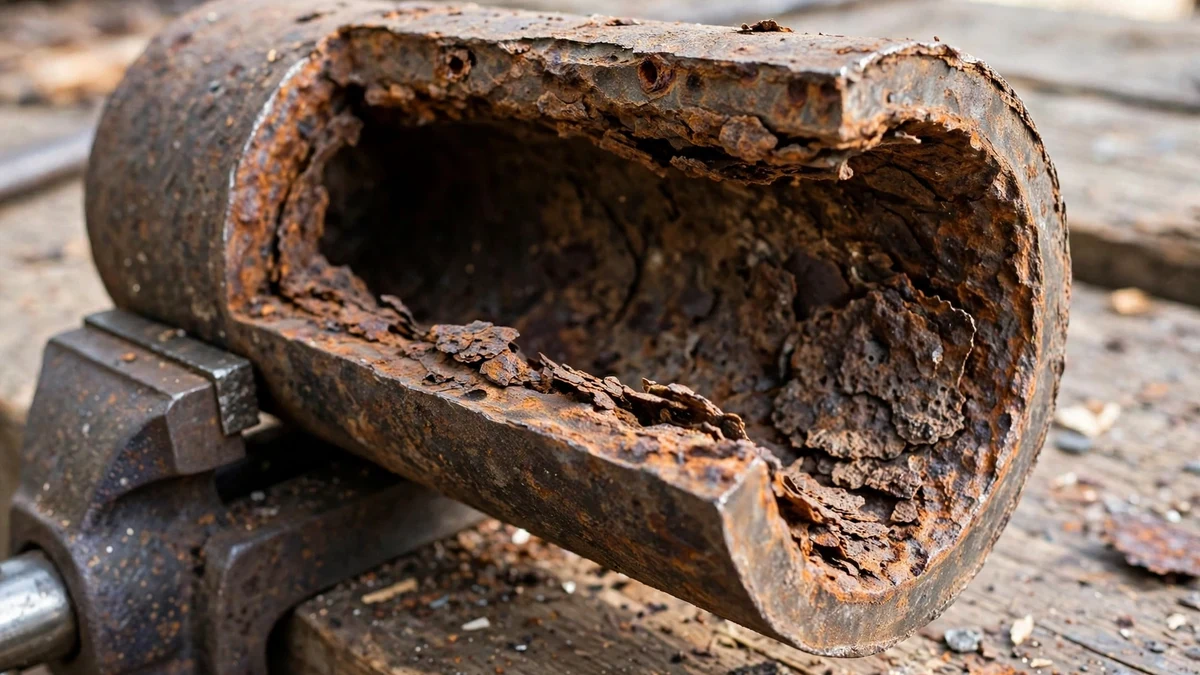
Cast iron pipe from before the 1980s is strong, and it can carry waste for many decades. Its weakness is internal corrosion. Waste gases form acids that eat the pipe from the inside, channeling along the bottom where water sits. The wall thins there first, the inner surface roughens and catches waste, and the opening narrows as scale builds.
That corrosion is why a cast iron line can look sound from outside yet fail inside. A camera run shows the channeling, the scale, and the thinning directly, and a condition grade records how far each has gone. A cast iron line with light scale and an even wall has life left. A line with deep channeling and a thin bottom is near the end of its working life, even if it still drains today.
Orangeburg: A Material Past Its Working Life
Orangeburg is a bitumen coated fiber pipe laid from the 1940s to the 1970s, and its working life was about fifty years. That life has now run out for nearly every Orangeburg line still in the ground. The material absorbs moisture, deforms under soil pressure, flattens, and eventually collapses.
An Orangeburg line that still drains is living on borrowed time in a practical sense, because its failure mode is deformation rather than slow wear. A camera run on Orangeburg often shows an oval or flattened shape, and that shape is the finding that matters. When a home is found to have Orangeburg, planning a replacement beats waiting for a collapse, and our old pipe replacement page explains how that replacement is planned.
PVC and ABS: The Longest Horizon, With One Caveat
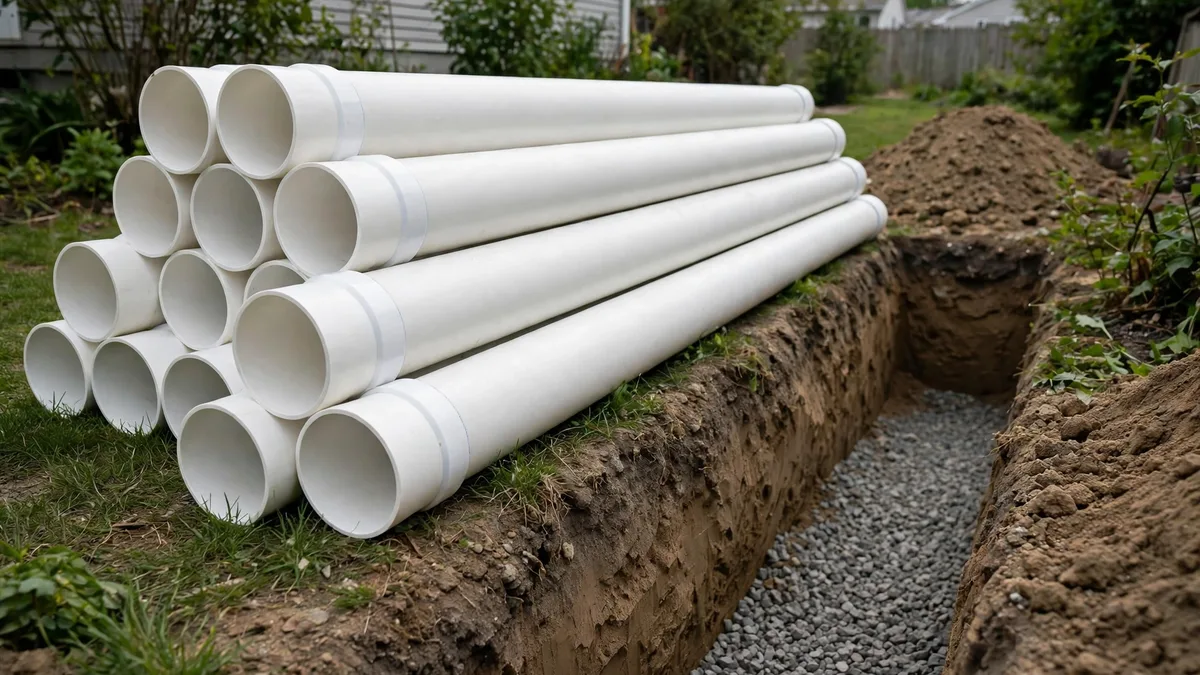
PVC and ABS pipe from the 1970s onward have the longest horizon of the common materials. Their joints are tight, their interiors smooth, and they resist roots and corrosion far better than clay or cast iron. A well laid PVC line can serve for many decades with little more than occasional clearing.
The caveat is installation and ground. A PVC joint damaged during install, a section crushed by a heavy load above, or a line laid with a poor grade can fail early despite the material. PVC also moves with frost heave in Maine soil, so a joint that was tight at install can open after years of freeze and thaw. Material gives PVC a long horizon, but the camera still has the final word.
How a Lifespan Assessment Actually Works
A lifespan assessment is a camera condition grading exercise, not a guess from the year a house was built. We run a camera through the line, note the material, and grade each section: joint condition, wall condition, roots, belly, and deformation. The grade for each section, taken together, shows whether a line has years of sound service left or whether its failures are spreading.
That assessment also weighs the ground. A line in stable, dry soil ages more slowly than a line in wet, shifting soil or under a driveway that carries heavy loads. Frost depth in Maine commonly runs four to five feet or more, and up to seven to eight feet in northern Maine, so burial depth and frost movement are part of every assessment here.
Material: clay, cast iron, Orangeburg, or PVC sets the starting range
Joints: open or failed joints shorten life more than wall wear in clay
Wall: channeling and thinning shorten life most in cast iron
Shape: flattening or collapse ends life in Orangeburg
Grade and ground: belly, frost heave, and loads affect every material
If your line is old enough that its material era is in question, a scheduled sewer inspection gives you a baseline and a trend. Call us at (207) 819-0831 or use our contact page. We work across Maine from 400 Congress St, Portland, ME 04101, and we will grade your line section by section.
Soil and Groundwater: The Quiet Factors
Soil and groundwater shape a line lifespan as surely as material does, though they rarely get credit. Wet soil keeps joints damp and feeds root growth toward any leak. Silty soil holds water and heaves hardest in winter, moving joints more than dry, sandy soil does. Soil that shifts or settles under a section leaves that section unsupported, so it sags and forms a belly.
Groundwater level matters too. A line that sits in groundwater for much of the year faces constant pressure at its joints, and any gap admits water and soil particles that widen it further. A line in dry, stable soil faces far less of that pressure, which is one reason two lines of the same material and age can age very differently.
None of this can be judged from the surface. A camera run shows the joints and the wall, and a locator survey shows depth and route, but soil conditions are read from the symptoms: joint gaps in wet ground, bellies where soil settled, and root masses where moisture drew roots in. Those symptoms, taken together, complete the lifespan picture.
A lifespan judgment always rests on footage, so a sewer camera inspection is the step that turns a material era and a house age into a grade for your specific line.
People Also Ask
How long does a clay sewer pipe last?
A clay pipe section itself can last many decades, but its joints often fail sooner as ground movement opens them and roots enter. A clay line with sound joints can still work well, while a clay line with open joints at many points is near the end of its useful life.
How long does a cast iron sewer pipe last?
A cast iron sewer pipe can last many decades, but internal corrosion thins its wall along the bottom and roughens its interior over time. A camera grade shows how far that channeling has gone, which matters more than the age of the pipe alone.
Is Orangeburg pipe still safe to use?
Orangeburg pipe is past its working life of about fifty years, since it absorbs moisture, deforms, and flattens under soil pressure. A line that still drains may keep working for a while, but planning a replacement is wiser than waiting for a collapse.
Frequently Asked Questions
Does the age of my house tell me the age of my sewer line?
House age hints at line material, since clay was common before the 1970s and cast iron before the 1980s, but a line may have been replaced since the house was built. A camera run shows the actual material in the ground, which is the only certain answer.
Can a sewer line last longer than its expected life?
Yes, a line can outlast its material era when its joints stay tight, its grade stays steady, and its soil stays stable. Many old lines still work well, which is why a camera grade matters more than a calendar date when judging a specific line.
What shortens a sewer line lifespan most?
Open joints shorten clay life most, internal corrosion shortens cast iron life most, and deformation ends Orangeburg life. For every material, poor grade, frost heave, heavy loads above, and root entry all shorten the working life.
Does PVC sewer pipe ever fail?
PVC pipe rarely fails by age alone, but it can fail from a damaged joint, a crushed section, or a poor grade laid at install. Frost movement in Maine soil can also open a PVC joint over time, so even a PVC line deserves a camera check when symptoms appear.
How often should an old sewer line be inspected?
An old line deserves a camera check when symptoms appear, before a home purchase, and then on a planned schedule so changes are caught early. Comparing footage over time shows whether a joint gap or a belly is stable or growing, which a single visit cannot show.
Is it better to replace an old line before it fails?
Replacing a line before it fails lets a homeowner plan the method, the timing, and the surface restoration, instead of reacting to a backup. That planning case is strongest for Orangeburg and for lines where a camera grade shows failures spreading across many sections.