There is no single answer to whether homeowners insurance covers sewer line repair, because coverage depends on your policy wording, the cause of the damage, and any endorsements you carry. Some policies cover sudden damage to a line, many exclude gradual wear, and backup coverage often sits in a separate endorsement. This post explains the angles to check, and it contains no pricing or coverage promises, because only your policy can answer for your home.
The Short Answer: Check Your Policy, Not a General Rule
Read this post as a checklist for a conversation with your insurer, not as a verdict. The questions below are the ones that decide most claims, and the records section explains what documentation helps when you ask them.
Covered Damage vs Excluded Wear: The Central Distinction
Most policies draw a line between sudden damage and gradual wear. A line broken by a sudden event, such as a tree fall or a collapse caused by an outside force, is more likely to fall on the covered side. A line that failed slowly through corrosion, joint wear, root growth, or age is more likely to fall on the excluded side, since insurers treat gradual deterioration as maintenance rather than damage.
That distinction is why the cause matters as much as the break. A camera report that shows a sudden break reads differently from a report that shows decades of channeling in cast iron or roots at many clay joints. When you talk to your insurer, ask how your policy treats each cause, and ask whether the wording names sewer lines, service lines, or underground piping at all.
The Backup Endorsement: A Separate Question
Backup coverage is often separate from line repair coverage. A standard policy may exclude damage from water that backs up through a sewer or drain, while a backup endorsement adds that coverage back for a stated scope. If your loss is water damage from a backup rather than the line repair itself, the endorsement question decides the answer.
Ask your insurer three things about backup coverage. Does your policy include a backup endorsement, and what does it cover: cleanup, repair, or both? Does it cover the line repair itself, or only the damage the backup caused inside the home? And does it require any condition, such as a backwater valve, for the endorsement to apply? Those answers vary widely, so do not assume them from a neighbor policy.
Service Line Coverage: A Newer Option Worth Asking About
Some insurers now offer service line coverage as an add-on, which covers repair of underground service lines, including sewer laterals, when they fail. This coverage is distinct from standard dwelling coverage and from backup endorsements, and it may carry its own terms, such as a waiting period or a requirement that the line be inspected.
If your policy does not include service line coverage, ask whether it can be added, what it covers, and what it excludes. Ask whether a camera inspection record helps, and whether a prior inspection affects eligibility. Adding coverage before a failure is the only time it helps, so the question is worth asking while your line is still working.
Records That Help When You Ask
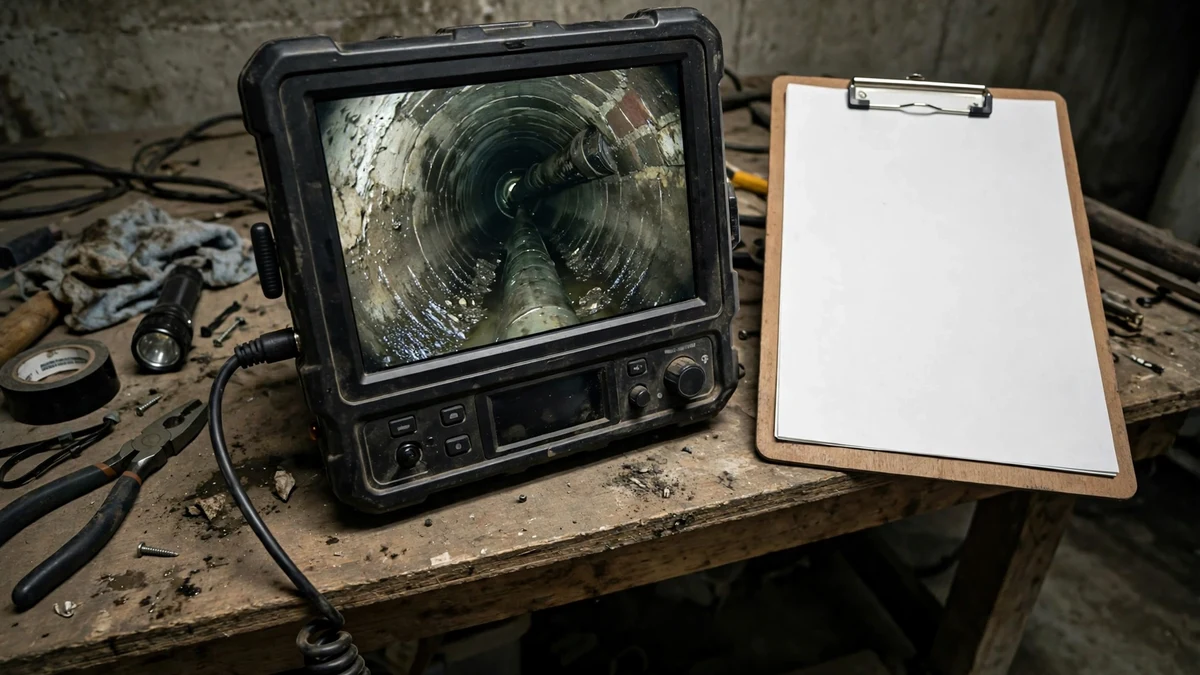
Good records help every insurance conversation, because they turn a claim from a story into evidence. A camera footage record shows the condition of the line, the location of the failure, and whether the damage looks sudden or gradual. An inspection record with dates shows when the line was last checked and what was found. A repair record shows what was done, when, and why.
Keep those records together: the camera video, the written findings, any prior inspection reports, and photos of the damage and the backup. When you call your insurer, describe the cause as the camera showed it, not as a general label, since the cause is what the policy wording turns on. A sewer camera inspection gives you that record, and a scheduled sewer inspection keeps it current over time.
Camera footage record: shows the failure and its location on video
Written inspection record: dates, findings, and condition grades
Repair record: what was done, when, and why
Photos: damage, backup extent, and affected areas
Policy wording: the exact terms for sewer, service line, and backup coverage
Questions to Ask Your Insurer, in Order
When you call your insurer, work through the questions in order, and note the answers with the name of the person you spoke to. First, does my policy cover sewer line repair at all, and under which section? Second, how does it treat the cause my camera showed: sudden damage, or gradual wear? Third, does my backup endorsement, if any, cover cleanup, repair, or both?
Fourth, does my policy include service line coverage, and if not, can it be added? Fifth, what records do you need from me: camera footage, a written report, photos, or an itemized repair record? Sixth, is there a waiting period, a condition, or an exclusion I should know about before I file? Those six questions cover most of the ground, and the answers will tell you whether a claim is worth filing.
If you need a camera record or an inspection report to take to your insurer, call us at (207) 819-0831 or use our contact page. We serve homes across Maine from 400 Congress St, Portland, ME 04101, and we will give you footage and findings you can hand to your insurer as they are.
When a Claim Is Denied: Reading the Letter
A denied claim letter is worth reading closely, because it names the policy section and the reason behind the denial. Common reasons include gradual wear, a backup exclusion, a missing endorsement, or a condition that was not met, such as a required valve. Each reason points to a different next step, so the wording matters more than the verdict.
If the denial cites gradual wear, ask whether any part of the loss, such as water damage inside the home, falls under a different section, such as backup coverage. If the denial cites a missing endorsement, ask whether that endorsement can be added for future losses. If the denial cites missing records, ask exactly which records would change the answer, and whether a camera report or a repair record would supply them.
Keep the denial letter with your policy, your camera footage, and your repair records. That file becomes the basis for any appeal, and it also becomes the checklist for the next policy renewal, when the gaps this claim exposed can be closed before another failure arrives.
When a repair record is needed for an insurer, a sewer line spot repair report that names the joint, the cause, and the date carries more weight than a general statement that work was done.
People Also Ask
Does homeowners insurance cover a broken sewer line?
Homeowners insurance may cover a broken sewer line when the damage is sudden, but it often excludes gradual wear such as corrosion, joint aging, or root growth. Your policy wording and the cause shown on camera decide the answer, so check both before assuming coverage.
Does insurance cover sewer backup damage?
Insurance covers sewer backup damage only when a policy includes backup coverage, often as a separate endorsement, since standard policies commonly exclude backup losses. Check whether your endorsement covers cleanup, repair, or both, and whether it requires a backwater valve.
What is service line coverage for a sewer line?
Service line coverage is an add-on that covers repair of underground service lines, including sewer laterals, when they fail, distinct from standard dwelling coverage and backup endorsements. Ask your insurer whether it can be added, what it covers, and what records it requires.
Frequently Asked Questions
Should I call my insurer before or after a sewer repair?
Call your insurer before a repair when you can, since some policies require notice before work starts or an inspection of the damage. When a backup needs urgent action, document the damage with photos and camera footage first, then call as soon as the immediate problem is contained.
Will filing a sewer claim raise my premium?
A claim can affect future premiums, and the effect depends on your insurer, your claims history, and the size of the loss. Ask your insurer how a claim would affect your policy before filing, especially when the repair scope is small enough that the answer matters.
Does insurance cover tree root damage to a sewer line?
Tree root damage is often treated as gradual wear rather than sudden damage, since roots grow over time through joints that were already open. A camera record showing a sudden break caused by roots reads differently, but root damage alone is commonly excluded.
What if my policy excludes sewer line repair entirely?
If your policy excludes sewer line repair, ask about adding service line coverage or a backup endorsement for future losses, since those add-ons only help when added before a failure. For the current failure, the repair itself will fall outside the policy as written.
Do I need a camera inspection for an insurance claim?
A camera inspection is not always required, but it greatly strengthens a claim, since footage shows the failure, its location, and its cause in a way words alone cannot. Insurers commonly ask for a written report and photos, and camera footage answers both requests at once.
Can I choose my own sewer repair company for an insurance claim?
Most policies let you choose your own repair company, though your insurer may want an estimate or an inspection before work starts. Keep your camera footage, written findings, and repair record together, and share them with your insurer as the work proceeds.