Sewer or septic

Sewer Line vs Septic System

A sewer line carries waste from your home to a public sewer in the street, which carries it on to a treatment plant. A septic system treats waste on your own property, in a tank and a drain field buried in your yard. Both systems start with pipes inside your house, but they end in different places, and that ending decides who can repair them and how.

Maine country road with a house and a small town street with manholes

By Straight Line Sewer Pros

The Plain Difference in One Paragraph

This distinction matters more in Maine than in most states, because about half of Maine homes use individual septic systems rather than a public sewer. If you call about a sewer line problem but your home runs on septic, you need a septic professional, not us. We cover sewer lines only, and this post exists so you can tell which system you have before you call anyone.

How to Tell Which System Your Home Uses

Start with records. A town office, a sewer district, or a property record can usually say whether a home connects to a public sewer. In Kennebunk, for example, the sewer district serves about half of homes, with the rest on septic, so even neighbors on the same road can differ. A Kennebunk town plan document describes that split in plain terms, and your own town may publish a similar record.

Physical clues help too. A home on public sewer usually has a sewer bill, a manhole in the street nearby, and no tank or drain field in the yard. A home on septic usually has a tank access cover in the yard, a drain field area that must stay clear, and no sewer bill. A camera run with a locator can also trace a lateral and show whether it heads to the street or to a tank, which settles the question when records are unclear.

What a Sewer Lateral Looks Like, and Where It Ends

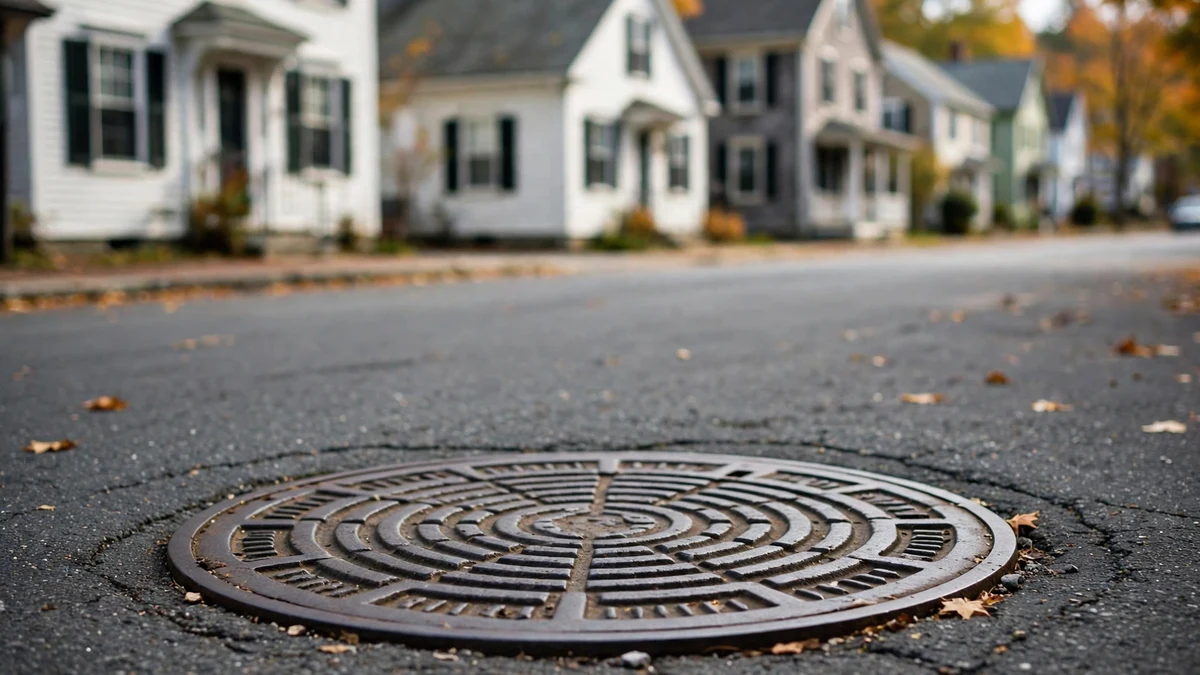
Manhole cover in a town street lined with older homes

A sewer lateral is the pipe that runs from your house to the public sewer in the street. It passes under your yard, crosses the property line, and joins the street main at a connection. Everything from your house to that connection is the lateral, and the lateral is the part of a sewer system that a sewer line company repairs.

A septic system has a different boundary. Waste leaves the house into a concrete tank, where solids settle and liquids flow on to a drain field. The tank boundary is where septic work begins, and it belongs to septic professionals with different tools and rules. Maine septic system rules govern tanks and drain fields, while municipal sewer rules govern street mains and laterals, and the two sets of rules do not overlap.

Why the Wrong Call Wastes Time

Calling the wrong trade wastes a visit and delays the fix. A sewer line camera cannot diagnose a failing drain field, and a septic pump truck cannot repair a broken lateral to the street. Worse, a homeowner who assumes a sewer connection may miss a septic problem, such as a full tank, until it backs up into the house.

The reverse mistake happens too. A homeowner on public sewer who assumes a septic problem may wait for a tank service that will never come, while a broken lateral keeps leaking. Knowing your system before you call gets the right trade to the right problem on the first visit, and that is the whole point of this post.

Signs That Point One Way or the Other

Several everyday signs point toward one system. A monthly or quarterly sewer bill points to public sewer. A tank pumping record, or a yard area that must stay unpaved and unplanted, points to septic. A street with manholes and a sewer district name on a town map points to public sewer, while a rural road with no street main points to septic.

When signs conflict, records decide. A home may sit on a sewered street yet still run on septic, as in the parts of Kennebunk outside the sewer district. A home may also have switched systems when a sewer main reached its street years after it was built. In those cases, a records check with the town or district, or a camera and locator survey, gives the certain answer.

What We Do, and What We Do Not Do

We repair sewer lines and closely related sewer work across Maine, including camera inspection, lining, bursting, spot repair, and lateral replacement for homes on public sewer. We do not pump, repair, or install septic systems, and we do not diagnose drain fields. That boundary is deliberate, and it keeps our work focused on the system we know best.

If you are on public sewer and your line shows trouble, a sewer camera inspection is the right first step, and a scheduled sewer inspection can keep an older lateral watched over time. If you are on septic, a septic professional is the right call, and we will say so plainly rather than take a job that belongs to another trade.

Unsure which system your home uses? Call us at (207) 819-0831 or use our contact page. We work from 400 Congress St, Portland, ME 04101, and we can help you read your records or trace your line to settle the question.

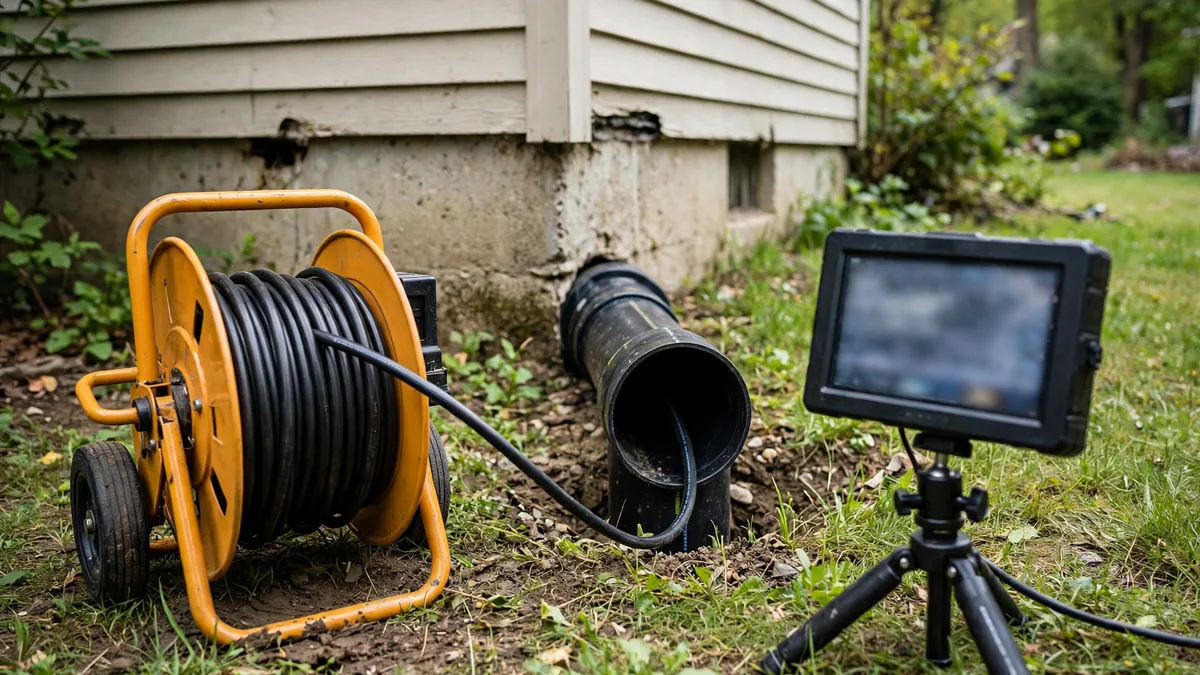
Sewer camera reel and monitor beside an outdoor cleanout pipe at a house foundation

When Records and Reality Disagree

Records sometimes disagree with what is in the ground. A home may appear on a sewer map yet still run on septic, because the map shows a main in the street, not a connection from that home. A home may also have connected to sewer years after it was built, leaving an old tank buried and forgotten in the yard.

When records conflict, a physical check settles the question. A camera run with a locator follows the lateral from the house and shows whether it heads to the street main or to a tank. A tank access cover in the yard, a sewer bill, or a pumping record each add weight to one side, and together they usually resolve the conflict without guesswork.

That resolution matters before any repair is booked, because the wrong trade on the wrong system wastes a visit and delays the fix. A few minutes with records, plus a locator survey when records conflict, gets the right professional to the right system on the first visit.

If the check confirms a sewer lateral with a single failed joint, a sewer line spot repair may fix that joint without touching the rest of the line, which is a very different job from any septic work.

People Also Ask

How do I know if my Maine home is on sewer or septic?

Check your town or sewer district records first, since they say whether a home connects to a public sewer, and look for a sewer bill, street manholes, or a tank cover in the yard. A camera and locator survey traces the lateral to the street or to a tank when records are unclear.

Can a house switch from septic to sewer?

A house can switch from septic to sewer when a public main reaches its street and the town or district allows a connection, with the old tank usually abandoned under local rules. The switch needs a new lateral to the street main, and it is a sewer line job once the connection is approved.

Does a sewer line company work on septic systems?

A sewer line company works on laterals to a public sewer, not on septic tanks or drain fields, since the two systems use different tools, rules, and skills. A home on septic needs a septic professional, and a home on sewer needs a sewer line company.

Frequently Asked Questions

What is the main difference between a sewer line and a septic system?

A sewer line carries waste to a public sewer in the street and on to a treatment plant, while a septic system treats waste on the property in a tank and a drain field. The difference is where waste ends up, and that ending decides which trade repairs the system.

How many Maine homes use septic systems?

About half of Maine homes use individual septic systems rather than a public sewer, which makes Maine one of the most septic reliant states. That split is why sewer line demand concentrates in cities and larger towns with municipal sewer systems.

Can I have both a sewer line and a septic tank?

A home normally uses one system or the other, not both at once, though a home that switched to sewer may still have an abandoned tank buried in the yard. Records and a locator survey will show which system is live and which, if any, is abandoned.

What happens to a septic tank when a home connects to sewer?

When a home connects to sewer, the old septic tank is usually pumped out and abandoned under local rules, so it cannot collapse or fill with water later. The new lateral then carries waste to the street main instead of to the tank.

Who do I call for a septic problem in Maine?

A septic problem needs a septic professional who pumps tanks and services drain fields, since sewer line tools and rules do not cover septic work. If you are unsure which system you have, a records check or a camera and locator survey will settle it first.

Do sewer lines and septic systems use the same pipes inside a house?

Inside a house, both systems use similar drain pipes, traps, and vents, and the difference only appears where waste leaves the house. That shared indoor plumbing is why a camera and locator survey is useful: it follows the line past the foundation to its ending.

Call us about your sewer line

(207) 819-0831

Still Not Sure Which System You Have?

Check your town records, look for a sewer bill or a tank cover, or let us trace your line. The right answer gets the right trade to your door on the first visit.

Call (207) 819-0831 or email info@sewerlinerepairmaine.com.

Related Reading

01

Sewer Camera Inspection

A camera run through the line so the problem is seen, not guessed at.

02

Scheduled Sewer Inspection

Planned, repeat inspections that catch trouble in an old line before it turns into a backup.

03

Buying a Home Sewer Inspection

Why a camera check belongs on the list before a Maine home purchase closes.

Last updated: October 28, 2026