By Straight Line Sewer Pros
The Line You Cannot See Is the One to Check
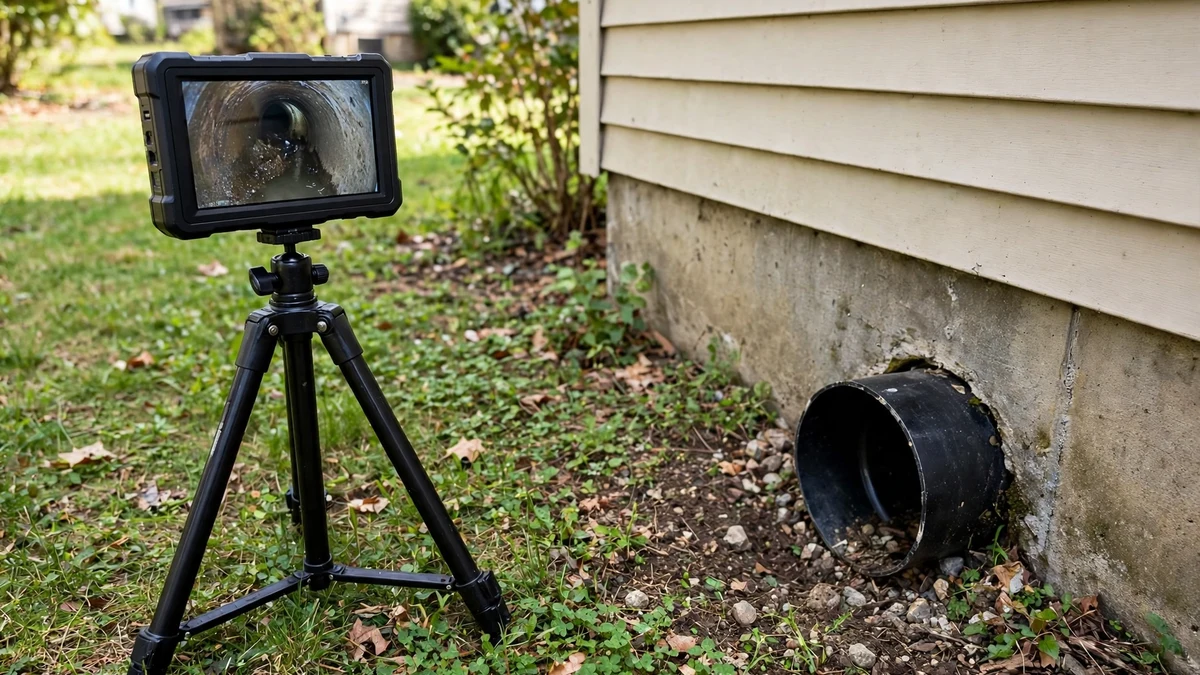
A pre purchase camera survey closes that gap. We run a push camera through the lateral from a cleanout, record the run, and grade what we find, so a buyer knows the condition of the line before closing. This post explains why that check matters in Maine, what it covers, and what to do with the footage.
Why Maine Buyers Face Higher Stakes
Maine has the oldest housing stock in the country, and Portland's median year built is 1945, which means half of Portland homes were built before that year. More than 40 percent of homes in Portland and Bangor were built before 1939. Homes that old often sit over clay or cast iron laterals, and those materials fail in known ways: clay at joints, cast iron by internal corrosion, Orangeburg by flattening.
A buyer who skips a sewer check on an older Maine home is betting that a decades old lateral is sound without ever looking at it. That bet sometimes pays off, and sometimes it ends in a backup weeks after closing, with a repair that could have been negotiated before the purchase. A camera check replaces the bet with evidence.
When to Schedule the Survey, and What to Ask
Schedule the survey during the inspection period, alongside the standard home inspection, so its findings arrive in time to shape negotiations. Ask for the recorded footage, not only a summary, and ask for a written condition grade that names each defect and its location. Ask whether the camera reached the street, and if it stopped, ask what stopped it and whether a second run after clearing is planned.
Also ask about the system itself. Is the home on public sewer or on septic? About half of Maine homes use septic, and a sewer camera survey only applies to the sewer case. Our guide to sewer versus septic systems explains how to tell, and a records check with the town should settle the question before the survey is booked.
After Closing: Keeping the Baseline
A pre purchase survey has a second life after closing. Its footage becomes the baseline for the line, and a later camera run can be compared against it to show whether a joint gap is stable or growing. That comparison is the core of a scheduled sewer inspection plan, and it turns a one time check into a long term record.
Keep the footage with your home records, alongside the inspection report and any repair records. When a symptom appears years later, that baseline will tell a technician whether the problem is new or whether it was present at purchase and has since grown. That history saves time, and it saves arguments about when a defect began.
If you are buying a Maine home and want a camera survey before closing, call us at (207) 819-0831 or use our contact page. We serve buyers across Maine from 400 Congress St, Portland, ME 04101, and we will give you footage and a written grade you can take to your agent and your seller.
Questions to Ask the Seller About the Line
A buyer can learn a great deal by asking the seller a few direct questions about the line. Has the lateral ever been replaced, lined, or spot repaired, and is there a record of that work? Has the home ever had a sewer backup, and if so, when and what caused it? Is there a backwater valve, and where does the lateral run?
Those questions work best alongside a camera survey, not instead of one, since a seller may not know the answers or may remember them imperfectly. A seller record of a past lining, paired with camera footage showing that lining today, gives a buyer far more confidence than either one alone.
Ask for records in writing where possible: past camera reports, repair invoices, and any inspection reports from a prior purchase. Those documents, added to a fresh camera survey, give a buyer a dated history of the line rather than a single snapshot, and that history is what turns a purchase decision from a guess into a judgment.
Finally, ask when the last camera survey was done, not only whether one was done. A survey from five years ago may predate a root problem that has grown since, while a survey from last year still describes the line a buyer will inherit. Fresh footage beats old footage every time.
One more buyer habit pays off: walk the yard with the lateral route in mind and note trees, driveways, and patios that sit over it. A tree over the route or a driveway over a shallow section does not disqualify a home, but it tells a buyer where future access will be easy and where it will be hard.
Book the survey through a sewer camera inspection visit, and if that footage shows failures across many sections, ask what an old pipe replacement would involve before you close, so the cost and scope are known while negotiation is still possible.
People Also Ask
Should I get a sewer inspection when buying a house?
Yes, you should get a sewer inspection when buying a house, especially an older home, since a standard home inspection does not run a camera through the lateral. A camera survey shows roots, cracks, bellies, and breaks before closing, when findings can still shape the deal.
What does a sewer scope show a home buyer?
A sewer scope shows the pipe material, joint condition, roots, cracks, bellies, and blockages along the lateral, plus whether the camera reached the street connection. The recorded footage and a written grade give a buyer evidence to negotiate a repair or to proceed with confidence.
How much does a home buyer sewer inspection matter in Maine?
A home buyer sewer inspection matters a great deal in Maine, since the state has the oldest housing stock in the country and many laterals are clay or cast iron. Portland's median year built is 1945, so many buyers face decades old lines they cannot judge without a camera.
Frequently Asked Questions
Is a sewer inspection part of a standard home inspection?
No, a standard home inspection rarely includes a sewer camera survey, since it covers visible systems such as the roof, structure, and electrical work. A sewer scope is a separate service that runs a camera through the lateral, and it must be booked on its own.
When should a sewer scope be done during a purchase?
A sewer scope should be done during the inspection period, alongside the standard home inspection, so its findings arrive in time to shape negotiations. Findings after closing still help for planning, but they can no longer be used to renegotiate the purchase.
What if the camera cannot reach the street during a buyer survey?
If the camera stops early, it has found an obstruction, such as a root mass or a collapse, that needs clearing before the rest of the line can be surveyed. A second run after clearing completes the picture, and the stop itself is a finding worth knowing before closing.
Can a seller refuse a sewer scope?
A seller can refuse access for a sewer scope, though most sellers allow it during the inspection period when it is requested through the agent. A refusal is itself information, and a buyer may weigh it alongside other inspection findings when deciding how to proceed.
Does a sewer scope check septic systems too?
A sewer scope checks a lateral to a public sewer, not a septic tank or drain field, since septic systems need different tools and rules. A buyer of a septic home needs a septic inspection instead, and a records check should confirm which system the home uses first.
Should I still get a sewer scope on a newer home?
A sewer scope still helps on a newer home, since it can reveal a damaged joint, a poor grade, or a crushed section laid at install, even though the material is young. The stakes are lower than for an older home, but the check still replaces a guess with footage.