By Straight Line Sewer Pros
Roots Do Not Attack Pipes. They Follow Water.
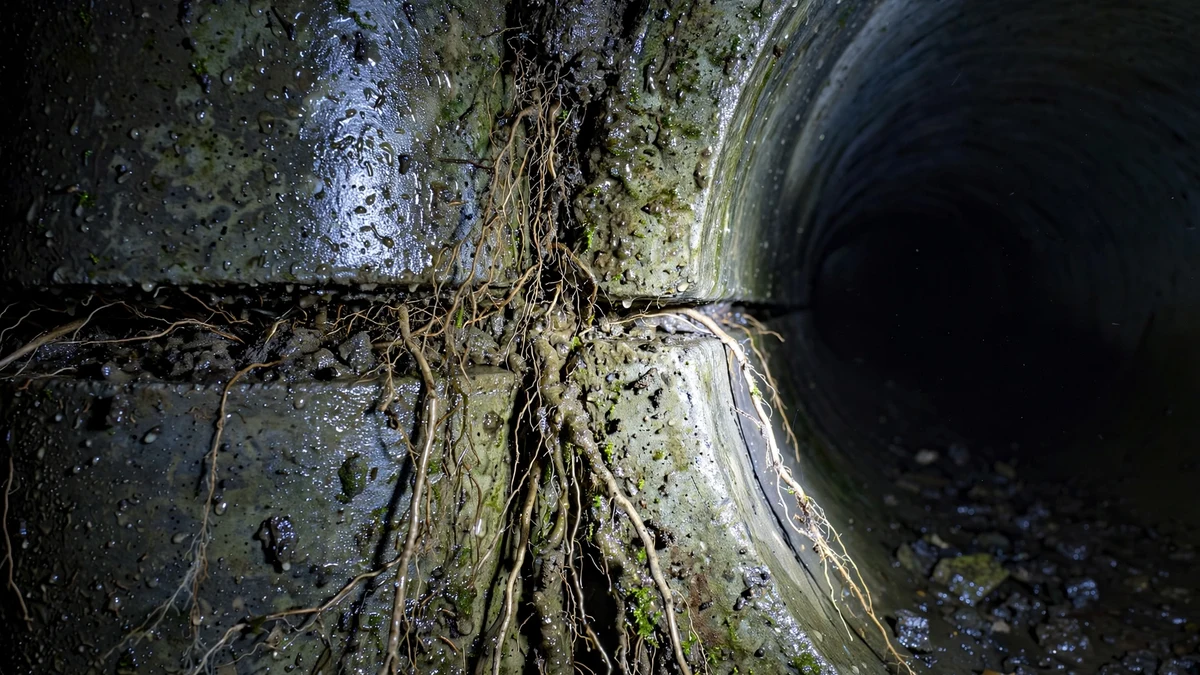
Once a root tip is inside, it finds a damp, nutrient rich space and grows. That growth is slow at first, a few fine hairs at a joint, and then faster as the mass thickens and catches more waste. This post explains that process, why some lines invite it and others resist it, and how a camera root check reads the result.
Clay Joints Are the Open Door
Clay pipe from before the 1970s was laid in short sections, often only a few feet long, so a single lateral can hold dozens of joints. Each joint is a seam, and over decades of ground movement those seams open a little. That opening is all a root needs, and it is why clay lines in tree lined streets show root problems far more often than newer lines.
Cast iron lines invite roots less often, because their sections are longer and their joints fewer, but they are not immune. A failed joint or a crack in cast iron gives roots the same opening, and once inside, roots grow just as fast. PVC lines resist roots best, with tight joints spaced far apart, but even a PVC joint can admit a root if it was damaged during install or shifted by ground movement.
Which Trees and Which Spots Carry the Most Risk
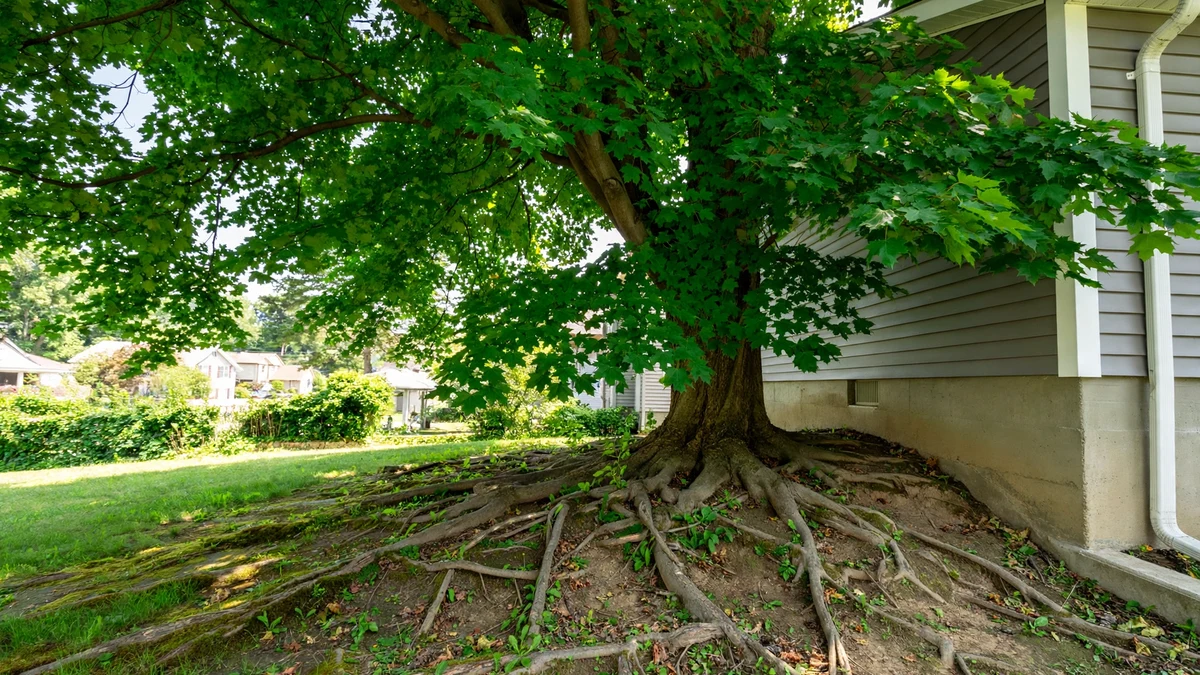
Any large tree near a line can send roots toward it, but fast growing trees with wide, shallow root systems reach a line sooner and in greater number. Maples and willows are common examples in Maine yards, and a mature tree within a dozen feet of a lateral deserves attention even if it looks healthy above ground.
Street trees carry their own rules. Many towns manage the trees along a street, and municipal street tree rules can affect who may prune or remove a tree near a line. That is worth checking before any work on a street tree, because the tree may belong to the town even though its roots reach a private lateral.
Risk also clusters where a line is shallow, where soil stays moist, and where a line already has open joints. A new PVC line under a lawn with no trees nearby carries little root risk. An old clay lateral under a maple lined street carries a great deal, and that contrast is why age and trees are always read together.
What a Camera Root Check Shows
A camera root check runs a push camera through the line and records where roots enter, how thick the mass is, and whether the joint behind the mass has shifted or cracked. The footage answers the question that matters most: is this one joint, or is it many? One joint with roots is a local issue. Roots at joint after joint point to a line that is aging out.
The footage also shows what sits behind the roots. A joint that looks sound once roots are cleared is a different case from a joint that has cracked or offset. That distinction is why we pair a root finding with a camera review before recommending any repair, and why our tree root removal page starts from the camera, not from the cutting tool.
After the Camera: Cutting, Watching, or Repairing
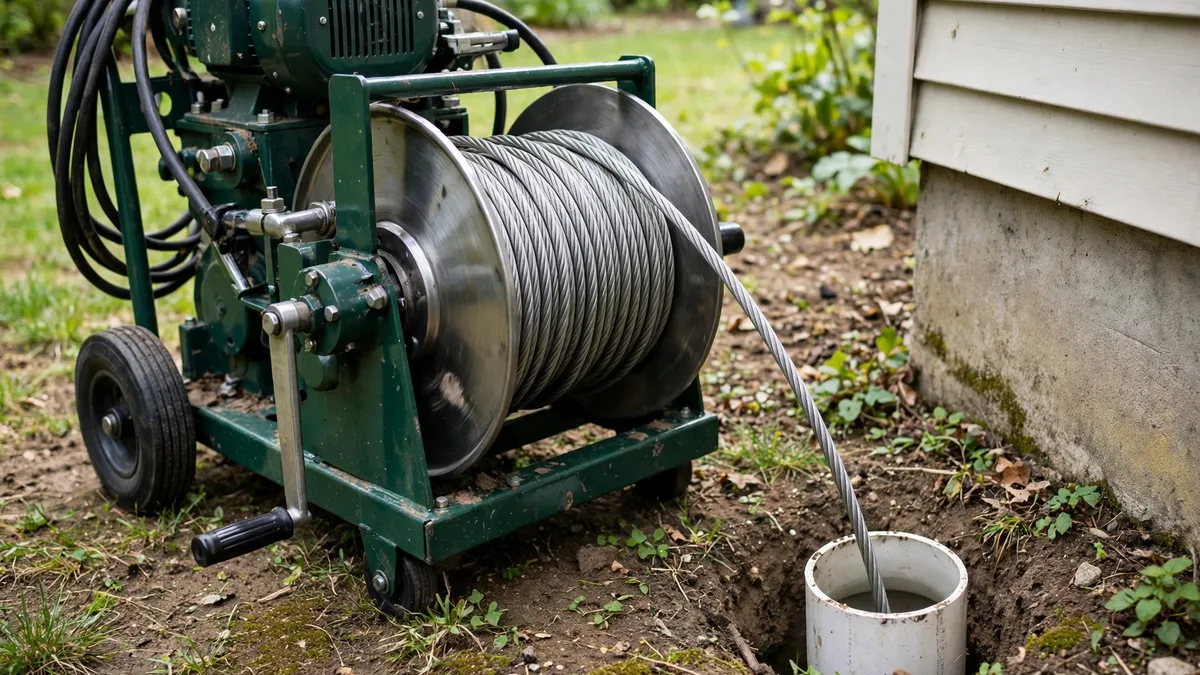
Once a camera run maps the roots, three paths open. Cutting clears the mass and restores flow, and it suits a joint that is otherwise sound. Watching suits a joint with only fine root hairs and no shift, with a repeat camera check planned to see whether the hairs thicken. Repairing suits a joint that has cracked, shifted, or failed, since cutting alone leaves that opening for roots to return through.
The choice rests on the joint, not on the root mass alone. A large mass at a sound joint is a clearing job. A small mass at a cracked joint is a repair job waiting to happen. That is why the camera review after a cutting matters: it shows the joint with the roots gone, when its condition can finally be judged.
Homeowners sometimes ask whether cutting roots harms the tree. Cutting roots inside a pipe removes only the fine growth that entered the line, not the tree root system in the soil, so the tree itself is rarely affected by a pipe cutting. The tree question that matters is different: whether a street tree or a neighbor tree is the source, and that question belongs to town rules and neighbor conversation, not to the cutting tool.
When roots have already narrowed a section, hydro jetting services can clear the mass and the scale around it, giving the camera a clean view of the joint underneath before any repair is chosen.
People Also Ask
Why do tree roots grow into sewer lines?
Tree roots grow into sewer lines because a leaking joint releases water and nutrients into the soil, and fine root tips follow that moisture through the smallest opening. Once inside, roots grow in the damp pipe and thicken into a mass that catches waste.
Which trees cause the most sewer line damage?
Fast growing trees with wide, shallow root systems cause the most sewer trouble, and maples and willows are common examples in Maine yards. Any large tree near an old clay lateral carries risk, but the pipe material and joint condition matter as much as the tree species.
Do roots grow back after they are cut from a sewer line?
Roots usually grow back after cutting when the joint that let them in is still open, because cutting removes the mass but does not close the opening. A camera check after cutting shows whether the joint is sound or failed, which decides whether cutting alone will hold.
Frequently Asked Questions
Can roots break a sewer pipe on their own?
Roots rarely break a sound pipe, but they widen existing joint gaps and can crack brittle clay once a mass thickens and pushes on the joint. The pipe usually fails first at a joint, and roots then exploit and enlarge that failure.
How do I know if roots are my problem or something else?
Roots show a seasonal pattern: drains slow during the growing season, clear after a cutting, and slow again the next year. A camera run confirms roots directly, showing fine hairs or a mass at a joint, and it rules out bellies, breaks, and scale.
Do root killers poured down a drain fix the problem?
Chemical root treatments can kill roots inside the pipe, but they do not close the joint, and they can harm the tree and the soil around the line if misused. They are at best a short term measure, and a camera check is still needed to judge the joint behind the mass.
Should I remove a tree that is sending roots into my line?
Removing a tree is a last resort, not a first step, since the joint that admitted the roots stays open for the next tree or the same stump regrowth. Repairing the failed joint, or the failed section, addresses the cause, while tree removal only removes one source of roots.
Are newer PVC lines safe from roots?
PVC lines resist roots far better than clay because their joints are tight and spaced far apart, but a damaged or shifted PVC joint can still admit a root. A camera check is the way to confirm a PVC joint is sound rather than assuming it from the material alone.
How often should a root prone line be checked?
A line with a history of roots deserves a camera check after a cutting and then on a regular schedule, so growth is caught while it is still fine hairs rather than a mass. The right interval depends on how many joints show roots and how fast they regrow.
Drains Slowing Every Summer?
A seasonal slowdown is the classic root pattern. A camera run will show whether one joint or many joints are involved, and that answer shapes the repair.
Call (207) 819-0831 or email info@sewerlinerepairmaine.com.