By Straight Line Sewer Pros
Winter Works on Your Line From Above and Below
This post explains how winter stresses a line, which lines feel it most, and what to watch for as the ground freezes in fall and thaws in spring. It is a seasonal guide, not a repair manual, and it pairs with a camera check when symptoms appear.
Frost Heave: How Frozen Ground Moves a Pipe
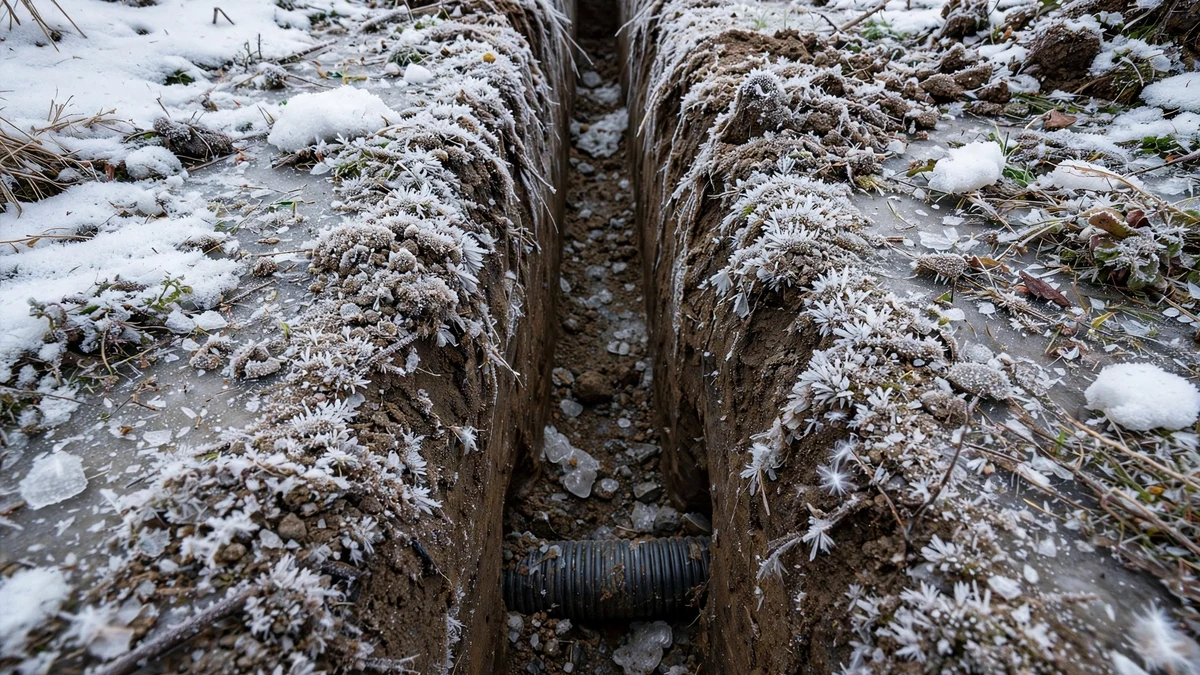
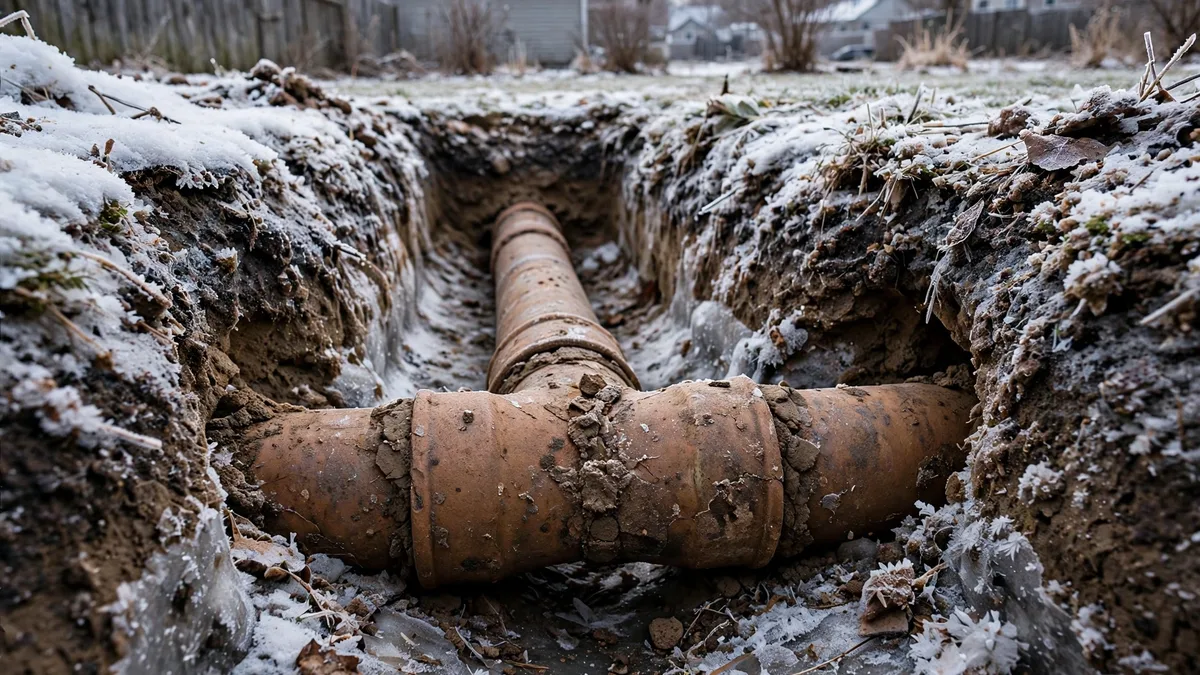
Frost heave happens when water in soil freezes, expands, and lifts the ground above it. That lift is rarely even, so one section of a buried line rises while the next stays put, and the joints between them take the strain. Clay joints, already the weakest point in an old line, open a little further with each cycle.
Wet, silty soil heaves hardest, because it holds more water to freeze. A line in wet soil near a foundation or a low spot therefore moves more than a line in dry, sandy soil. The movement is small in any single winter, but over decades of Maine winters it adds up, and a joint that was tight when a house was built can end up open enough to admit roots.
What Winter Symptoms Look Like Indoors
Winter line trouble rarely announces itself as a winter event. It shows up as slow drains in late winter, a backup in early spring as the ground thaws and shifts, or roots that appear in summer through joints opened during winter. A homeowner who connects a spring backup to a winter of frost heave is usually on the right track.
Watch for a pattern across winters. A drain that slows every February, or a backup that arrives every spring thaw, points to a line that moves with the seasons. That pattern is worth a camera check in the milder months, when the ground is workable and the line can be surveyed end to end.
- Slow drains in late winter: suspect frost movement at joints
- Backup during spring thaw: suspect a joint opened or a section shifted over winter
- Roots each summer after a hard winter: suspect joints widened by freeze and thaw
- New wet patch above a line after thaw: suspect a joint or crack opened over winter
Getting a Line Ready for Winter, and Checking It After
There is no winterizing step that protects a buried line the way insulating a pipe indoors protects it, because the line already sits below frost depth. The useful steps are simpler: fix known joint problems before winter, keep heavy loads off shallow line routes where possible, and watch for symptoms as the ground thaws.
A fall camera check makes sense for a line with a history of winter trouble, since it shows the joints before frost heave works on them. A spring check makes sense after a hard winter, since it shows what moved. Either way, the camera turns a seasonal worry into a dated record, and that record is what lets a homeowner plan rather than react.
If your drains slow every winter or back up every spring thaw, call us at (207) 819-0831 or use our contact page. We serve homes across Maine from 400 Congress St, Portland, ME 04101, and a spring camera run will show what winter did to your line.
A Spring Thaw Checklist for Your Line
Spring thaw is the right moment for a line checklist, since winter movement has finished and the ground is workable again. Walk the line route and look for new wet patches, new settling, or a strip of ground that has sunk since fall. Indoors, note any drain that slowed over winter or any backup that arrived with the thaw.
Next, run water into little used drains to refill traps that may have dried over winter, and check basement drains for debris that settled during the cold months. Those small steps clear the simple causes, so any symptom that remains points more clearly to the line itself rather than to a trap or a surface drain.
Finally, book a camera check if any winter symptom appeared, or if your line has a history of winter trouble. A spring run shows what frost heave changed, joint by joint, and it gives a dated baseline for the next winter. That baseline is the practical payoff of a seasonal habit.
One more spring step costs little effort: check the vent termination on the roof for ice damage or a cracked cap, since a vent damaged by ice can cause odor problems that mimic a line problem all summer. A vent check that clears the simple cause keeps the line diagnosis honest and focused.
Before winter sets in, hydro jetting services can clear grease and scale that would otherwise narrow the line just as cold weather slows flow, giving the line its best chance through the freeze.
People Also Ask
Can a Maine winter damage a sewer line?
A Maine winter can damage a sewer line through frost heave and repeated freeze and thaw cycles, which move the ground and widen joints over time. The damage builds slowly across many winters, with clay joints and shallow lines affected most.
How deep is the frost line in Maine?
Frost depth in Maine commonly runs four to five feet or more, and up to seven to eight feet in northern Maine, which is why sewer lines here are buried deep. The most active freeze and thaw zone sits shallow, where temperature swings are most extreme.
Do sewer lines freeze in winter?
Sewer lines buried below frost depth rarely freeze solid, since household water keeps flowing and the ground insulates the pipe. Shallow lines, lines with standing water in a belly, and lines in unheated spaces are more likely to freeze than a deep, well graded main line.
Frequently Asked Questions
Why do sewer problems appear in spring rather than winter?
Sewer problems appear in spring because frost heave moves joints during winter, and thaw lets the ground settle into its new shape, opening gaps that then admit roots or catch waste. The damage happens in winter, but the symptom often waits for the thaw.
Can snow piled over a sewer line cause damage?
Snow piled over a line insulates the ground and usually helps, but plowed snow mixed with ice, and heavy equipment driving over a shallow line, can compact soil and stress joints. The risk comes more from loads and plowing than from the snow itself.
Should I insulate a buried sewer line for winter?
A buried line below frost depth does not need insulation the way an indoor pipe does, since depth and steady household flow protect it. Shallow sections, exposed sections in a crawl space, and lines with standing water are the cases where insulation or a repair is worth discussing.
Does frost heave affect PVC sewer pipe?
Frost heave affects PVC less than clay, since PVC joints are tight and the material flexes, but repeated movement can still open a damaged joint or shift a shallow section. A camera check after a hard winter shows whether any PVC joint moved.
Is winter a bad time for sewer line repair in Maine?
Winter makes excavation harder, since frozen ground is difficult to dig and restoration must wait for thaw, but camera inspection and diagnosis work year round. Urgent repairs proceed in winter when needed, while planned work is often scheduled for milder months.
How do I protect my sewer line before winter?
Fix known joint problems before winter, avoid parking heavy loads over shallow line routes, and note any slow drains so they can be checked. A fall camera run gives a baseline, and a spring run after thaw shows what winter changed.