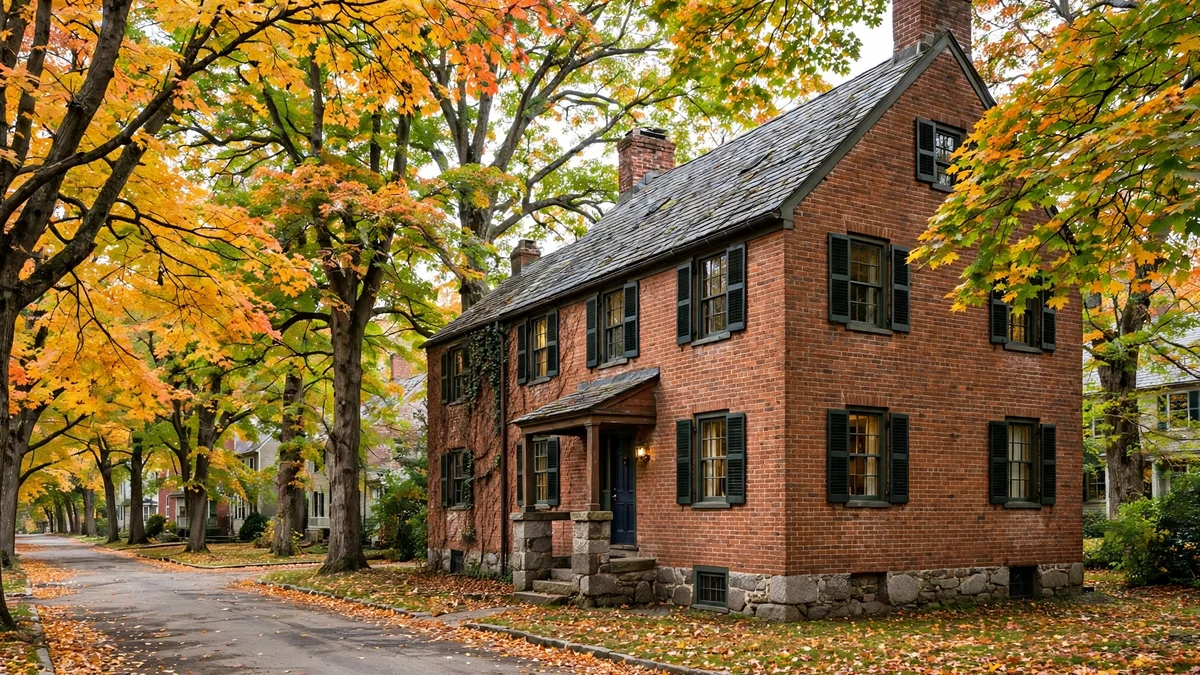
Maine has the oldest housing stock in the United States, and that fact shapes every sewer line conversation here. Portland's median year built is 1945, which means half of Portland homes were built before that year. More than 40 percent of homes in Portland and Bangor were built before 1939, in an era when clay and cast iron were the standard lateral materials.
Those homes were built to last, and many have, with stone foundations, hardwood floors, and solid framing. Their sewer lines were built from the materials of their era, and those materials have now had decades to age. This post explains what that aging looks like, and what an owner of an old Maine home should check.
What Old Home Laterals Are Made Of
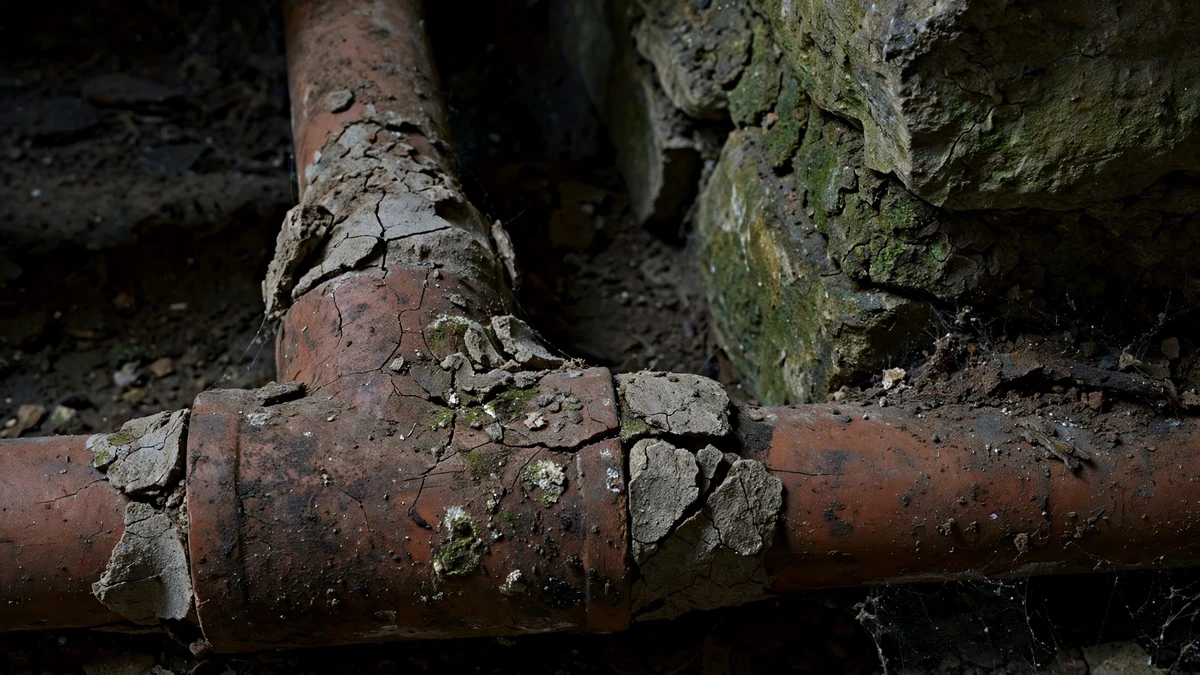
An old Maine home lateral is usually clay, cast iron, or a mix of the two, with Orangeburg possible for homes built from the 1940s to the 1970s. Clay laterals show short sections with many joints. Cast iron laterals show longer sections with a rougher interior. Orangeburg laterals, where present, show a fiber pipe that has absorbed moisture and deformed.
A single home may hold more than one material, since past repairs often replaced one section in a newer material while leaving the rest. A camera survey maps those changes, and that map matters, because each material fails differently and each section needs judging on its own terms.
How Old Lines Fail, Material by Material
Clay laterals in old homes fail at joints. Ground movement over decades opens the many joints, roots enter, and waste catches on the steps between sections. Cast iron laterals fail by internal corrosion, channeling along the bottom until the wall thins and the opening narrows. Orangeburg laterals fail by deformation, flattening under soil pressure until the pipe collapses.
Those three patterns cover most old home failures, and they often appear together in one lateral. A clay run with open joints may also hold a cast iron section with scale, and an Orangeburg section may sit between them. That mix is normal for a home that has seen several eras of repair, and it is why a whole line survey beats a guess from house age alone.
Old Neighborhoods Add Their Own Pressure
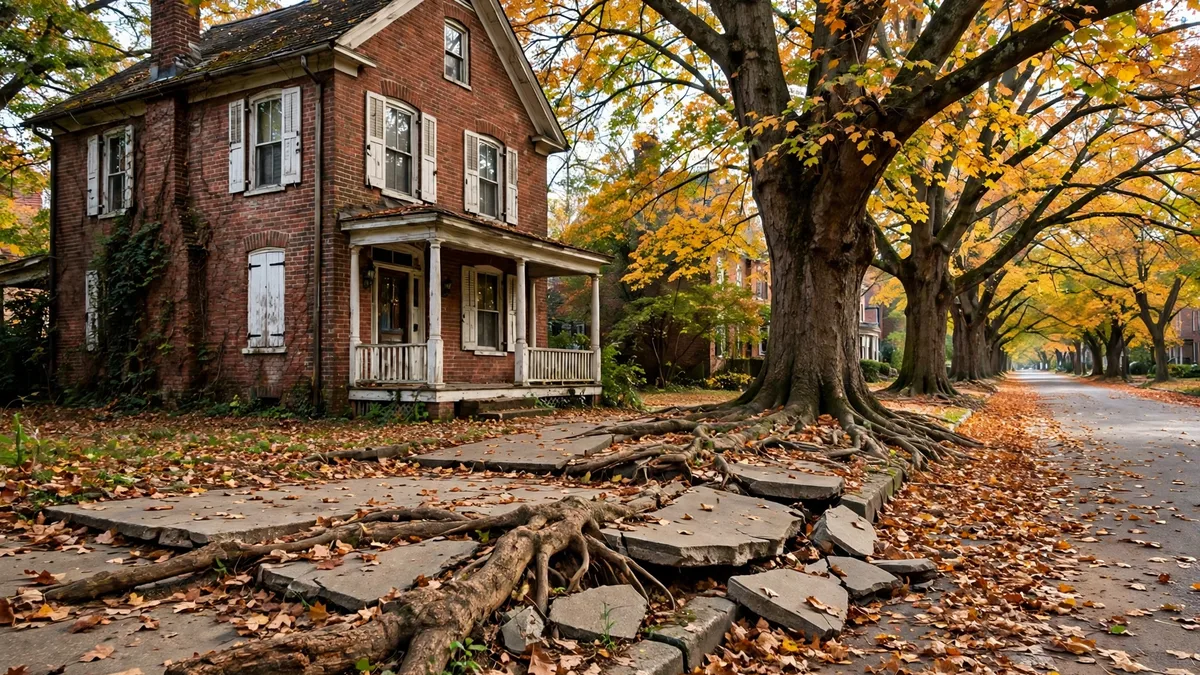
Old neighborhoods add pressure beyond pipe age. Mature trees line their streets, and their roots reach laterals through open clay joints. Old street mains and combined sewer history in cities like Portland mean surges can push back toward homes during heavy rain. Narrow lots and shared driveways can limit access for excavation, which shapes which repair methods fit.
Stone foundations add another wrinkle. An old home lateral often passes through or beside a stone foundation wall, and that passage can shift as the foundation settles. A camera run that starts inside and follows the line past the foundation shows whether that passage is sound or whether it has become a joint or crack worth addressing.
Signs an Old Home Line Needs a Look
Several signs point an old home owner toward a camera check. Slow drains across the house, repeat backups at the lowest drain, gurgling across fixtures, a sewer smell that returns after traps are filled, and a wet patch above the line all deserve attention in any home, and they carry extra weight in a home built before 1939.
Two moments deserve a check even without symptoms. The first is a home purchase, when a pre purchase survey gives a buyer the line condition before closing. The second is a major renovation, when a line that will sit under a new addition or a new driveway should be surveyed before it becomes hard to reach. Both moments are covered in our guide to buying a home sewer inspection.
House built before 1939 with no known line replacement
Repeat backups, slow drains, or gurgling across fixtures
Mature trees over or near the lateral route
A renovation or addition planned over the line route
What to Do With an Old Line: Watch, Repair, or Replace
An old line does not automatically need replacement. A line with sound joints and a sound wall, whatever its age, can keep serving with periodic checks. A line with one failed joint may suit a sewer line spot repair. A line with failures across many sections may suit lining, bursting, or a full old pipe replacement, depending on what the camera shows.
The right sequence is survey first, then plan. A sewer camera inspection gives the condition grade, a scheduled sewer inspection tracks changes over time, and the repair choice follows from the grade rather than from the house age. Age raises the odds of trouble, but footage decides the work.
If you own an old Maine home and have never seen your lateral on camera, call us at (207) 819-0831 or use our contact page. We serve homes across Maine from 400 Congress St, Portland, ME 04101, and we will show you your line as it is, not as its age suggests it might be.
Old Homes, New Additions: Lines Under New Work
Old Maine homes often gain new additions, new driveways, or new patios, and those projects can change the life of the lateral beneath them. An addition built over a lateral makes that section hard to reach for future repair. A new driveway over a shallow lateral adds load that can press a section down. A new patio over a cleanout buries the very access a camera needs.
The wise order is survey before building. A camera run before an addition shows the line condition while it is still reachable, and it shows the route, so the addition can be planned around access rather than over it. A cleanout that stays accessible after construction saves a future excavation, and a line that is repaired before it is built over saves a far larger job later.
If work is already planned, share the lateral route with the builder and mark cleanout locations on the plan. Those two steps cost nothing at the planning stage and can save a great deal at the repair stage, when access is the difference between a small job and a large one.
One last caution: never let a new addition cover a known bad joint without repairing it first, since a joint that is already failing will not improve under a new floor. Repairing it before construction is a small job, while repairing it after construction means opening the new work to reach the old pipe.
People Also Ask
Why do old Maine homes have sewer line problems?
Old Maine homes have sewer line problems because Maine has the oldest housing stock in the country, and many laterals are clay or cast iron laid decades ago. Clay joints open with ground movement and admit roots, while cast iron corrodes inside and thins along its bottom.
What kind of sewer pipe do old Maine homes have?
Old Maine homes usually have clay or cast iron laterals, with Orangeburg possible for homes built from the 1940s to the 1970s. A single home may mix materials from past repairs, and a camera survey maps each material change along the line.
Should I replace the sewer line in an old house?
You should replace the sewer line in an old house only when a camera grade shows failures across many sections, since a sound old line can keep serving with periodic checks. A single failed joint may suit a spot repair, while widespread failure points toward lining, bursting, or replacement.
Frequently Asked Questions
How old is too old for a sewer line in Maine?
No age alone makes a sewer line too old, since a sound clay or cast iron line can serve for many decades past its era. A camera grade, not a calendar date, decides whether a line is sound, needs a local repair, or needs replacement.
Do all pre 1939 Maine homes have bad sewer lines?
No, many pre 1939 Maine homes have laterals that still work well, especially where joints stayed tight and soil stayed stable. Age raises the odds of joint wear, corrosion, and root entry, which is why older homes benefit from a camera check when symptoms appear.
What is the most common old home sewer failure in Maine?
The most common old home failures are open clay joints admitting roots and cast iron corrosion channeling along the pipe bottom. Both develop over decades, and both show clearly on a camera survey before they cause a backup.
Can an old sewer line be lined instead of replaced?
An old line can be lined when its pipe still holds its shape and grade, since a liner seals cracks and joints from inside. A collapsed pipe, a deep belly, or a badly offset joint cannot be lined, and those cases need excavation or bursting instead.
Does renovating an old home affect its sewer line?
Renovating can affect a sewer line when an addition, a driveway, or heavy equipment sits over the lateral route or changes drainage around it. A camera survey before renovation shows the line condition while it is still easy to reach and repair.
How often should an old home sewer line be inspected?
An old home sewer line deserves a camera check when symptoms appear, before a purchase, and then on a planned schedule so changes are tracked. Comparing footage over time shows whether a joint gap or a belly is stable or growing.
Age alone does not condemn a line, but it does earn it a camera look. One survey will show you the material, the joints, and the grade as they actually are.